
Key Takeaways
Heat Damage
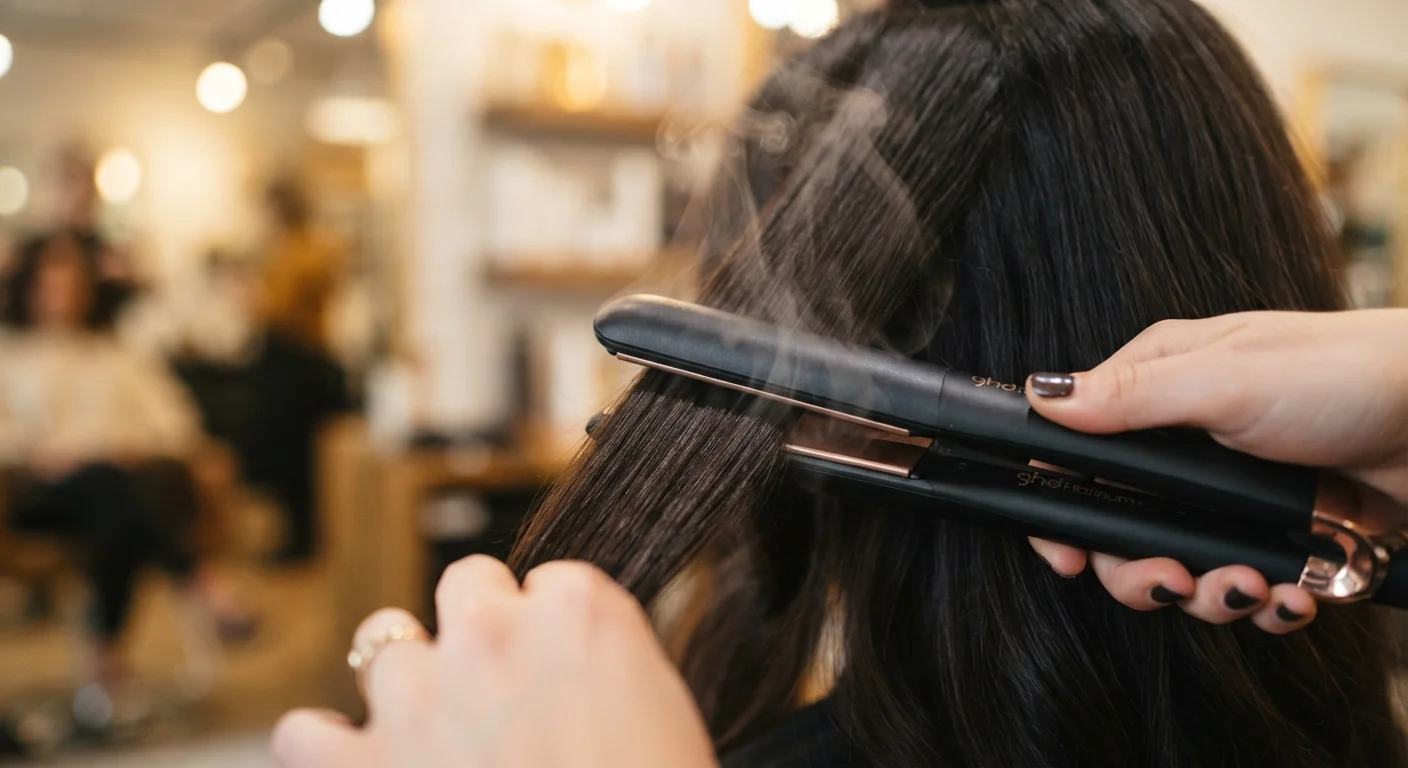
Heat damage refers to structural changes in the hair strand caused by exposure to high temperatures from tools like flat irons, curling wands, and blow dryers. Unlike surface dryness, heat damage alters the proteins that give hair its strength and shape — changes that cannot be reversed once they occur. The result is hair that feels rough, breaks easily, or loses its natural curl or wave pattern.
At the molecular level, high heat disrupts disulfide bonds within keratin proteins and degrades the hair's cuticle layer, reducing its ability to retain moisture and resist mechanical stress.
Inside a Hair Strand: The Structure That Heat Disrupts
To understand heat damage, it helps to know what hair actually is. Each strand is built from a fibrous protein called keratin, arranged in tightly coiled chains held together by various chemical bonds — most notably hydrogen bonds and disulfide bonds. These bonds give hair its tensile strength, elasticity, and the ability to return to its natural shape after stretching.
The outermost layer of the strand is the cuticle — a series of overlapping, scale-like cells that protect the interior cortex. When hair is in healthy condition, these scales lie flat, reflecting light and preventing moisture from escaping too quickly. The cortex beneath them contains the keratin bundles and determines the strand's strength and curl pattern.
Heat disrupts this system in two primary ways. First, it rapidly drives water out of the cortex, causing the strand to contract and swell unevenly. Second — at higher temperatures — it begins to denature the keratin proteins themselves, breaking down their structural integrity much the way high heat changes the proteins in a cooked egg. Unlike a temporary change in hairstyle, this protein degradation is permanent within that strand of hair.
Understanding your hair's natural properties, including porosity, elasticity, and density, is essential context for gauging how vulnerable your particular strands are to these effects.
What Heat Actually Does at Each Stage
Heat damage isn't binary — it exists on a spectrum that depends on temperature, duration, and how frequently the hair is exposed. Here's how the progression typically unfolds:
- Low heat exposure (below ~250°F / 121°C): Primarily evaporates surface and bound water from the strand. Hair may feel temporarily dry but the protein structure remains largely intact.
- Moderate heat exposure (~250–350°F / 121–177°C): Hydrogen bonds — which are weaker and reversible — begin breaking more aggressively. This is the temperature range most styling tools operate in. Repeated exposure at this range causes cumulative cuticle lifting and gradual protein degradation.
- High heat exposure (above ~350°F / 177°C): Disulfide bonds and the keratin matrix itself begin to break down. Hair may turn brittle, lose curl memory, or develop a spongy, gummy texture when wet — a hallmark sign of significant protein loss.
~300°F
Temperature at which keratin degradation can begin
Research published in hair science literature indicates keratin proteins begin to show structural changes at temperatures starting around 149°C (300°F), with more significant damage occurring above this threshold.
Up to 450°F
Maximum heat output of common flat irons
Many consumer flat irons sold in the U.S. reach temperatures up to 450°F (232°C) at their highest settings — well above the threshold at which protein degradation becomes a meaningful concern.
3 layers
Structural zones in each hair strand
Each hair strand consists of three concentric layers — the cuticle, cortex, and medulla — each of which is affected differently by sustained heat exposure.
The cuticle tells the clearest visual story of heat damage. Under a microscope, heat-damaged hair shows raised, chipped, or missing cuticle scales — which is why damaged hair looks dull, tangles more easily, and struggles to retain moisture. If you've noticed your hair feeling perpetually dry despite conditioning, the cuticle may be the reason. See our article on why hair feels dry even after conditioning for more on this connection.
The Role of Porosity in Heat Vulnerability
Not all hair responds to heat identically. One of the most significant factors is porosity — how readily the hair strand absorbs and releases moisture. High-porosity hair, whether naturally occurring or the result of prior chemical treatment, has a cuticle layer that is already more open or compromised. This means heat penetrates more readily and moisture escapes more rapidly, amplifying the damage potential at any given temperature.
Low-porosity hair, by contrast, has a tightly sealed cuticle that resists moisture absorption — meaning it also resists heat penetration somewhat, though it is not immune. The tradeoff is that low-porosity hair often requires more sustained heat to achieve styling results, which increases cumulative exposure risk.
Test Your Hair's Elasticity Before Styling
A simple wet-stretch test can give you a rough read on your hair's current protein and moisture balance. Gently stretch a wet strand between two fingers — healthy hair typically stretches slightly and returns. Hair that snaps immediately may be protein-deficient; hair that stretches excessively without returning may be over-moisturized or protein-depleted. Either condition signals that your strands are more vulnerable to heat stress than usual, and reducing tool temperatures or heat frequency is advisable.
Hair that has been colored, relaxed, or otherwise chemically processed sits in a particularly vulnerable position — its disulfide bonds have already been chemically altered, leaving the keratin structure less resilient. If your hair falls into this category, adjusting your routine after chemical treatment becomes even more important when heat tools are part of your regular styling.
Practical Approaches to Reducing Heat Damage
Because heat damage is cumulative and irreversible, the most effective approach is prevention rather than repair. Several practices are supported by the science of hair structure:
- Use a heat protectant formulated for your hair type. These products — typically containing silicones, polymers, or natural oils — coat the cuticle and act as a thermal buffer, slowing the rate at which the strand reaches damaging temperatures.
- Choose the lowest effective temperature. Higher heat is not necessarily more effective — it simply works faster. A lower temperature with an extra pass is generally less damaging than a single pass at maximum heat.
- Ensure hair is fully dry before flat ironing. Applying a flat iron to wet or damp hair creates steam inside the strand, which can cause small internal ruptures sometimes called "bubble hair" — a severe form of heat damage visible under magnification.
- Limit frequency. Giving hair heat-free days reduces the cumulative toll on the cuticle and protein structure. Protective styles are one option for reducing manipulation and heat exposure — though they carry their own considerations, which our article on protective styling addresses in full.
- Keep the tool moving. Holding a flat iron stationary on a section dramatically increases the heat load that section receives. Consistent, smooth passes distribute heat more evenly.
For those weighing daily blow drying against air drying, our explainer on air drying vs. blow drying offers a balanced look at the trade-offs. And since healthy hair growth starts well before the strand even emerges, it's worth noting that scalp health plays a foundational role in producing strands that are structurally resilient from the outset.
This article is for general informational and educational purposes only. It does not constitute medical or professional dermatological advice. Consult a qualified healthcare provider or trichologist for concerns about hair loss, scalp conditions, or significant hair health changes.