

Key Takeaways
Scalp Health
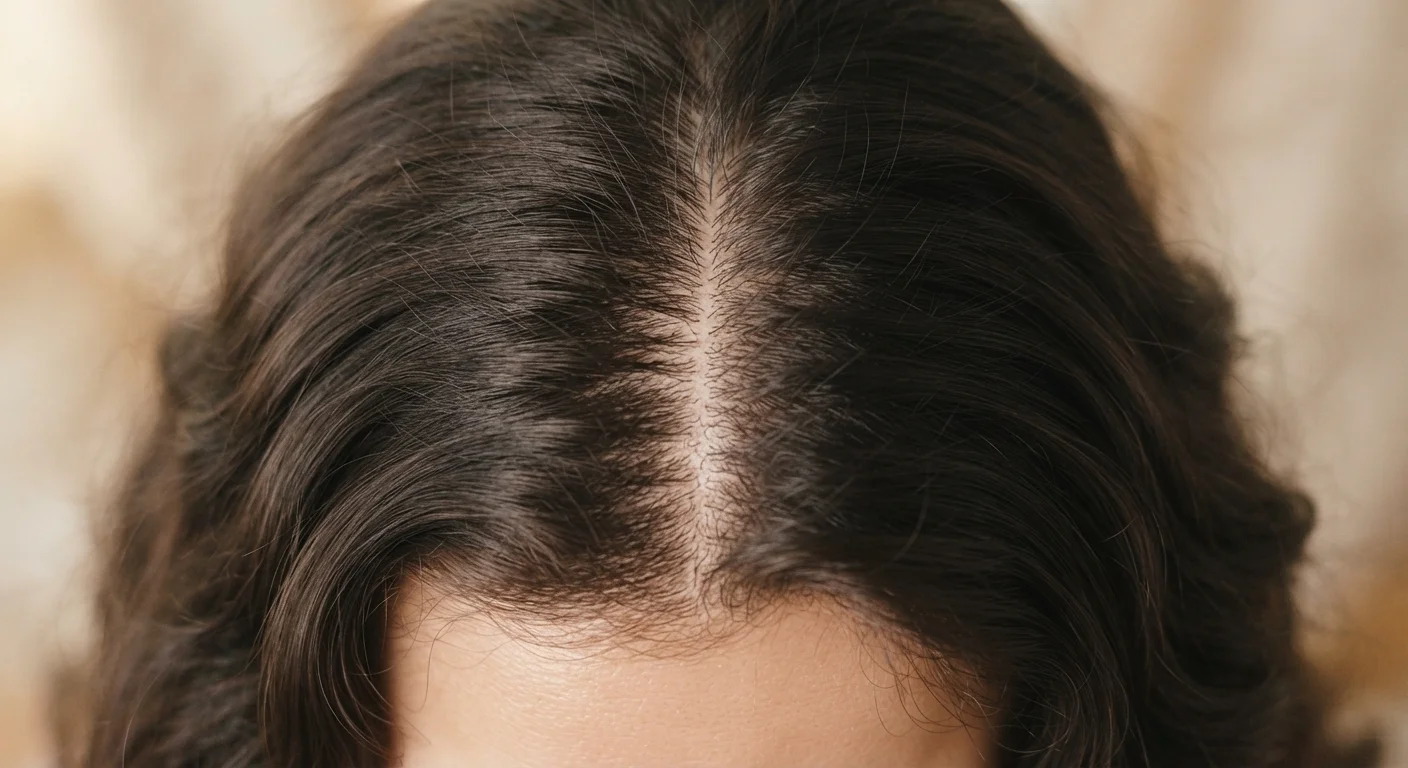
Scalp health refers to the overall condition of the skin on your head — including its balance of oil production, microbial environment, cell turnover rate, and circulation. A healthy scalp maintains a stable environment that supports the hair follicle lifecycle. Just as healthy soil is essential for strong plants, a well-functioning scalp is the foundation for resilient hair growth.
The scalp hosts a distinct microbiome of bacteria and fungi; disruptions to this balance are associated with conditions like seborrheic dermatitis and dandruff, both of which can influence follicle function and hair shedding patterns.
Why the Scalp Is the Starting Point
Most conversations about hair care center on the strand — split ends, frizz, shine, moisture. But the strand itself is already dead tissue by the time it's visible. The living part of your hair is housed entirely within the scalp, inside structures called hair follicles. What happens at and around those follicles shapes the thickness, growth rate, and resilience of every hair you grow.
The scalp is skin — approximately 3 to 5 millimeters thick, rich in sebaceous (oil) glands, and home to a complex microbial ecosystem. When that skin is well-balanced, follicles cycle normally through their growth, transition, and resting phases. When it's chronically inflamed, overly oily, excessively dry, or burdened with product residue, that cycle can be disrupted in ways that no conditioner can reverse.
Understanding your hair's natural properties like porosity and density is valuable — but those properties are themselves downstream effects of follicle health, which begins at the scalp.
100,000+
Average number of hair follicles on the human scalp
According to general dermatological literature, the average adult scalp contains approximately 100,000 hair follicles, each cycling independently through growth and rest phases.
50–100
Hairs shed daily considered within normal range
Dermatologists generally consider losing 50 to 100 hairs per day to be within the normal range for adults, with variation based on hair cycle phase and individual factors.
2–6 years
Typical duration of the hair growth (anagen) phase
The anagen phase — during which a follicle actively produces a hair strand — typically lasts two to six years, a range influenced by genetics and scalp environment.
Common Scalp Imbalances and What They Signal
Scalp issues often disguise themselves as hair problems. Here are the most frequent conditions, and what they actually indicate:
- Excess sebum (oiliness): When sebaceous glands overproduce oil, hair appears greasy quickly and the scalp environment can become a breeding ground for the Malassezia fungi associated with dandruff. Triggers include hormonal fluctuations, stress, and frequent use of heavy products on the scalp itself.
- Dryness and flaking: A stripped or dehydrated scalp — often the result of overwashing or harsh cleansers — can produce tight, itchy skin and fine white flakes. This differs from the larger, oilier flakes associated with seborrheic dermatitis, a condition driven by inflammation rather than simple dryness.
- Product buildup: Silicones, waxes, and dry shampoos that accumulate on the scalp can physically block follicle openings, reduce scalp breathability, and create an environment where bacteria and fungi thrive.
- Inflammation: Redness, tenderness, or persistent irritation are signs of scalp inflammation, which can be triggered by contact allergens, harsh ingredients, or underlying skin conditions. Chronic inflammation is among the more significant threats to healthy hair cycling.
If you notice an uptick in shedding alongside any of these symptoms, it is worth distinguishing whether you are experiencing true shedding from the follicle root or strand breakage mid-shaft — these have very different causes. See the hair shedding vs. breakage distinction for guidance on telling them apart.
Check Where You're Applying Products
Before your next wash day, note which products you're applying directly to the scalp versus the strands. Oils, heavy creams, and dry shampoos intended for the strand can create significant buildup when used on the scalp over time. Rerouting your application technique is often the simplest first adjustment.
Building a Scalp-First Routine
Reorienting your hair care around the scalp doesn't require an overhaul — it requires intention. A few foundational shifts make a significant difference:
- Cleanse consistently and appropriately. The goal of shampooing is primarily scalp cleansing, not strand cleansing. Focus lather on the scalp and let it rinse through the length rather than scrubbing the mid-shaft and ends. Choosing the right formula matters too — learn how sulfate-free and traditional shampoos differ and which suits your scalp type.
- Don't apply styling products to the scalp. Oils, butters, creams, and dry shampoos are typically formulated for the strand. When layered directly onto the scalp, they contribute to buildup and can interfere with normal sebum regulation.
- Support circulation. Regular, gentle scalp massage — using fingertips, not nails — may support blood flow to follicles. This is a low-risk habit most people can incorporate during washing.
- Let the scalp breathe. Protective styles offer real benefits for length retention, but protective styling also carries scalp risks if styles are too tight or worn too long without cleansing.
“The scalp is an extension of the skin of the face. It deserves the same attention, the same cleansing routine, and the same thoughtfulness about what you put on it.”
— Dermatology consensus perspective, Reflected across multiple board-certified dermatologist guidelines on scalp care
For a broader framework on building a complete hair care routine, including cleansing and conditioning fundamentals, see building a hair care routine from scratch.
This article is for informational purposes only and does not constitute medical advice. If you are experiencing persistent scalp symptoms, hair loss, or skin irritation, consult a board-certified dermatologist.