

Key Takeaways
Start here
Why Skincare Doesn't Have to Be Complicated
Next
Know Your Skin Type First
Core skills
The Three Steps Every Beginner Needs
Apply it
Building Morning and Evening Routines
Avoid pitfalls
What to Avoid When You're Just Starting Out
Level up
When to Consider Adding More Steps
Why Skincare Doesn't Have to Be Complicated
Walk through any beauty aisle or scroll a skincare account for five minutes and the message seems to be: the more steps, the better. In reality, the science of healthy skin is far simpler. The skin's primary job is to act as a barrier — keeping moisture in and environmental stressors out. A routine that supports that function doesn't require twelve steps or a shelf of serums.
This guide focuses on what actually matters at the start: understanding your skin, building a stable three-step foundation, and staying consistent. Once that's in place, expanding your routine becomes optional — not overwhelming. Think of this the same way you'd approach any new skill: fundamentals first, complexity later. If you're also starting fresh with another self-care area, our guide on building a hair care routine from scratch follows a similarly grounded approach.
Know Your Skin Type First
Choosing products before identifying your skin type is one of the most common beginner mistakes — and one of the easiest to avoid. There are five generally recognized types:
- Normal: Balanced, few blemishes, not noticeably oily or dry.
- Oily: Visibly shiny, enlarged pores, prone to breakouts.
- Dry: Feels tight, may show flaking or rough texture.
- Combination: Oily in the T-zone (forehead, nose, chin), drier on cheeks.
- Sensitive: Reacts easily to ingredients or environmental factors with redness or irritation.
A simple way to assess: wash your face with a mild cleanser, pat dry, and wait one hour without applying anything. Then observe — does your skin feel tight and look flaky (dry)? Appear shiny all over (oily)? Or shine only across the T-zone (combination)? This basic self-assessment guides every product decision that follows.
Skin barrier
The outermost layer of skin that locks in moisture and blocks environmental irritants. Keeping it intact is the central goal of any basic skincare routine.
Broad-spectrum SPF
A sunscreen rating indicating protection against both UVA rays (linked to aging) and UVB rays (linked to burning). Both types contribute to skin damage.
Non-comedogenic
A label indicating a product is formulated to avoid clogging pores. Commonly used on moisturizers and sunscreens designed for oily or acne-prone skin.
Active ingredient
An ingredient with a specific, measurable effect on skin — such as retinol, niacinamide, or salicylic acid. Actives tend to be more potent and require careful introduction.
Patch test
Applying a small amount of a new product to a discreet skin area (like the inner forearm) and waiting several days to check for irritation before using it on the face.
AHA / BHA
Alpha hydroxy acids and beta hydroxy acids are chemical exfoliants. AHAs (like glycolic acid) work on the skin surface; BHAs (like salicylic acid) penetrate deeper into pores.
The Three Steps Every Beginner Needs
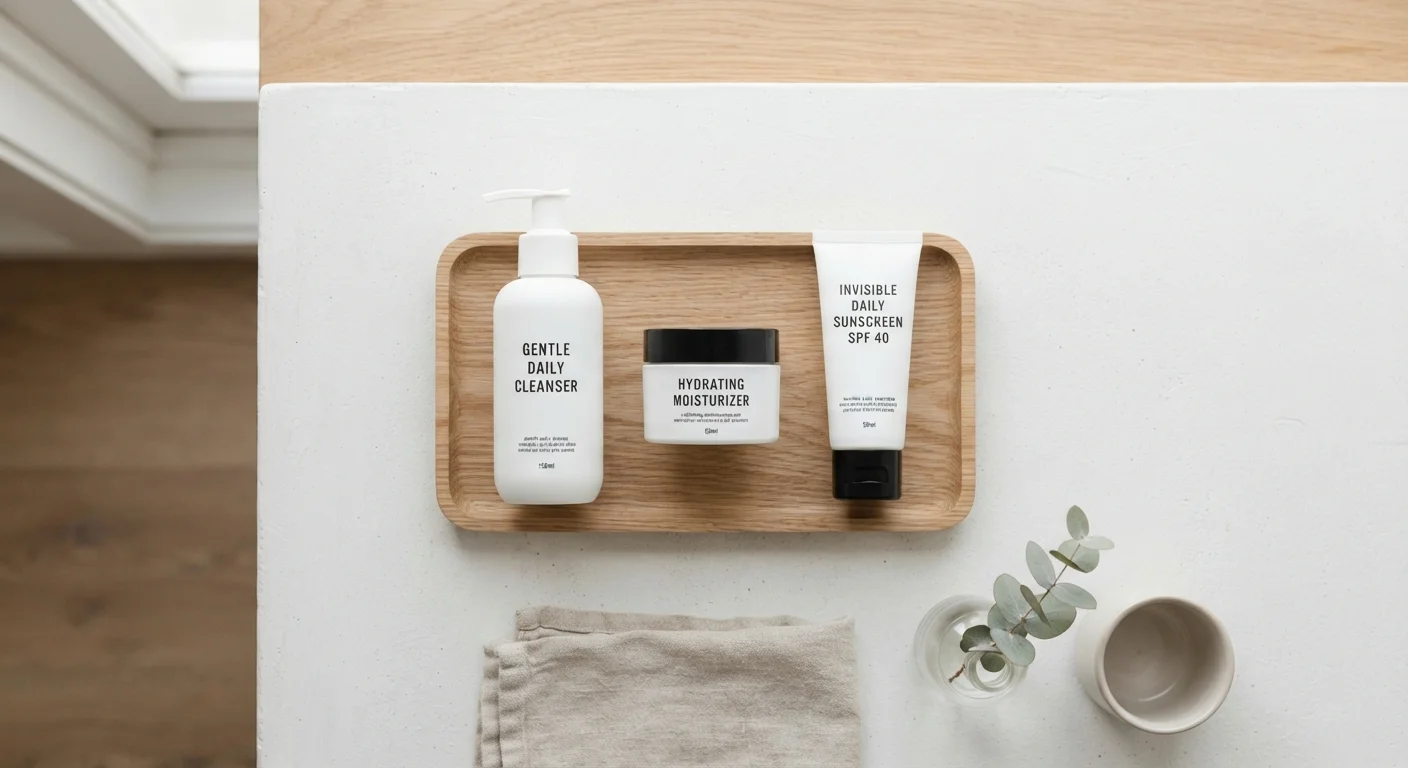
Regardless of skin type, three steps form the non-negotiable foundation of any effective routine:
1. Cleanser
Cleansing removes dirt, oil, and environmental residue that accumulates on skin throughout the day. For most beginners, a gentle, fragrance-free cleanser works well. Avoid anything that leaves skin feeling squeaky-clean — that sensation often signals the skin barrier has been stripped.
2. Moisturizer
Moisturizer helps skin retain water and keeps the barrier functioning properly. Oily skin types generally do well with lightweight gel formulas. Dry skin benefits from richer creams. Sensitive skin should prioritize short ingredient lists to reduce reaction risk.
3. Sunscreen (AM only)
Daily broad-spectrum sunscreen — SPF 30 or higher — is the single most evidence-supported step in any skincare routine. UV exposure is a primary driver of premature skin aging and uneven skin tone. This step belongs in every morning routine, regardless of skin type or weather conditions.
Start With the Fewest Ingredients Possible
When choosing your first cleanser and moisturizer, shorter ingredient lists are your friend. Fewer ingredients mean fewer potential irritants and a clearer picture of what your skin responds well to. Fragrance — listed as 'fragrance' or 'parfum' — is one of the most common causes of skin sensitivity and is worth avoiding in your starter products.
Building Morning and Evening Routines
With your three core products identified, the structure is straightforward:
| Step | Morning | Evening |
|---|---|---|
| 1 | Cleanser (or just water if skin isn't oily) | Cleanser |
| 2 | Moisturizer | Moisturizer |
| 3 | Sunscreen | — (skip) |
Some people find that rinsing with water only in the morning — rather than using cleanser twice daily — works well for dry or sensitive skin types. Evening cleansing is more consistently important, as it removes the day's buildup before skin undergoes its natural overnight repair. Once your morning and evening routines feel second nature, you'll be well-positioned to explore how product layering order affects absorption.
What to Avoid When You're Just Starting Out
Beginning routines fail most often not from doing too little, but from doing too much, too fast. A few patterns to sidestep:
- Introducing multiple new products at once. If a reaction occurs, you won't know what caused it. Add one product at a time, spaced several days apart.
- Using active ingredients too early. Retinoids, AHAs, BHAs, and vitamin C are effective tools — but they require a stable baseline routine first. Starting with actives before your skin is used to regular care often leads to irritation.
- Skipping patch tests. Even gentle products can cause reactions in some individuals. Testing on a small skin area before full application is a low-effort precaution.
- Expecting overnight results. Skin cell turnover takes roughly four to six weeks. Visible changes take time, and switching products before that window closes resets the clock.
Don't Overcorrect When Skin Purges
Some people experience a temporary increase in breakouts when starting a new routine — sometimes called 'purging' — particularly when introducing exfoliants or cleansing more consistently. This is different from a true allergic reaction and typically resolves within a few weeks. If you experience persistent redness, swelling, or hives, discontinue the product and consult a dermatologist.
For a more structured review of habits that may be holding a routine back, the skincare routine audit checklist is a useful next read once you have a few weeks of consistency behind you.
When to Consider Adding More Steps
After four to six weeks of a stable three-step routine, it's reasonable to ask whether additional steps would help. The answer depends on your specific concerns. Common additions and what they address:
- Exfoliant (1–2x per week)
- Helps remove dead skin cells and can improve texture and tone. Chemical exfoliants (AHAs like lactic acid, BHAs like salicylic acid) are generally gentler and more controllable than physical scrubs.
- Serum with targeted actives
- Vitamin C serums support brightening and antioxidant protection. Niacinamide may help with pore appearance and oil regulation. These are optional additions, not requirements.
- Eye cream
- The skin around the eyes is thinner and more delicate. A fragrance-free moisturizer or a dedicated eye cream can help maintain hydration in that area — though it isn't essential for everyone.
If you're curious about expanding your routine logically, our guide to layering skincare products in the right order explains the sequencing principles that make actives more effective. Men looking to apply similar principles to a broader grooming context may find maintaining a men's grooming routine equally practical.
Skincare Product Layering Guide
Once your three-step routine is stable, understanding product order helps actives work more effectively. This guide explains the sequencing logic that applies across most routine types.
Skincare Routine Audit Checklist
A structured checklist for reviewing an existing routine to identify missing steps, ingredient conflicts, or habits that may be undermining your results.
This article is for general informational and educational purposes only. It is not a substitute for advice from a licensed dermatologist or healthcare professional. If you have a skin condition, persistent irritation, or concerns about a specific ingredient, please consult a qualified professional.