

Key Takeaways
Why Simplicity Is the Point
The biggest obstacle to a consistent grooming routine isn't lack of motivation — it's overcomplication. When a routine requires ten steps and a shelf full of specialized products, most people drop it within weeks. The goal is a repeatable system that fits your actual morning, not an idealized one.
Men's grooming has historically been underserved by clear, practical guidance, which means many men either do too little or overcorrect with products they don't need. This guide focuses on what actually matters: scalp and hair care, facial skin maintenance, and beard upkeep — approached as a sustainable habit rather than a performance.
If you're starting from scratch, this plain-language hair care guide covers cleansing and conditioning fundamentals across all hair types. For skin specifically, a beginner skincare walkthrough can help you build from zero without overwhelm.
The Core Practices That Actually Move the Needle
A well-rounded men's grooming routine doesn't need to be elaborate. It needs to be consistent, adapted to your hair type and skin, and built around habits that address the most common grooming gaps. Below are the practices that dermatologists and grooming professionals consistently point to as foundational.
Cleanse your scalp based on your hair type, not a one-size schedule.
Overwashing strips natural oils, leaving the scalp dry and prone to irritation. Underwashing allows product buildup and can contribute to dandruff. Hair type, activity level, and scalp oiliness all affect how often cleansing is appropriate.
Apply a facial moisturizer with SPF every morning as a single combined step.
Daily UV exposure is the leading external contributor to premature skin aging, and most men skip sunscreen because it feels like an extra step. Combining moisturizer and SPF into one product removes that friction entirely.
Trim or shape your beard on a consistent weekly schedule rather than reacting to overgrowth.
Reactive trimming leads to inconsistent shape and often results in cutting too much. A scheduled trim — even a quick one — keeps lines clean and reduces the time needed per session.
Use a conditioner or leave-in treatment suited to your hair's porosity and texture.
Conditioning restores moisture lost during cleansing and reduces friction that causes breakage. Skipping it — especially for coarser or drier hair — is one of the most common causes of dull, brittle strands.
Incorporate a gentle exfoliating cleanser or scalp scrub once per week.
Dead skin cell buildup on the face and scalp can clog follicles, dull appearance, and reduce the effectiveness of other products. A once-weekly exfoliation step addresses this without disrupting the skin barrier.
Avoiding the Habits That Undermine Your Routine
Good grooming isn't only about what you add — it's also about what you stop doing. Many damaging habits are so routine they go unnoticed. Rough towel-drying, skipping conditioner on coarser hair, and washing too frequently are among the most common contributors to dryness, breakage, and scalp irritation. For a deeper look at which habits quietly cause the most harm, see grooming habits that wear down hair over time.
85%
Men who report skipping sunscreen daily
Surveys by dermatology associations consistently find the majority of men do not apply SPF as part of a regular daily routine, despite UV exposure being a primary driver of skin aging.
2–3x
Faster scalp product absorption on clean scalp
Grooming research indicates that product buildup on the scalp significantly reduces the efficacy of treatments like serums and leave-in conditioners applied afterward.
Once your routine is established, it's worth reviewing it periodically. Auditing your skincare routine can reveal gaps — an missing SPF step, an ingredient mismatch, or a product that stopped working as your skin changed seasonally.
When to Consult a Dermatologist
Persistent scalp flaking, itching, or redness that doesn't respond to routine changes may indicate a condition like seborrheic dermatitis or psoriasis — both of which benefit from professional evaluation. Similarly, sudden or patchy hair changes warrant a conversation with a healthcare provider rather than a product swap. General grooming advice is not a substitute for clinical diagnosis or treatment.
Keeping It Going Without Burning Out
Routine maintenance works best when it stays low-effort. Revisit product choices twice a year — once heading into winter, once into summer — rather than reacting to every new trend. Skin and scalp behavior shifts with humidity, temperature, and lifestyle changes, so small seasonal adjustments are normal and expected.
“The best skincare routine is one you'll actually do consistently. Complexity is the enemy of adherence — especially for people who are new to the habit.”
— Dr. Joshua Zeichner, Board-certified dermatologist and director of cosmetic and clinical research in dermatology
Grooming also intersects with broader self-care habits. The consistency, flexibility, and realistic expectations that make a sustainable mental wellness routine stick apply equally here — attach new grooming habits to existing anchors, like brushing your teeth or showering, so they require no extra decision-making.
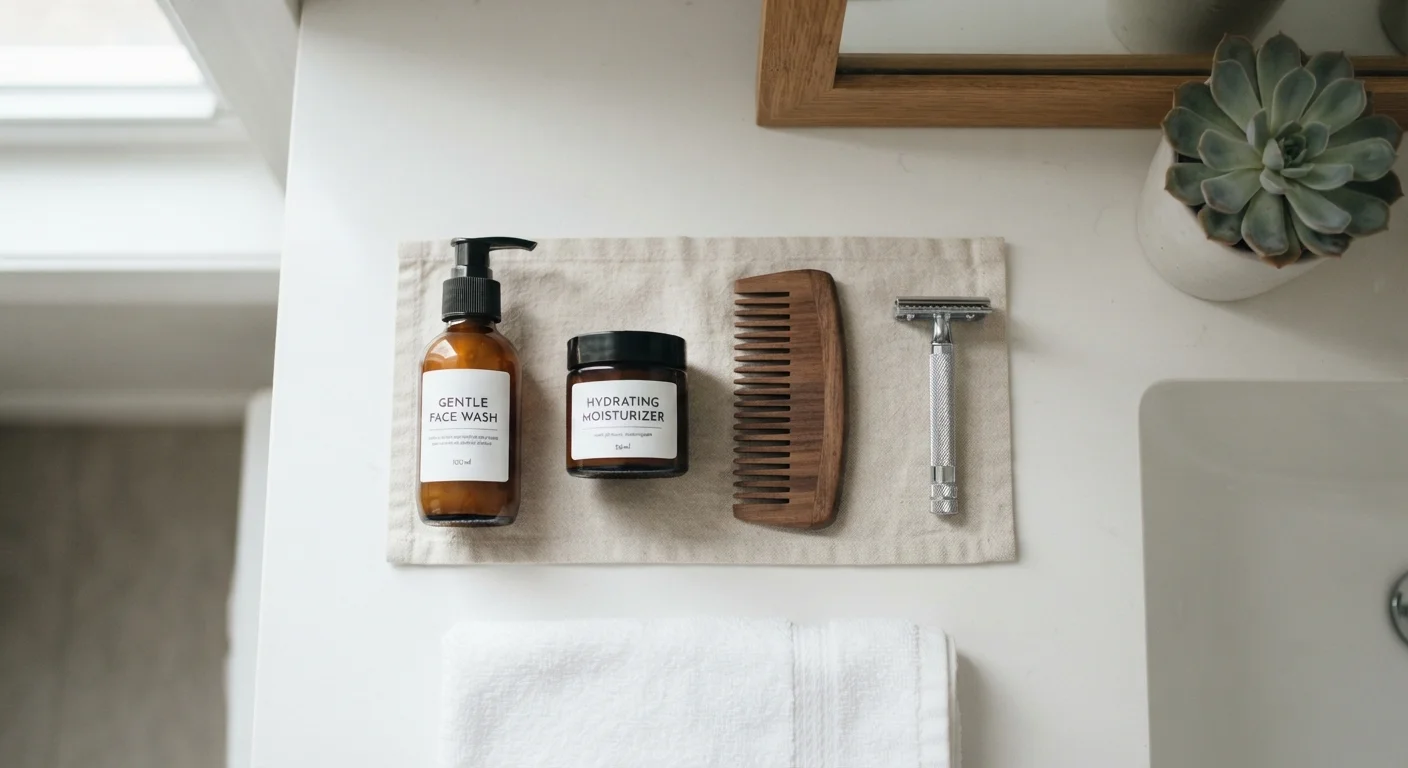
Keep products visible and accessible. A cluttered cabinet leads to skipped steps. A counter with three to five products you actually use leads to consistency.
This article is for general informational purposes only and does not constitute medical or dermatological advice. Consult a qualified healthcare professional for concerns about skin conditions, scalp health, or allergic reactions.