

Key Takeaways
Unit Pricing
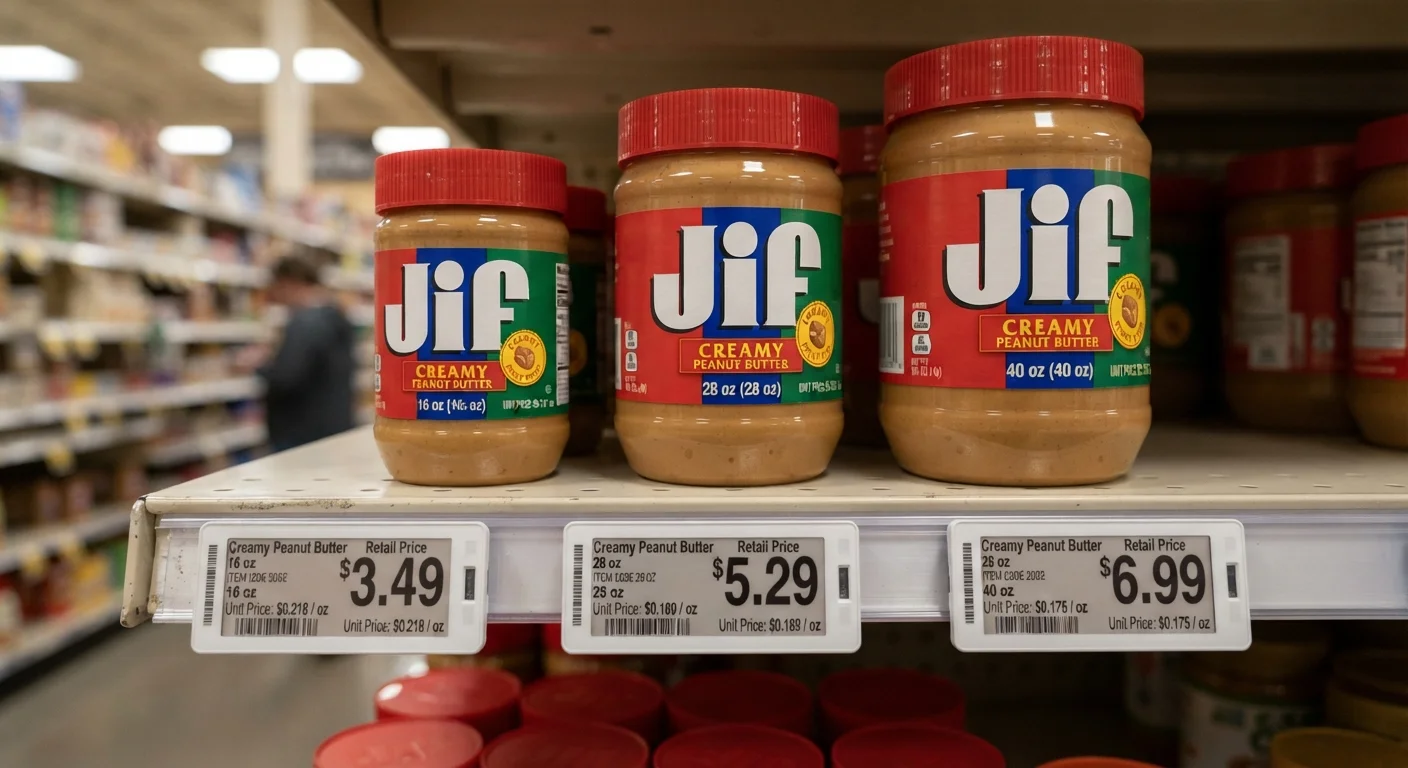
Unit pricing is the cost of a product expressed per standardized unit of measurement—such as per ounce, per 100 grams, per count, or per fluid ounce. It allows you to compare products of different sizes on an equal footing, regardless of how they're packaged or marketed. Most U.S. retailers are required or encouraged to display unit prices on shelf tags alongside the total package price.
Unit price is calculated by dividing the retail price by the quantity in the package. Regulations on mandatory disclosure vary by state and retailer type; large grocery chains are most consistently required to display them.
Why Package Size Is a Poor Proxy for Value
Retail packaging is designed to attract attention, not to help you calculate value. A 32-oz bottle placed next to a 20-oz bottle of the same product can look like an obvious win—more product, probably a better deal, right? Not necessarily. Manufacturers adjust package sizes and prices independently, which means the apparent bargain may cost more per ounce than the smaller option sitting right beside it.
This isn't a rare edge case. Shrinkflation—the practice of reducing package content while keeping the price the same—has made comparisons by eye even less reliable. Without unit pricing, you're essentially comparing apples to oranges every time you pick up two packages of different sizes.
For a broader look at how retail math can mislead, see how sale pricing tactics work.
~60%
U.S. states with some form of unit pricing law
Consumer advocacy research has found that a majority of U.S. states have enacted unit pricing disclosure requirements for grocery and general merchandise retailers, though scope and enforcement vary.
Up to 30%
Potential overpayment without unit price comparison
Consumer research studies have found shoppers who rely on package size rather than unit price can pay materially more for the same amount of product, with differences sometimes exceeding 25–30% between competing sizes.
How to Read a Unit Price on a Shelf Tag
Most grocery store shelf tags display two numbers: the total retail price (large, prominent) and the unit price (small, often in a corner). The unit price might read $0.18/oz, $1.29/100g, or $0.06/ct (per count). That smaller number is the one that matters for comparison.
To use it effectively:
- Find the unit of measurement (oz, g, fl oz, count, load, sheet).
- Make sure you're comparing the same unit across competing products.
- Lower unit price = lower cost for the same amount of product.
If unit prices aren't displayed, you can calculate your own: divide the shelf price by the net quantity printed on the package. A $4.79 jar containing 26 oz works out to roughly $0.18 per oz.
Keep a Calculator Handy in the Aisle
When unit prices aren't listed on the shelf tag, the formula is simple: total price ÷ net quantity = unit price. Most smartphones have a built-in calculator. Getting into the habit of running this quick check takes about five seconds and can prevent paying significantly more than necessary for the same amount of product.
This approach works just as well beyond groceries. Understanding unit price math can reveal whether a 'deal' on paper towels or laundry detergent is genuine or just clever packaging.
When Unit Pricing Changes the Calculus
Unit pricing is especially powerful in three common shopping scenarios:
Sale Items
A product marked 20% off still needs to be compared unit-for-unit against non-sale alternatives. Sometimes a standard-priced store brand has a lower unit cost than a name brand on promotion. The math behind real deals explains exactly how to run that comparison.
Multi-Buy Promotions
'Buy 2, get 1 free' sounds compelling—but the unit price of the deal should still beat single-unit alternatives before it qualifies as a genuine saving. Divide the total cost of all units you're acquiring by the number of units.
Store Brand vs. Name Brand
Unit pricing often makes the cost gap between store brands and name brands concrete and hard to ignore. A side-by-side unit price comparison removes the packaging bias entirely.
Practical Habits That Make Unit Pricing Second Nature
You don't need a spreadsheet to use unit pricing consistently. A few simple habits turn it into an automatic part of your shopping routine:
- Glance at the bottom of the shelf tag first. Train yourself to look for the unit price before reading the total price.
- Use your phone's calculator for unlabeled items. Price ÷ quantity takes about five seconds.
- Check net weight on the package, not just the size descriptor. 'Large' and 'family size' have no standardized meaning; net weight in ounces or grams does.
- Revisit stored favorites periodically. A product that was the best unit-price option six months ago may have been quietly repriced or resized.
For related label-reading skills, understanding what product labels actually tell you rounds out your ability to evaluate what you're buying—not just how much you're paying for it.
Unit pricing won't automatically make every shopping trip cheaper, but it will ensure you know what you're actually paying for every item you put in your cart. That's a meaningful advantage in any budget. For a broader framework on managing what you spend, the Budgeting Basics hub offers practical planning strategies.