

Key Takeaways
Why Label Literacy Matters More Than It Used To
Product labels have grown more complex over time. More ingredients, more certifications, and more marketing language compete for attention on packages that have not gotten any larger. For everyday shoppers, the result is often a blur of fine print that gets skipped in favor of a quick front-panel impression — which is exactly what manufacturers design for.
Reading labels critically is part of a broader set of consumer awareness skills that help you evaluate what you're actually buying rather than what's being sold to you. Whether you're choosing a cleaning product, a packaged food, or a personal care item, the label is the primary source of factual information available at the point of sale.
Marketing Claims Are Not Legally Binding
Words like "pure," "premium," "natural," and "gentle" have no standardized legal definitions for most product categories in the U.S. They are promotional language, not regulated descriptors. Do not rely on front-of-package claims alone to assess a product's quality or safety. Always check the ingredient list and any third-party certifications on the back or side panel.
Labels also interact with other information channels. Product reviews can fill in real-world performance gaps, and comparing generic and name-brand ingredients often reveals more than brand positioning suggests. But the label itself remains the baseline.
What you will need
What You Need Before You Start
The product itself
The physical label is your primary source — digital images or thumbnails often crop out required disclosures.
Magnifying glass or phone camera zoom
Fine print on labels can be extremely small; zooming in prevents misreading ingredient names or quantities.
Reference resource for ingredient names
A reliable consumer database or agency glossary helps decode unfamiliar chemical or INCI names quickly.
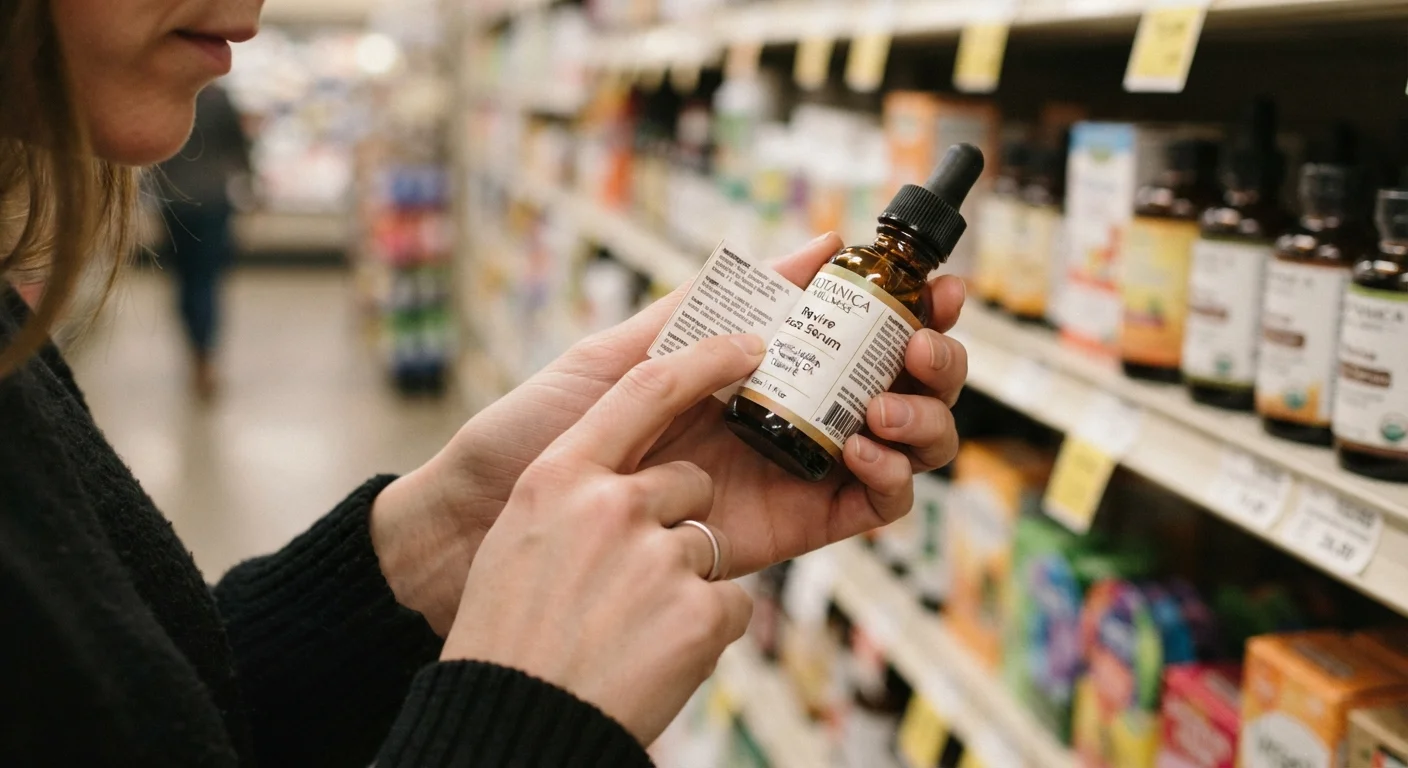
You don't need special expertise to read a label effectively. What helps most is a systematic approach — moving through the label in a defined order rather than scanning randomly. The steps below provide that order, starting with the structural distinction between regulated and unregulated content and moving through each key section in turn.
Scan the Back Panel First
Front-of-package messaging is designed to attract attention, not inform decisions. Flipping the product over and starting with the ingredient list and required disclosures gives you a clearer picture before any marketing language influences your read. Make it a default habit before dropping anything in your cart.
How to Read a Product Label Step by Step
Identify What Is Regulated vs. What Is Marketing
Before reading a single word, understand that a product label has two distinct zones: regulated content and promotional content. In the U.S., federal agencies such as the FDA and USDA mandate specific disclosures — ingredient lists, net quantity, nutrition facts, allergen warnings, and country of origin for certain goods. These appear in defined formats and carry legal accountability.
Everything else — the bold claims on the front panel — is largely promotional. Phrases like "clinically tested," "ultra-concentrated," or "farm fresh" are marketing language unless backed by a specific, verifiable certification. Train yourself to mentally separate these two zones before evaluating anything further.
Read the Net Quantity and Serving Size
The net quantity tells you the actual amount of product in the package — by weight, volume, or count. This figure, found on the front panel by law, is essential for comparing value across different package sizes. Pair it with the unit price on the shelf tag to make a fair comparison.
For food and supplement products, locate the Nutrition Facts panel and find the serving size and servings-per-container lines immediately. Every figure that follows — calories, sodium, fat — applies only to that declared serving, not the full package.
Work Through the Ingredient List Systematically
Ingredients are listed in descending order by weight — the first ingredient is the largest by quantity, and the last is the smallest. This applies to food, cosmetics, and most personal care products regulated in the U.S. The practical implication: the first three to five ingredients define what the product primarily is.
Look for the point where active or meaningful ingredients appear versus where filler, fragrance, or preservative ingredients begin. Long ingredient lists are not inherently problematic, but ingredient placement tells you where the formulation's weight actually sits.
Check for Allergen and Safety Warnings
For food products, the Food Allergen Labeling and Consumer Protection Act (FALCPA) requires that the nine major allergens — milk, eggs, fish, shellfish, tree nuts, peanuts, wheat, soybeans, and sesame — be clearly declared, either within the ingredient list or in a separate "Contains" statement immediately following it.
For household and personal care products, look for hazard signal words ("Danger," "Warning," "Caution") and first-aid instructions. These are required under federal and state regulations for products that meet defined risk thresholds. If a signal word is present, read the associated precautions before use.
Evaluate Certifications and Third-Party Claims
Logos from certifying bodies — USDA Organic, ENERGY STAR, NSF, Fair Trade, and others — indicate that a product has been evaluated against defined standards by a third party. These carry more weight than self-declared claims because they involve external verification. However, not all certification marks are equal in rigor or scope.
When you see an unfamiliar logo or seal, look for the certifying organization's name. Reputable programs publish their standards publicly. A logo without a clear issuing body is a red flag. For a breakdown of what major certifications actually verify, see common quality labels and certifications explained.
Note Country of Origin and Manufacturer Information
Country of origin is required on many product categories including food, textiles, and automobiles, though requirements vary by product type. For imported goods, this disclosure identifies where the product was made or substantially transformed, which some consumers factor into purchasing decisions.
Manufacturer name and address (or U.S. distributor information) must appear on most FDA-regulated products. This contact information is your starting point if you need to report a problem, verify a claim, or request safety data.
Once you've worked through a label using this sequence a few times, it becomes a faster, intuitive habit. You'll find yourself automatically noting serving size before reading nutrition figures, or checking for a certifying body name before trusting a logo. These small adjustments compound into noticeably better purchasing decisions over time.
Common Pitfalls and What to Do Next
The most common mistake shoppers make is treating the front panel as a summary of the back. It isn't — it's a sales pitch. Front-of-package claims are chosen by marketing teams, not regulatory bodies. The term "non-toxic" on household products, for example, has no single federal definition and may mean very different things across product categories.
Serving Size Can Be Misleading
Manufacturers set their own serving sizes, and they are not always intuitive. A small bottle may list two or three servings, which means every nutrient figure on the label must be multiplied accordingly. Always check the servings-per-container line before comparing products or assessing totals.
If a product's ingredient list uses unfamiliar chemical names, don't let that alone trigger concern or confidence. Both synthetic and naturally derived ingredients can be safe or harmful depending on concentration and use. For personal care products in particular, understanding INCI naming conventions helps decode what looks like intimidating terminology.
For food products, understanding how macronutrients are represented on the Nutrition Facts panel is its own skill — see Macronutrients Decoded for a plain-language breakdown. Clothing care labels work on a separate symbol-based system covered in reading garment care labels.
This article provides general consumer information for educational purposes only. Regulatory requirements for product labels vary by product category and may change. Consult applicable agency guidelines or a qualified professional for specific compliance or safety questions.