

Key Takeaways
How Reference Pricing Shapes What You Think You're Saving
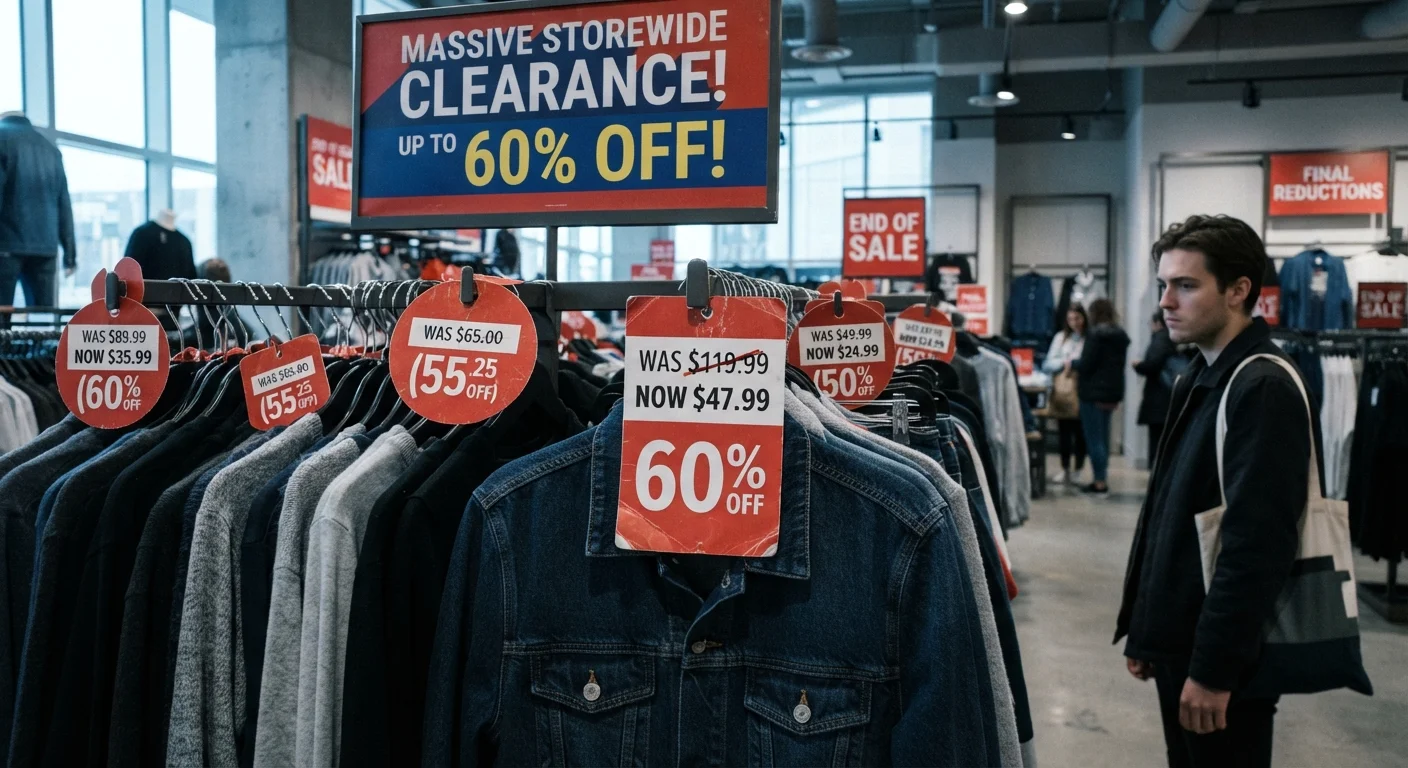
Walk through any retail store or browse an e-commerce site and you'll see it constantly: a price struck through in gray, with a bold lower number underneath. That struck-through figure is called a reference price — also known as a comparative price or anchor price — and it does one job: make the current price feel like a bargain.
The problem is that reference prices are largely self-reported by retailers. There's no universal standard requiring that a product actually sold at that higher price for any meaningful period before it can be advertised as "marked down." The Federal Trade Commission does provide general guidance that comparative pricing should be honest and not misleading, but enforcement is inconsistent, and the practices are widespread.
This is where anchoring bias — a well-documented cognitive tendency to rely heavily on the first number we see — works against shoppers. Once your brain registers "$199 original price," a tag reading $119 feels like a $80 victory, even if that item never meaningfully sold at $199 and its real market value is closer to $100. For a deeper look at how retailers construct these mental traps, see how psychological pricing tactics work.
~40%
Items sold primarily on promotion in some retail categories
Research on grocery and consumer goods pricing has found that a substantial share of items in certain categories spend more time at a "sale" price than at the stated regular price, raising questions about what the true baseline price actually is.
3x
Influence of anchor price on perceived value
Behavioral economics research consistently demonstrates that an initial price anchor can shift consumers' willingness to pay by a factor of two to three times compared to seeing only the final price.
Common Mistakes Shoppers Make Around Sale Pricing
Knowing that these tactics exist isn't enough — the mistakes below happen even to informed consumers, because the psychological pull is real and the cues are designed to trigger fast, emotional decisions.
Accepting the "original" price as real without verification.
Why it happens: Retailers display reference prices prominently and consumers rarely question whether those prices reflect actual transaction history. The visual formatting — a crossed-out number next to a bold lower one — is intuitively read as evidence of a genuine reduction.
Assuming a perpetual sale is a limited-time event.
Why it happens: Urgency language like "sale ends soon" or a countdown timer triggers loss aversion — the fear of missing out overrides rational evaluation. Many of these "limited" sales reset immediately or run indefinitely.
Conflating a large discount percentage with a large dollar saving.
Why it happens: Percentage framing is psychologically compelling — "60% off" feels enormous regardless of the dollar amount involved. Retailers frequently apply high percentage claims to low-cost items where the absolute saving is negligible.
Buying something unnecessary because it's on sale.
Why it happens: A discount reframes a purchase as an opportunity rather than a cost. The mental accounting shifts from "am I spending money?" to "am I saving money?" — making a net expense feel like a gain.
Ignoring total cost by focusing only on the sticker discount.
Why it happens: Sale pricing draws attention to the front-end number and away from downstream costs — shipping, accessories required, shorter lifespan, or energy consumption that erodes the apparent saving over time.
What You Can Actually Do About It
Cutting through manufactured discounts requires a small shift in habit, not heroic willpower.
- Track prices before you need to buy. Browser extensions and price-history tools log the actual price trajectory of a product over weeks or months. If the "original" price only appeared briefly before a sale launched, that's a red flag.
- Compare unit prices, not package prices. A sale on a large bundle is only real if the cost per unit is lower than alternatives. Understanding unit price math is the fastest way to verify whether a deal holds up.
- Search the item independently. A quick search of the product name outside the retailer's site shows you what other sellers charge. That's the closest thing to a real market price you'll find without specialized tools.
- Ignore the percentage, focus on the price. "50% off" is a compelling claim, but 50% off an inflated anchor price can still be more expensive than the same item elsewhere at full price.
Artificial Markups Are a Documented Practice
Regulators in the U.S. and other markets have taken action against retailers for advertising inflated reference prices that products never genuinely sold at. While rules vary by state and retailer, the practice of setting a fictitiously high "original" price to amplify a discount's apparent size is neither rare nor illegal everywhere. Treat any reference price as a claim to be verified, not a fact to be accepted.
For a broader look at how sale prices interact with actual product quality, price isn't a reliable quality signal — and that applies in both directions. A sale doesn't confirm poor quality, but it doesn't confirm value either. The Smart Shopping hub has practical guidance across these related decisions.
This article is for general consumer education purposes only. Price regulations vary by region and retailer; consult applicable consumer protection resources in your area for guidance specific to your situation.