

Key Takeaways
Why the Ingredient List Is the Most Honest Part of the Package
The front of a product package is marketing. The ingredient list on the back is law. In the United States, most packaged goods — food, cosmetics, and personal care products — are required by federal regulation to disclose their ingredients. Unlike the claims on the front panel, ingredient lists follow structured rules that, once you understand them, make the label far more readable than it first appears.
Learning to read ingredient lists is one of the most practical consumer skills you can develop. It lets you verify whether a product actually contains the ingredients it's being sold on, estimate how much of a key ingredient is present, and spot additives you may want to avoid. For a deeper look at how marketing language relates (or doesn't) to what's actually inside, see our guide on what buzzwords like 'natural' and 'clean' actually signal.
What you will need
How to Read an Ingredient List Step by Step
The steps below apply broadly to food, personal care, and cosmetic products sold in the U.S. Some categories — like over-the-counter drugs — have additional labeling requirements not covered here.
Start at the top — identify the dominant ingredients
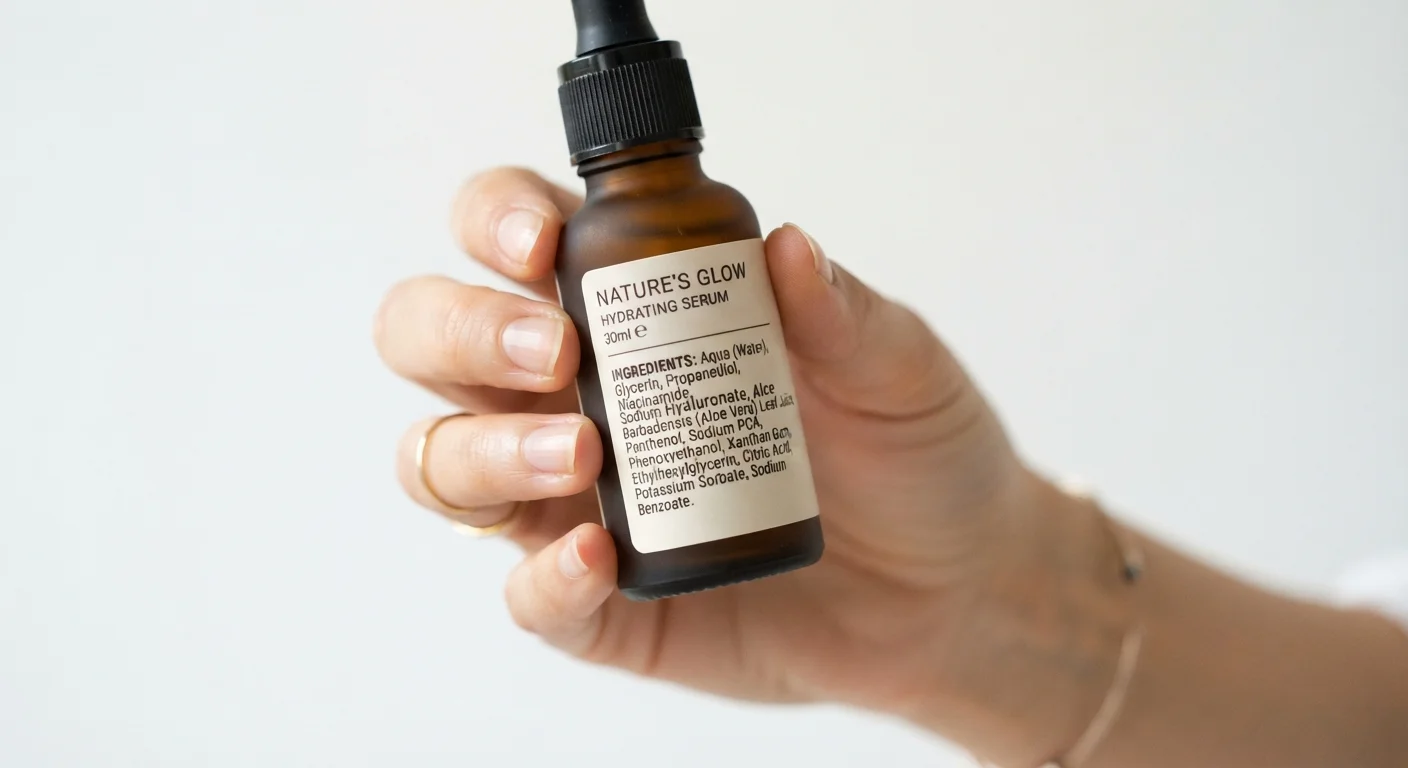
Ingredients are listed in descending order by weight at the time of manufacture. The first three to five ingredients typically make up the majority of the product. In a moisturizer, if water and glycerin are first and second, you know the formula is primarily water-based with a humectant base. In a food product, if sugar appears first, it outweighs every other ingredient.
Identify what the product is actually built around
Ask yourself: what is the primary ingredient this product is supposed to deliver? If you're buying a protein bar, look at where the protein source (whey, pea protein, egg white) falls in the list. If it appears after multiple sweeteners and fillers, the formula may not be as protein-forward as the front panel suggests. The same logic applies to a serum claiming to feature vitamin C — look for its listed form (ascorbic acid, sodium ascorbyl phosphate, etc.) and where it falls relative to other ingredients.
Learn common aliases for ingredients you're tracking
If you're monitoring intake of added sugars, sodium, or a specific allergen, you need to know its aliases. The FDA requires major food allergens to be disclosed clearly (either in the ingredient list or a separate 'Contains' statement), but other ingredients may go by technical or trade names. Keeping a short personal reference list of aliases for ingredients that matter to your household makes this step faster over time.
Note preservatives, stabilizers, and functional additives
Ingredients like emulsifiers, pH adjusters, thickeners, and preservatives keep products stable and safe. They're not inherently harmful — many perform important functions. Identify which additives are present and, if any concern you, look them up using a reliable regulatory or scientific source rather than relying on marketing-driven 'ingredient fear' lists, which often lack concentration context.
Cross-reference with the front-panel claims
Once you've read the ingredient list, look back at the front of the package. Does the ingredient being promoted appear in a meaningful position on the list? Is the claim 'made with real fruit' supported by fruit appearing in the first few ingredients, or is it a minor addition listed near the end? This final comparison is where ingredient literacy pays off most directly — it lets you verify whether a product delivers what it implies.
Length Doesn't Equal Danger
A long ingredient list isn't a red flag on its own. Some products require many components to achieve a specific texture, stability, or performance level. Focus on what the ingredients are and where they fall in the list, not how many there are. Short ingredient lists can also include problematic ingredients, and long ones can be entirely benign.
Common Pitfalls and What to Watch For
Even once you understand the ordering rules, a few labeling conventions can still trip you up.
Ingredient Aliases
A single ingredient can appear under many names. Sugar, for example, may be listed as sucrose, dextrose, maltose, evaporated cane juice, or fruit juice concentrate. When multiple forms appear separately, each ranks lower individually — even if their combined total would push them to the top of the list. This is a legal practice, not necessarily a deceptive one, but it's worth knowing.
The 1% Threshold in Cosmetics
In cosmetics, ingredients present at 1% or less can be listed in any order after those above 1% are listed in descending weight. Colorants can also be listed in any order at the end. This means a hero ingredient like retinol or niacinamide may appear near the bottom simply because it's used at a low concentration — which is often entirely appropriate for that ingredient. Our companion guide on reading a skincare ingredient list covers INCI naming conventions in detail.
Food Additive Sub-listings
In food products, compound ingredients (those made of multiple components, like a seasoning blend) must list their own sub-ingredients in parentheses. These sub-ingredients are ordered within the parentheses but don't reset the overall list position of the compound ingredient itself.
Don't Rely on Ingredient Lists for Allergen Safety Alone
While U.S. regulations require major allergen disclosure, manufacturing facilities may process multiple ingredients on shared equipment. 'May contain' or 'processed in a facility with' statements are voluntary and not standardized. If you have a serious food allergy, consult your healthcare provider and contact manufacturers directly for detailed information about their production practices.
For food products specifically, pairing your ingredient list reading with an understanding of the Nutrition Facts panel gives you a fuller picture — see our breakdown of the Nutrition Facts panel for that context.