

Key Takeaways
How Ingredient Lists Are Structured by Law
In the United States, cosmetic ingredient lists must follow guidelines set by the FDA. Ingredients are listed using INCI names — a globally standardized naming system that uses Latin botanical terms, chemical names, or anglicized names depending on the substance. Because INCI is international, Butyrospermum Parkii always means shea butter, regardless of which country manufactured the product.
The most important structural rule: ingredients appear in descending order by weight. The ingredient present in the greatest amount comes first; the one present in the smallest amount comes last — with one major exception. Any ingredient present at 1% or less may be listed in any order after the higher-concentration ingredients. This is why actives like retinol or niacinamide often appear near the bottom of a list even when they are genuinely effective — they work at very low concentrations.
For a broader look at how labeling rules shape everyday consumer products, see our guide to decoding ingredient lists.
What you will need
What to Actually Look For When You Scan a Label
Start at the top. The first five to seven ingredients typically make up the bulk — often 80–90% — of a formula by weight. Water (Aqua) leads most water-based products; emollients like dimethicone or cetyl alcohol dominate thicker creams. These are not "fillers" in a dismissive sense — they determine texture, stability, and how actives are delivered to the skin.
Next, locate your key actives. Knowing whether niacinamide, hyaluronic acid, or a peptide complex appears in the top third, middle, or tail of a list gives you a rough sense of its likely concentration — though "rough" is the operative word. Manufacturers are not required to disclose exact percentages unless the product makes a drug claim. Some brands voluntarily publish concentrations; most do not.
Finally, scan the bottom of the list for fragrance and its variants: parfum, aroma, or individual fragrance components like linalool and limonene. These are common skin sensitizers in some individuals. If you have reactive skin, understanding how fragrance is labeled is worth the extra step.
Preservatives Signal Stability, Not Harm
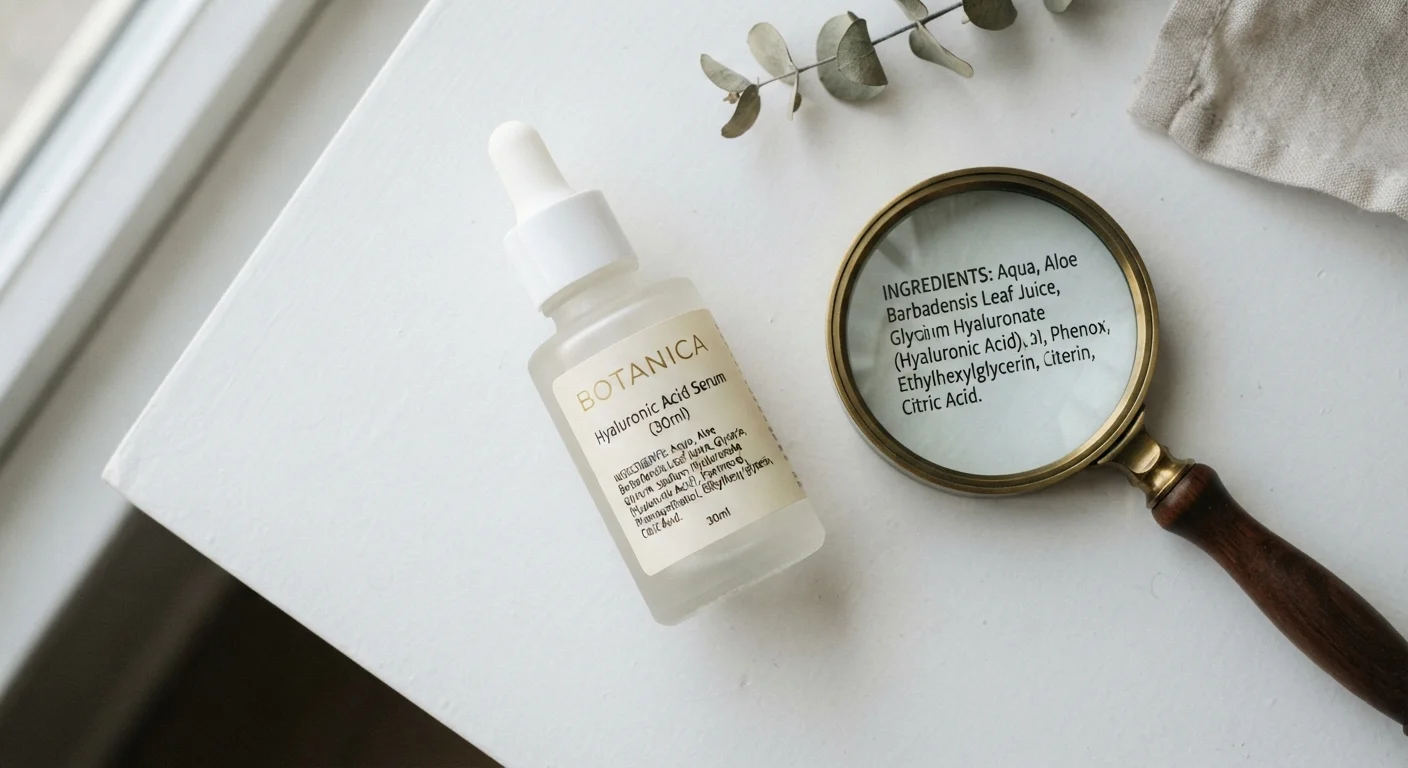
Ingredients like phenoxyethanol, ethylhexylglycerin, and sodium benzoate appear near the bottom of lists because they're effective at very low concentrations — not because they're afterthoughts. Preservatives prevent microbial growth and extend product safety. A product without any preservative system is not inherently cleaner; it may simply be less shelf-stable.
Step-by-Step: Reading a Label in Practice
Find the ingredient list — not the marketing copy
Flip the product to its back or bottom panel. The regulated ingredient list is separate from front-of-pack claims like "with hyaluronic acid" or "vitamin C brightening." Look for the word Ingredients: followed by a comma-separated list. This is the only section with legal accuracy requirements.
Identify the first five ingredients
Write down or photograph the first five ingredients. These represent the highest-concentration components and define the product's base formula. Common entries at this position include Aqua (water), glycerin, cyclopentasiloxane (a lightweight silicone), or fatty alcohols like cetearyl alcohol. Understanding what these do tells you whether the formula is water-based, oil-rich, or silicone-forward — which matters for product layering order.
Locate your target actives and note their position
Search for the specific ingredients you're seeking — peptides, AHAs, antioxidants, etc. Their position in the list gives a directional signal about concentration. An active appearing in the top third is likely present at a meaningful level; one appearing after preservatives (like phenoxyethanol) is almost certainly below 1%. This doesn't mean it's ineffective — some actives, like retinol, function at fractions of a percent — but it calibrates expectations.
Check for fragrance and known sensitizers
Scan for parfum, fragrance, or aroma — all umbrella terms that can represent a blend of many undisclosed aromatic compounds. Also look for individual fragrance allergens that must be disclosed at certain concentrations under EU rules (and are increasingly disclosed voluntarily in the US): linalool, limonene, geraniol, citronellol, and others. If your skin is prone to sensitivity, these are worth flagging even if they appear at the very end of the list.
Use your skin type and condition as a filter
Apply what you find to your own context. An ingredient list is neutral data — what matters is whether the formula suits your skin. A long ingredient list isn't inherently problematic, and a short one isn't automatically cleaner or safer. Evaluate based on what your skin currently needs. For guidance on how skin type and condition shape ingredient choices, see how skin type differs from skin condition.
Once you've worked through the label, cross-reference your findings with what you know about your own skin. If you're unsure whether your routine gaps are about missing ingredients or mismatched product types, auditing your current skincare routine is a practical next step. And before layering multiple actives, check which ingredient combinations to approach carefully.
This article provides general educational information about cosmetic labeling and is not a substitute for advice from a licensed dermatologist or healthcare professional. If you have a skin condition or concerns about a specific ingredient, consult a qualified provider.