

Key Takeaways
Smart Home Ecosystem
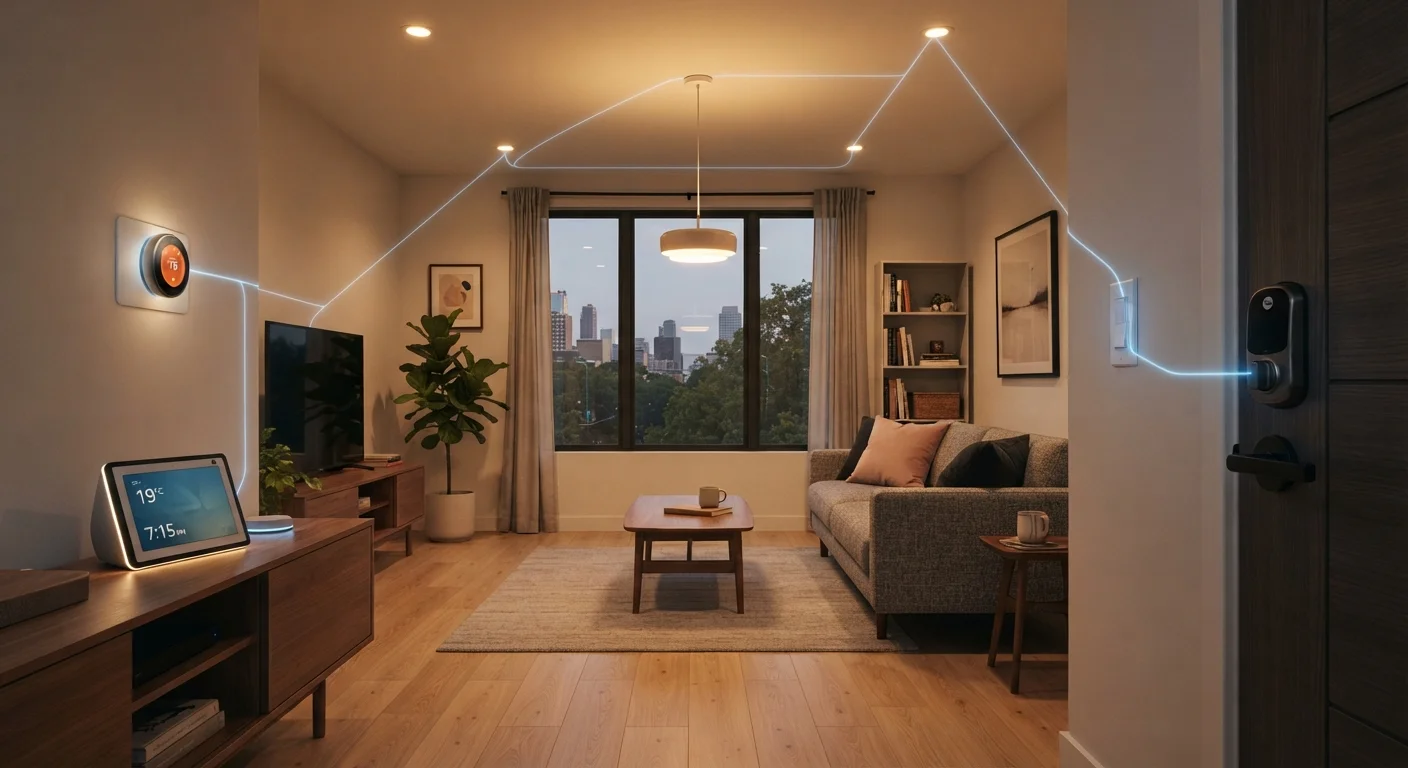
A smart home ecosystem is a collection of connected devices — lights, thermostats, locks, cameras, and more — that share a common platform or communication standard so they can interact with each other. When devices are part of the same ecosystem, one action can trigger another automatically, without manual input. The ecosystem is typically managed through a single app, voice assistant, or smart hub.
Ecosystems rely on shared communication protocols (such as Wi-Fi, Zigbee, Z-Wave, or the newer Matter standard) that allow devices from different manufacturers to exchange data through a central controller or cloud service.
The Difference Between 'Smart' and 'Connected'
A device can be 'smart' without being truly connected to anything else. A Wi-Fi-enabled bulb that you control from your phone is smart in a narrow sense — it responds to commands remotely. But if it can't communicate with your thermostat, your door lock, or your voice assistant, it's operating as an island. The real value of a smart home ecosystem comes from devices that respond to each other — not just to your manual input.
This distinction matters because many consumers buy individual smart devices expecting them to integrate automatically, only to find they need separate apps and can't be grouped into shared automations. True ecosystem integration means a single action — arriving home, saying a wake phrase, or a scheduled time — can trigger a coordinated response across multiple devices simultaneously.
For a grounded look at what smart home devices actually deliver day-to-day, see our balanced overview of smart home trade-offs.
How Ecosystems Are Structured
Most smart home ecosystems are organized around a central platform — usually tied to a voice assistant or a dedicated smart home hub. The platform acts as the coordinator: it receives input from one device and relays instructions to others. Devices that are certified for or compatible with that platform can participate; those that aren't, can't.
Communication between devices happens through protocols — essentially shared languages. The most common ones include:
- Wi-Fi: Widely supported and doesn't require a hub, but can strain your home network with many devices.
- Zigbee and Z-Wave: Low-power mesh protocols designed for smart home use. They require a compatible hub but are reliable and efficient.
- Bluetooth: Short-range, useful for local control but limited for whole-home automation.
- Matter: A newer, cross-industry standard designed to let devices from different brands work together regardless of which voice assistant platform you use.
Matter Doesn't Mean 'Works With Everything'
The Matter standard significantly improves cross-brand compatibility, but it covers specific device categories and requires that both the device and the hub or platform also support Matter. Always check the product's specifications page rather than relying on packaging alone — certification logos vary in what they actually guarantee.
Understanding these protocols also informs how smart speakers fit into your setup. Our explainer on how smart speakers actually work covers the role of voice assistants in coordinating connected devices.
Why Compatibility Breaks Down in Practice
Compatibility problems are among the most common frustrations for people building a smart home. A device may claim to work with a major platform, but the depth of that integration varies. Some devices offer only basic on/off control through a platform, while others expose their full feature set — temperature readings, energy data, sensor states — to automation routines.
Brands also change platform support over time. A device that worked with a particular ecosystem at launch may lose that integration if the manufacturer updates its firmware or changes its business direction. This is one reason why checking whether a device supports open or industry-wide standards — rather than a proprietary API — matters for long-term reliability.
300+
Device types certified under the Matter standard
The Connectivity Standards Alliance reported broad device-category coverage for Matter as adoption expanded through major platform providers.
57%
U.S. households with at least one smart home device
According to Statista consumer research, smart home device ownership in U.S. households has grown steadily through the early 2020s.
3+
Average separate apps used by multi-device smart home owners
Industry surveys have consistently found that consumers with multiple smart home devices frequently manage them through more than one app due to ecosystem fragmentation.
Before adding any new device to your home, our pre-purchase compatibility checklist walks through exactly what to verify.
Building a Coherent Setup Without Starting Over
For most households, the practical path to a functional smart home ecosystem isn't to rebuild everything at once — it's to choose a platform anchor first, then add devices that are verified compatible with it. That anchor is typically the voice assistant or hub you already own or are most likely to use.
From there, the key is consistency: buying devices that carry the same compatibility certifications, or that explicitly support the Matter standard, reduces the risk of integration failures. If you already have devices using different protocols, a capable smart home hub can bridge them — but this adds a layer of configuration that not everyone wants to manage.
Choose a Platform Anchor Before You Buy
Before purchasing any smart home device, decide which platform or voice assistant will serve as your central hub. Then filter your device choices to those explicitly certified for that platform — or those carrying Matter certification for broader flexibility. This single step prevents the most common compatibility headaches.
If you're new to connected home technology entirely, the starter guide for non-tech households explains where to begin without overcomplicating the process. And if you want to understand how data syncing between devices can sometimes work against you, our explainer on syncing covers that dynamic clearly.