

Key Takeaways
Capsule Wardrobe
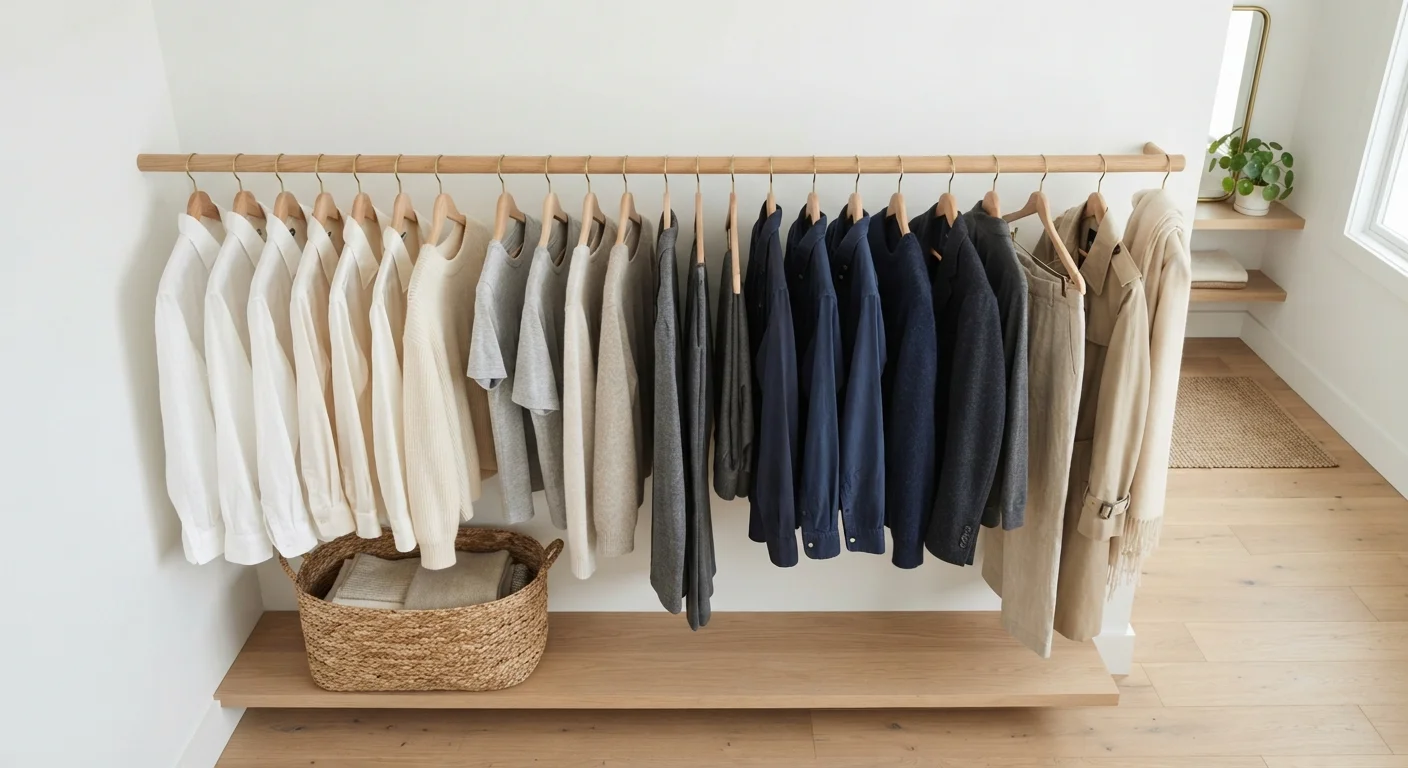
A capsule wardrobe is a deliberately small, curated collection of clothing items that work well together and cover most of your everyday needs. The idea is to own fewer pieces — each chosen for versatility and fit — so that nearly everything in your closet can be combined with everything else. Rather than chasing trends, a capsule wardrobe is built around consistent use and longevity.
The concept was popularized by London boutique owner Susie Faux in the 1970s and later brought to mainstream attention by designer Donna Karan's 'Seven Easy Pieces' collection in 1985.
Where the Concept Comes From
The term "capsule wardrobe" was coined by Susie Faux, owner of a London boutique called Wardrobe, in the 1970s. Her idea was straightforward: a small collection of timeless, well-made pieces that could be supplemented seasonally. The concept gained wider traction when Donna Karan introduced her "Seven Easy Pieces" concept in 1985 — a workable system of interchangeable essentials designed for busy professional women.
Since then, the capsule wardrobe has been reinterpreted endlessly. Minimalist bloggers, sustainability advocates, and personal stylists have all claimed it, sometimes pulling the concept in very different directions. What remains consistent across all versions is the core premise: fewer, better-chosen clothes that do more work.
“A capsule wardrobe is not about having less for its own sake. It's about having exactly what you need, in a form that actually serves you.”
— Susie Faux, Founder of Wardrobe boutique, London; originator of the capsule wardrobe concept
The Principles That Make It Work
A capsule wardrobe isn't just a small closet. It's a closet built around a set of deliberate rules:
- Every piece earns its place. If an item only pairs with one or two other things, it's not a capsule staple — it's a specialty item. True capsule pieces work across multiple combinations.
- Fit is non-negotiable. A well-fitting basic will always look more intentional than a fashionable piece that doesn't fit your body well. The basics of fit matter more than the label or the price tag.
- Color coherence matters. Most effective capsule wardrobes are built on a consistent palette — usually neutrals like white, navy, gray, and black — that allows free mixing without clashes.
- Durability over novelty. Capsule pieces are chosen to last through repeated wear and washing, not to reflect the latest trend cycle.
The Three-Outfit Test
Before adding any item to your wardrobe, try to mentally style it into three distinct outfits using only what you already own. If you can't get to three, the piece is likely too narrow in its application to earn capsule status. This simple filter eliminates a large percentage of impulse purchases before they happen.
These aren't rigid rules, but they are useful filters. When evaluating a potential purchase, ask: does this work with at least three things I already own? If the answer is no, it probably belongs in a different category.
What a Capsule Wardrobe Actually Contains
The specific items vary by person, climate, and lifestyle, but most capsule wardrobes share a common structure. Typical categories include:
- A few well-fitting bottoms in neutral colors — usually including dark jeans, trousers, and one casual option
- Tops in solid colors or simple patterns that layer easily
- At least one structured layer — a blazer, cardigan, or jacket — that elevates other pieces
- Versatile footwear that transitions between contexts (casual, semi-formal)
- One or two occasion-appropriate items for events outside your usual routine
The goal isn't to own only these categories. It's to ensure these categories are covered reliably so you're never opening your closet and feeling like you have nothing to wear.
20%
Clothes worn regularly by average person
Research frequently cited in sustainable fashion discussions suggests most people wear roughly 20% of their wardrobe 80% of the time, leaving the majority of owned clothing rarely used.
~60%
Increase in garment production since 2000
According to the Ellen MacArthur Foundation's 2017 report on the circular economy in fashion, global clothing production approximately doubled between 2000 and 2015.
If you're building a wardrobe from scratch, starting with capsule thinking from the beginning saves both money and decision fatigue later.
How to Know If It's Right for You
A capsule wardrobe works best for people who want to reduce daily friction around getting dressed, spend less on impulse purchases, and feel consistently presentable without maintaining a large or complex closet. It also aligns well with financial intentionality — buying fewer, more durable pieces is a form of practical budgeting applied to your wardrobe.
It's not a perfect fit for everyone. People with highly varied professional and social demands — say, formal business attire one day, outdoor gear the next — may need more category depth than a strict capsule allows. And creative dressers who use clothing as genuine self-expression may find the constraints frustrating.
For most people, though, the capsule framework is a useful default: a set of reliable pieces that handle 80–90% of your daily life, with room to add specific items when your lifestyle genuinely requires them. If you're not sure where to begin, a wardrobe audit is a practical first step — it shows you what you actually wear, which is the foundation of any capsule worth building.
For those who want low-effort style without developing a deep interest in fashion, everyday dressing guidance and capsule thinking work hand in hand.