

Key Takeaways
Start here
Why You Don't Need to Care About Fashion to Dress Well
Next
The Core Principles That Do the Heavy Lifting
Then
The Pieces Worth Having
Apply it
Getting Dressed Without Overthinking It
Refine
Common Mistakes That Undermine an Otherwise Fine Outfit
Why You Don't Need to Care About Fashion to Dress Well
Fashion and dressing well are not the same thing. Fashion is an industry, a culture, and for many people a genuine hobby. Dressing well — meaning you look appropriate, reasonably put-together, and comfortable in your own clothes — is a practical skill that anyone can acquire without developing any particular interest in style.
This guide is for people who just want to get dressed without making it a project. If you've ever stood in front of a closet full of clothes and felt stuck, or bought things that never quite worked, or worn the same rotation of items out of default rather than choice, these fundamentals will help you spend less mental energy on clothing while looking consistently fine.
Fit
How well a garment conforms to your body's actual shape and proportions — not too tight, not too loose, with seams and hems sitting where they should.
Neutral palette
A set of colors — typically white, grey, navy, black, tan, and brown — that tend to work together and with most other colors without clashing.
Capsule wardrobe
A deliberately small collection of clothing where every piece works with most other pieces, reducing decisions while covering everyday needs.
Formality level
How dressed-up or casual a garment reads. Mixing items from very different formality levels — like a dress shirt with athletic shorts — creates visual incoherence.
Pilling
Small balls of fiber that form on the surface of fabric through wear and friction, making clothing look worn and aged even if it's otherwise functional.
The Core Principles That Do the Heavy Lifting
Most of what determines whether an outfit looks good comes down to three things:
- Fit. Clothes should follow the shape of your body without pulling tight or hanging loose. Shoulders should sit at your actual shoulder line. Pants shouldn't bunch at the crotch or drag on the ground. This one principle, applied consistently, does more than any trend or brand.
- Condition. A clean, unwrinkled, lint-free garment with no visible pilling or fading reads as intentional. Worn-out clothing signals neglect regardless of its original quality. Washing properly, air-drying when appropriate, and folding or hanging clothes extend their life significantly.
- Coherence. An outfit doesn't need to be interesting — it needs to look like it belongs together. Items in similar color families or consistent tones tend to work without much thought. When everything is roughly the same level of casual or dressed-up, the result feels intentional.
These three principles apply universally across body types, budgets, and occasions. The wardrobe essentials that earn their space guide explores which specific items best embody these qualities.
The Simplest Upgrade: Better Fit
If you can only act on one thing, focus on fit. Many tailors offer basic alterations — hemming pants, taking in a waist — at modest cost. A garment altered to fit your specific body will always look more intentional than an expensive one worn as-is off the rack.
The Pieces Worth Having
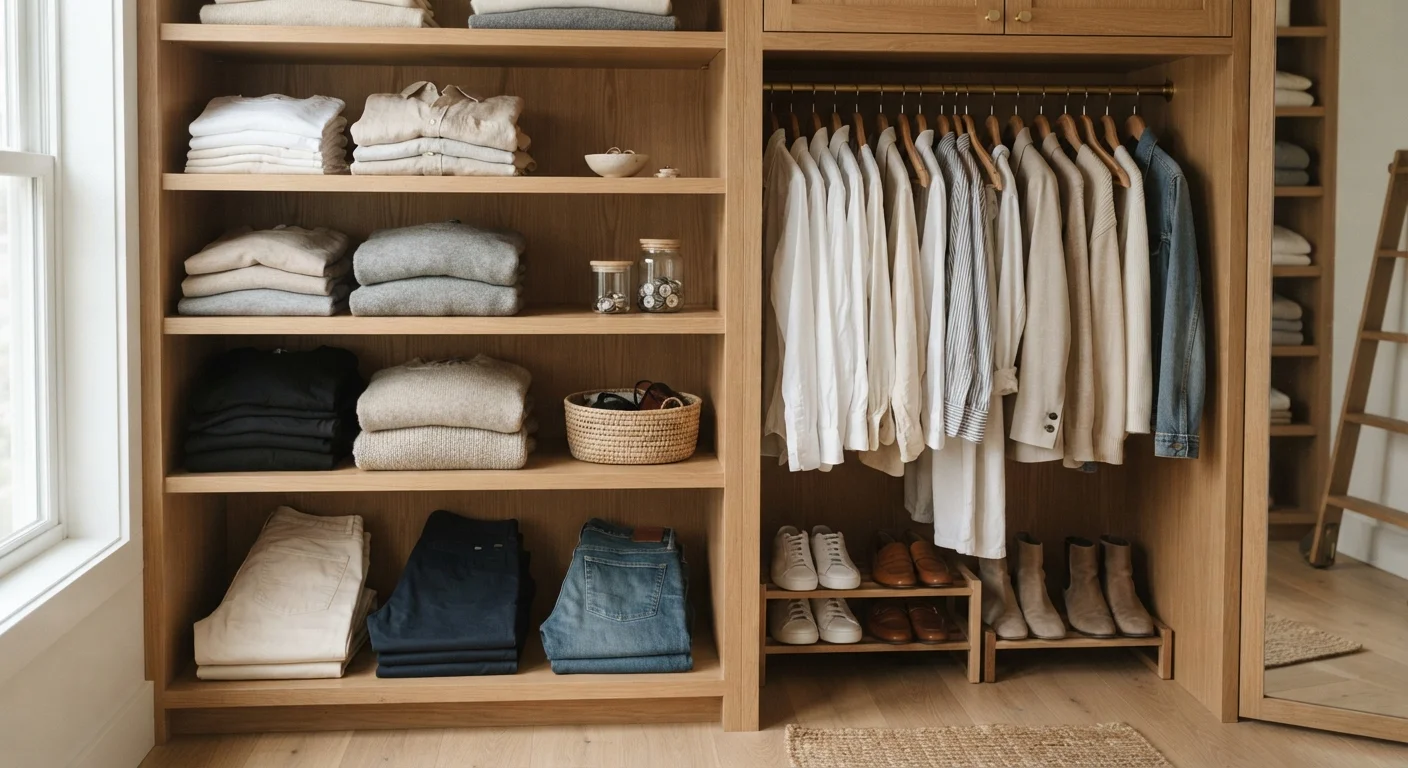
You don't need many clothes — you need the right ones for your actual life. A small set of reliable basics covers most everyday situations without requiring active thought. Consider anchoring your wardrobe around:
- Well-fitting pants or chinos in a neutral (navy, khaki, grey, or black)
- Plain or simply patterned tops in neutral tones — white, grey, navy, or earth tones
- A layer that works for transitions — a simple cardigan, zip fleece, or unstructured jacket
- Clean, simple footwear in one or two neutral colors that don't clash with most outfits
- One slightly more put-together option for occasions that call for it
The goal isn't a fashion-forward wardrobe. It's a functional one. The concept behind a capsule wardrobe — small, versatile, interchangeable — is useful here even if you don't adopt the label. If you're starting from scratch, our guide to building a wardrobe from scratch walks through a practical starting point.
Getting Dressed Without Overthinking It
The easiest way to reduce decision fatigue around clothes is to default to a reliable formula. A simple one: one bottom, one top, one layer if needed, footwear that doesn't draw attention. Within a neutral palette, most combinations work automatically.
If you're unsure whether something is appropriate for an occasion, lean slightly more formal. Being slightly overdressed is almost always easier to recover from socially than being visibly underdressed. For a clearer breakdown of where the dress code lines fall, see where casual and smart-casual actually differ.
Before buying anything new, it's also worth doing a realistic assessment of what you already own. A wardrobe audit helps you identify what's actually working, what isn't, and what gaps are worth filling versus what purchases were mistakes. Buying fewer things with more intention is nearly always more effective than shopping volume — see buying fewer clothes and getting more from them for practical strategies.
Shopping Thoughtfully Matters Too
How you shop is part of how a wardrobe works. Buying things that don't coordinate with what you already own, or impulse-purchasing because something is marked down, leads to closets full of items that never get worn. The smart shopping hub covers practical guidance for evaluating everyday purchases before you commit.
Common Mistakes That Undermine an Otherwise Fine Outfit
Even a simple wardrobe can be undercut by a few consistent errors worth knowing about:
- Wearing clothes that no longer fit
- Bodies change. Clothes that once fit well may now pull, bag, or sit oddly. Ill-fitting clothing is the fastest way to look less put-together, even if the item is otherwise fine.
- Ignoring garment condition
- Pilling, fading, stretched necklines, and unraveling hems signal wear. Retiring or replacing items before they visibly deteriorate keeps everything looking intentional.
- Mismatched formality levels
- Pairing a very formal item (a dress shirt) with a very casual one (worn-in athletic shorts) creates incoherence. Keeping items at roughly the same register of casual or dressed-up avoids this without requiring style knowledge.
- Footwear that clashes or dominates
- Shoes in a neutral that doesn't fight the rest of the outfit rarely cause problems. Very loud or very worn footwear draws attention in ways that can undermine an otherwise clean look.
None of these require fashion knowledge to address — they're maintenance and coherence issues, both of which are fully within reach regardless of interest level.
Avoid Buying for the Occasion You Wish You Had
A common wardrobe mistake is purchasing items for an idealized version of your life rather than your actual daily context. Clothes that don't match your real routine don't get worn, don't justify their cost, and add clutter. Build around where you actually go and what you actually do.