

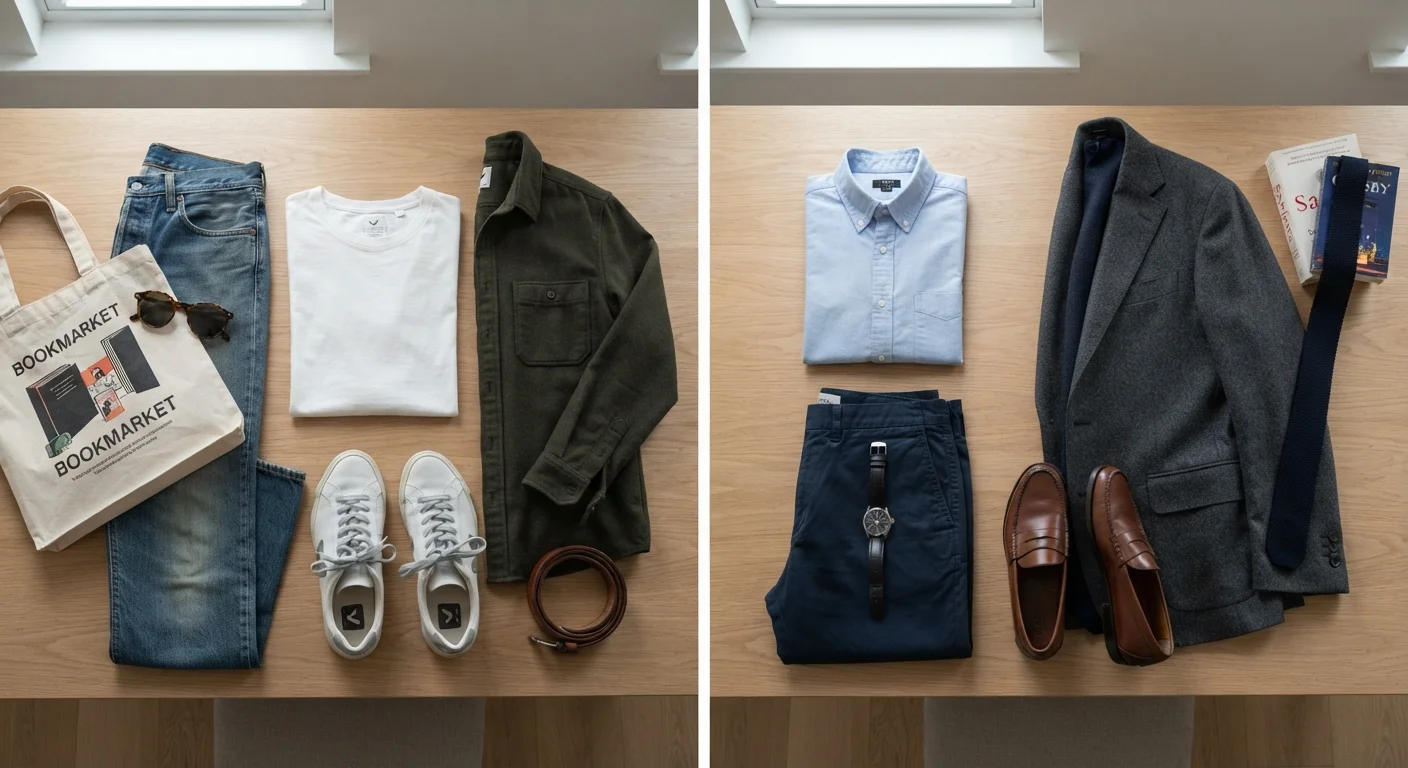
Key Takeaways
Option A
Casual Dress
The relaxed, comfort-first everyday default.
Best for: Off-duty days, informal social settings, weekends, and anywhere with no dress expectations.
Option B
Smart-Casual Dress
The polished-but-approachable middle ground.
Best for: Dinner out, casual Fridays with a client component, social events where effort is expected but formality isn't.
If you're heading to a backyard barbecue or running weekend errands
Casual Dress
No dress code expectation exists in these contexts. Comfort and practicality should lead your choices.
If you're attending a dinner party, casual office event, or first date at a mid-range restaurant
Smart-Casual Dress
These settings reward visible effort. A single polished element — a clean blazer, structured shoes, or tailored trousers — signals you dressed with intention.
If the invitation just says 'casual' but the venue feels upscale
Smart-Casual Dress
When in doubt, err toward the elevated option. Smart-casual reads as appropriate in nearly any casual-coded setting.
If you're working from home or spending the day indoors with no social commitments
Casual Dress
Casual dress serves its purpose perfectly here — comfort without compromise.
Why These Two Codes Get Confused
"Casual" and "smart-casual" appear on invitations, dress code guides, and HR handbooks with a confidence they don't always deserve. Both sit below business casual on the formality spectrum, and both allow more flexibility than formal dress — which is exactly what makes them easy to conflate. The confusion usually costs people in one direction: underdressing for something that called for a little more effort, or overthinking a genuinely relaxed setting.
The real gap between the two isn't dramatic. It comes down to intentionality. Casual dress says, I dressed for comfort. Smart-casual says, I dressed for this occasion. That shift in framing changes what you reach for.
For a broader map of the full dress code landscape, see our Dress Codes Decoded guide, which places both codes in context alongside formal and semi-formal options.
What Casual Actually Means
True casual dress has almost no rules — which is also why it's hard to define. Jeans, t-shirts, sneakers, hoodies, and athletic-adjacent clothing all qualify. Fit is relaxed, fabric choices favor comfort, and coordination is optional rather than expected. The standard is: you covered yourself appropriately for the setting.
Where people sometimes go wrong is assuming that "casual" means anything goes, including visibly worn, stained, or ill-fitting clothing. The code is relaxed, not absent. In most real-world contexts, casual still means clean, seasonally appropriate, and reasonably put-together — just without any expectation of polish or elevation.
| Criterion | Casual | Smart-Casual |
|---|---|---|
| Primary goal | Comfort and ease | Polished but approachable |
| Typical bottoms | Relaxed jeans, joggers, shorts | Chinos, dark-wash jeans, tailored trousers |
| Typical tops | T-shirts, hoodies, sweatshirts | Button-downs, knit sweaters, neat blouses |
| Footwear | Sneakers, sandals, slip-ons | Loafers, ankle boots, structured flats |
| Layering | Optional, casual (zip-ups, denim jackets) | Structured — blazer, tailored jacket, fitted cardigan |
| Fit expectation | Relaxed; comfort-first | Intentional; clothes should fit well |
| Appropriate settings | Weekends, errands, home, casual social | Dinner out, casual office, semi-social events |
If you want a foundation for effortless casual dressing, our guide to everyday dressing covers the practical basics without overcomplicating it.
What Smart-Casual Actually Requires
Smart-casual is more specific than it sounds. The "smart" part is the operative word: it implies a degree of sharpness or polish layered over an otherwise casual foundation. Think of it as casual with at least one deliberate upgrade.
In practice, that upgrade often comes from one of three places:
- Fit: A well-fitting chino or trouser in place of relaxed jeans. A fitted knit sweater rather than an oversized hoodie.
- Footwear: Leather loafers, clean suede boots, or structured flats instead of athletic sneakers or flip-flops.
- Layering: A blazer, structured jacket, or tailored cardigan that adds visual intention to an otherwise simple outfit.
You don't need all three simultaneously. One or two elevated elements are usually enough to shift a casual outfit into smart-casual territory. The goal isn't formality — it's evidence of effort.
1 element
Minimum upgrade needed for smart-casual
Style educators generally agree that elevating just one component — fit, footwear, or layering — is enough to shift a look from casual to smart-casual.
3 in 4
Adults uncertain about dress code expectations
Surveys on workplace dress codes consistently show most people find casual and smart-casual the hardest categories to interpret correctly.
Smart-casual also tends to be more fabric-conscious. Structured wovens, ponte, denim in darker washes, and knit fabrics that hold their shape all read as more polished than jersey or athletic mesh. That said, these are tendencies, not rules — a perfectly tailored jersey piece can absolutely qualify.
Reading the Room: Which Code Is Actually Being Asked For
When a dress code isn't labeled explicitly, context is your decoder. A few reliable signals:
- The venue: A rooftop restaurant typically implies smart-casual; a friend's apartment doesn't.
- The occasion: A celebration of any kind (birthday dinner, work anniversary, date night) nudges toward smart-casual. A casual hangout or errand run doesn't.
- The host: If the person inviting you tends to dress with intention, match their energy.
- The word "dinner": Dinner almost always implies slightly more effort than lunch, regardless of setting.
When genuinely uncertain, smart-casual is almost always the safer call. It reads as appropriate in casual settings while showing respect in slightly elevated ones. The reverse — showing up underdressed — is harder to recover from in the moment.
For more on navigating fashion decisions with confidence rather than anxiety, see our style rules worth keeping.
A Note on Dress Codes and Personal Style
Dress codes describe a level of formality, not a specific look. Within both casual and smart-casual, there's significant room for personal expression — through color, silhouette, cultural dress, and individual taste. The goal of understanding these codes is to dress appropriately for a context, not to conform to a single aesthetic. Once you know the floor, everything above it is yours to interpret.