
| Least Formal Code | Casual |
| Most Formal Code | White Tie |
| Most Common Professional Code | Business Casual |
| Evening Event Standard | Cocktail Attire |
| Tuxedo Required | Black Tie (and White Tie) |
| Safest Default When Unsure | Dress one level above your instinct |
Why Dress Codes Still Matter
Dress codes communicate expectations — they signal the formality of an event and help guests show respect for the occasion and the host. Knowing how to interpret them removes anxiety and lets you show up feeling confident rather than underdressed or conspicuous.
The terminology can feel slippery. "Business casual" means something different at a law firm than at a creative agency. "Smart casual" sits in an awkward middle ground that trips up even seasoned dressers. This guide cuts through the ambiguity and gives you a practical framework for each major level. For a deeper look at the two most commonly confused codes, see how casual and smart casual actually differ.
| Least Formal Code | Casual |
| Most Formal Code | White Tie |
| Most Common Professional Code | Business Casual |
| Evening Event Standard | Cocktail Attire |
| Tuxedo Required | Black Tie (and White Tie) |
| Safest Default When Unsure | Dress one level above your instinct |
The Dress Code Spectrum, Explained
Think of dress codes as a dial running from fully relaxed to fully formal. Each level has a clear logic once you understand what it's trying to achieve.
Casual
No-fuss everyday clothing — jeans, t-shirts, sneakers. Casual doesn't mean sloppy; clean, well-fitting pieces still matter. Reserve truly casual dressing for informal social settings where an invitation explicitly uses the word.
Smart Casual
A step up without crossing into formal territory. Think dark jeans or chinos, a collared shirt or fitted blouse, leather shoes or clean loafers. Avoid athletic wear, distressed denim, or flip-flops. This is the code most likely to cause confusion — when in doubt, err slightly more dressed-up.
Business Casual
The dominant dress code for modern professional environments. Slacks or tailored trousers, button-down shirts, blouses, blazers, and closed-toe shoes are all appropriate. Ties are optional. Jeans are situational — dark, unripped denim may pass in some workplaces, but classic trousers are safer for client-facing or interview settings.
Business Formal / Professional
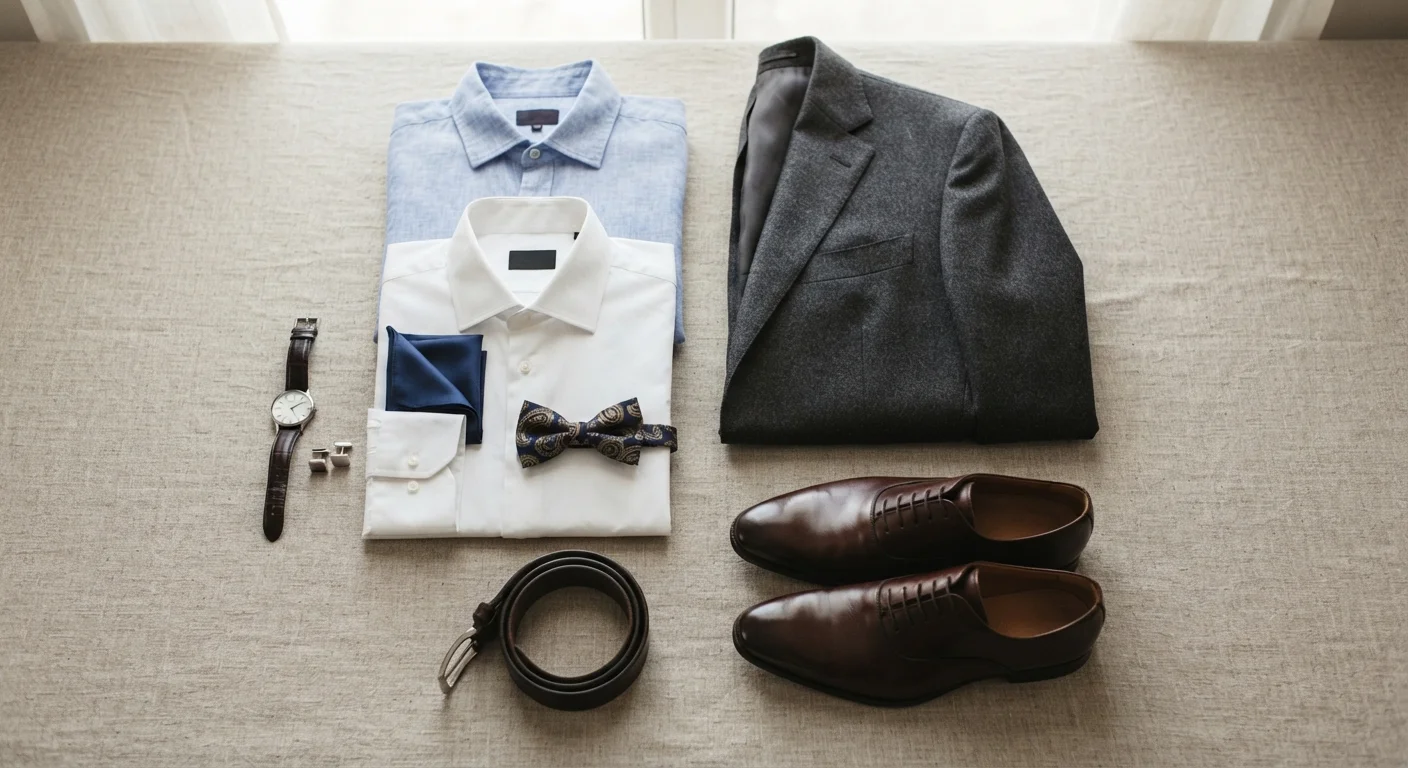
A step above business casual. Expect a full suit and tie for men; a tailored suit, dress, or pantsuit for women. Colors stay conservative — navy, charcoal, black, or dark grey. This code applies to job interviews, court appearances, executive meetings, and formal presentations.
Cocktail Attire
The go-to for evening events — holiday parties, fundraisers, wedding receptions. Knee-length or midi dresses, dressy separates, or a dark suit work well. Avoid floor-length gowns (too formal) and casual fabrics like jersey or denim (not formal enough).
Black Tie
One of the most clearly defined codes. Men traditionally wear a tuxedo with a white dress shirt, black bow tie, and black formal shoes. Women wear floor-length gowns or, increasingly, formal jumpsuits or elegant midi dresses. When an invitation says "black tie optional," a dark suit is acceptable but a tuxedo is still appropriate and appreciated.
White Tie
The most formal dress code in existence, reserved for state dinners, opera galas, and some awards ceremonies. Men wear tailcoats, white waistcoats, and white bow ties. Women wear full-length ball gowns. If you receive a white tie invitation, treat it as a strict instruction rather than a suggestion.
Black Tie Optional
An invitation designation indicating that a tuxedo is preferred but not required. A dark, well-fitted suit is acceptable; casual clothing is not.
Cocktail Attire
Semi-formal evening dress typically featuring knee-length to midi-length dresses or dark suits. It falls between business formal and black tie on the formality scale.
Smart Casual
A mid-range dress code bridging casual and business environments. It calls for polished, coordinated clothing without requiring formal business wear or a suit.
Business Casual
A professional dress code common in modern workplaces. It generally includes tailored trousers, blouses or collared shirts, and closed-toe shoes, without requiring a full suit and tie.
White Tie
The most formal Western dress code, requiring tailcoats and white bow ties for men, and full-length ball gowns for women. Reserved for the most prestigious events.
Practical Tips for Getting It Right
When the invitation is vague, a useful rule of thumb: go one level above what you'd default to. It is almost always easier to remove a blazer than to wish you'd worn one.
Fit matters at every level. A well-fitting suit from a modest price point will read more polished than an expensive one that hasn't been tailored. The same applies to casual clothes — clothing that fits your body communicates care and intentionality regardless of formality.
Accessories carry real weight in formal settings. At black tie events, the wrong shoes or a mismatched bag can undercut an otherwise correct outfit. When in doubt, keep accessories simple and cohesive.
Building a small wardrobe of versatile pieces makes navigating dress codes significantly easier. A few well-chosen staples — a dark blazer, tailored trousers, a classic dress — cover a wide range of situations. For a practical starting point, see wardrobe essentials that work across occasions.
For a look at which broader style conventions are worth honoring and which you can safely skip, style rules worth keeping offers useful perspective.
When the Dress Code Isn't Listed
If an invitation doesn't specify a dress code, look at the venue, time of day, and nature of the event for clues. Evening events at upscale venues typically call for cocktail attire or above, while daytime outdoor gatherings lean smart casual or casual. When uncertain, it's always reasonable to contact the host directly — most people appreciate the consideration.