

Key Takeaways
Our Verdict
The 50/30/20 rule is an accessible starting point, but its fixed percentages don't account for high-cost-of-living areas, significant debt burdens, or irregular income. Zero-based budgeting offers more precision for detail-oriented planners, while the pay-yourself-first method works well for those who struggle with consistent saving. Choosing the right framework depends on your income stability, current debt obligations, and personal discipline style.
| Best for | Recommended |
|---|---|
| Those new to budgeting who want a simple, low-maintenance structure | 50/30/20 Rule |
| Detail-oriented individuals who want full control over every dollar | Zero-Based Budgeting |
| People who save inconsistently and want to automate good habits | Pay-Yourself-First |
| Those carrying significant debt who need to fast-track repayment | Debt-Priority Variation |
How the 50/30/20 Rule Works
The 50/30/20 rule, popularized by Senator Elizabeth Warren and her daughter Amelia Warren Tyagi in their book All Your Worth, proposes a straightforward division of your after-tax income: 50% toward needs, 30% toward wants, and 20% toward savings and debt repayment beyond minimums.
Needs include housing, utilities, groceries, insurance, and minimum debt payments. Wants cover dining out, entertainment, subscriptions, and non-essential spending. The remaining 20% is directed toward building an emergency fund, contributing to retirement accounts, or paying down debt faster.
The appeal is its simplicity. You don't need a spreadsheet with 40 categories — just three buckets. For someone building their first budget, that low barrier to entry matters. However, the framework assumes your essential expenses comfortably fit within half your income, which isn't realistic for everyone. In many high-cost cities, housing alone can consume 40% or more of take-home pay, leaving little room for the other categories.
Key Alternatives to the 50/30/20 Framework
Several well-established budgeting methods address gaps that the 50/30/20 rule leaves open. Understanding each one helps you select — or blend — an approach that fits your actual financial picture.
Zero-Based Budgeting
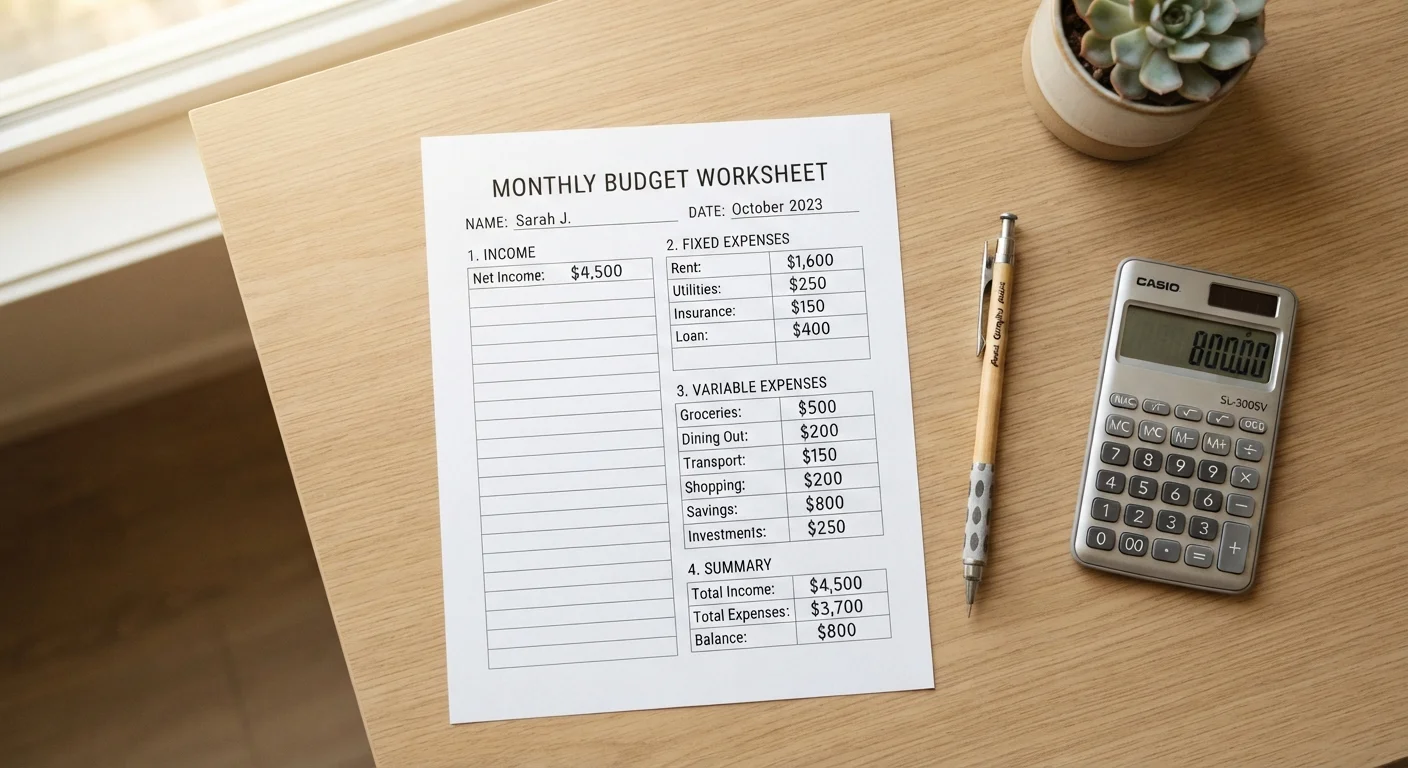
Every dollar of income is assigned a specific purpose, so income minus expenses equals zero at month's end. You're not spending every dollar — you're accounting for every dollar, including savings transfers and debt payments. This method demands more time but produces a detailed picture of spending patterns. It's particularly effective for people who feel money "disappears" between paychecks. See a direct comparison of zero-based budgeting and the 50/30/20 rule for a deeper side-by-side analysis.
Pay-Yourself-First
Before any discretionary spending occurs, a fixed amount is automatically transferred to savings or an investment account on payday. The remainder covers all expenses. This approach prioritizes wealth-building and relies on automation to remove the temptation to spend first and save whatever is left.
Debt-Priority Variation
For households carrying high-interest debt, a modified structure shifts the savings percentage toward aggressive repayment. For example, a 50/20/30 split — where 20% targets debt reduction and only 30% goes to wants — can meaningfully accelerate payoff timelines. Once debt is cleared, the freed-up percentage redirects to savings.
| 50/30/20 Rule | Zero-Based Budgeting | Pay-Yourself-First | Debt-Priority Variation | |
|---|---|---|---|---|
| Complexity | Low — three categories | High — every dollar assigned | Low — automate savings first | Medium — modified percentages |
| Best income type | Stable, salaried | Variable or irregular | Any income type | Stable with debt burden |
| Savings focus | 20% to savings/debt | Explicit savings line item | Savings happens first | Reduced until debt cleared |
| Debt repayment priority | Moderate | Customizable | Low by default | High — core focus |
| Time commitment | Minimal | Significant monthly effort | Minimal after setup | Moderate |
| Flexibility | Limited by fixed % | Highly flexible | Flexible after savings | Adapts as debt reduces |
Which Method Fits Your Situation?
Matching a budgeting framework to your life requires honest assessment of three factors: income stability, debt load, and personal habits.
Start With One Month of Tracking
Before committing to any budgeting framework, spend one full month tracking your actual spending without changing behavior. This baseline reveals where your money is really going and makes it easier to choose a method that fits your actual patterns rather than an idealized version of your finances. Free tools from your bank or a dedicated budgeting app can simplify this process considerably.
Income stability: Salaried workers benefit from any structured method, since monthly income is predictable. Freelancers or gig workers often find zero-based budgeting more useful because it can be rebuilt each month based on actual earnings rather than assumed percentages of a fixed figure.
Debt load: If minimum payments on student loans, credit cards, or other obligations already consume a large share of your income, rigid percentage rules can create false reassurance. Prioritizing high-interest debt repayment above the "wants" category is generally sound financial practice — though your specific situation warrants guidance from a qualified financial adviser.
Personal habits: Honest self-assessment matters. If tracking every expense feels overwhelming, pay-yourself-first automates the most important behavior. If you prefer structure and want to eliminate vague spending, zero-based budgeting provides that accountability. The complete budgeting reference covers how to adapt any of these methods as your circumstances evolve.
Couples managing shared finances add another layer of complexity; the approaches that reduce financial friction article addresses how different budgeting frameworks interact with joint versus separate accounts.
This article is for general informational and educational purposes only and does not constitute personalized financial advice. Please consult a licensed financial professional before making decisions based on your individual circumstances.