

Key Takeaways
Start here
What Is a Personal Budget?
Understand the why
Why Budgeting Matters
Learn the language
Core Budgeting Concepts You Need to Know
Take action
How to Build Your First Budget
Avoid missteps
Common Budgeting Pitfalls to Avoid
Keep going
What Comes After Your First Budget
What Is a Personal Budget?
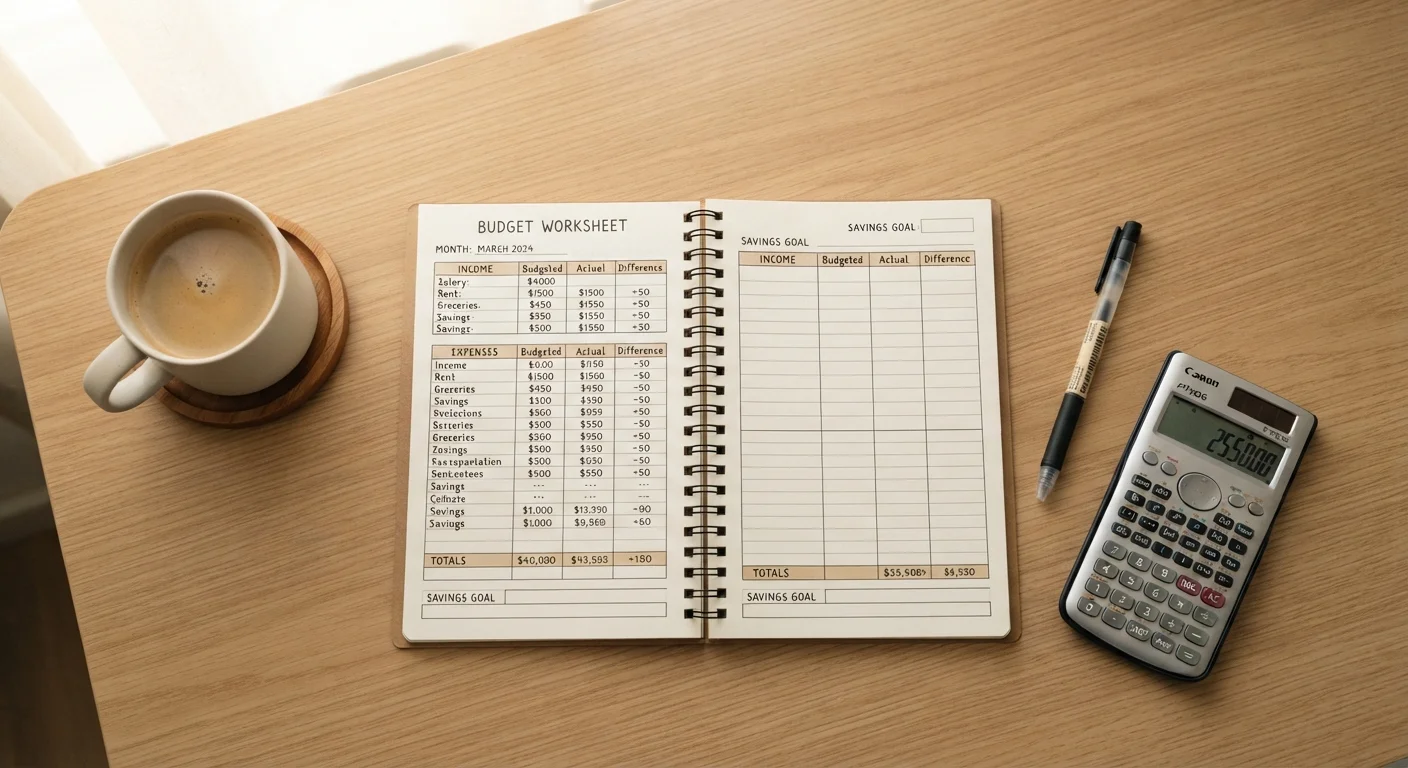
A personal budget is a written plan — on paper, in a spreadsheet, or inside an app — that maps your expected income against your planned expenses for a given period, usually a month. Nothing more complicated than that.
Think of it as a financial flight plan. You decide in advance where your money is going rather than looking back at the end of the month and wondering where it went. A budget doesn't eliminate spending; it makes spending intentional.
If you've heard that budgets are restrictive or only for people who are struggling financially, our article on common budgeting myths addresses those misconceptions directly.
Why Budgeting Matters
Without a spending plan, it's easy to reach the end of a pay period unsure why your account balance is lower than expected. A budget replaces that guesswork with clarity. It reveals patterns — habitual small purchases that add up, subscriptions you've forgotten, categories where you consistently overspend.
Beyond awareness, budgeting creates space for financial goals. Whether you're working toward an emergency fund, paying down debt, or setting aside money for a larger purchase, a budget lets you assign resources to those priorities before the money disappears into day-to-day spending.
Start Tracking Before You Budget
If you're brand new to budgeting, spend two to four weeks simply tracking every dollar you spend before building any plan. This gives you real data rather than guesses, and the numbers that emerge will make your first budget far more realistic and sustainable.
Budgeting also acts as an early warning system. When your budget is tight one month, you see it before it becomes a crisis rather than after. That lead time is genuinely valuable.
Core Budgeting Concepts You Need to Know
Net income
The money you actually take home after taxes, insurance premiums, and other payroll deductions are subtracted from your gross pay. This is the number you budget from.
Fixed expense
A cost that stays the same amount each month, such as rent, a car loan payment, or a monthly insurance premium. These are easy to plan for because the number doesn't change.
Variable expense
A cost that fluctuates month to month, such as groceries, gas, dining out, or utility bills. Variable expenses are where most people find the most flexibility to cut spending.
Discretionary spending
Money spent on non-essential items and experiences — entertainment, clothing beyond basics, subscriptions, hobbies. These are wants rather than needs and are the first place most budgeters look when trimming costs.
Emergency fund
A dedicated cash reserve set aside to cover unexpected expenses — a medical bill, a car repair, a job loss — without going into debt. Financial educators generally suggest building this before other investment goals.
Budget surplus
What remains when your income exceeds your planned expenses for the month. A surplus is an opportunity to save, invest, or pay down debt faster.
Understanding a handful of key terms makes the budgeting process much smoother. The distinction between fixed and variable expenses is particularly important — fixed costs are predictable and easier to plan for, while variable costs are where most people find room to adjust. For a fuller glossary of terms you'll encounter, see our fixed vs. variable expenses guide.
How to Build Your First Budget
Building a first budget follows a clear sequence:
- Calculate your net income. Start with what actually lands in your bank account after taxes and other withholdings — not your gross salary. If your income varies month to month, use a conservative average.
- List your fixed expenses. Rent or mortgage, loan payments, insurance premiums, and similar costs that stay the same each month.
- Track your variable expenses. Pull the last two to three months of bank and credit card statements and categorize what you actually spent on groceries, utilities, dining, transportation, and discretionary items.
- Add it up and compare. Subtract total expenses from net income. A positive number means you have room to save or pay down debt. A negative number means adjustments are needed.
- Assign every remaining dollar a purpose. Savings, an emergency fund, debt repayment — allocate what's left deliberately rather than letting it drift.
For a detailed walkthrough of each step, our guide on building a monthly budget that reflects your life goes deeper into the process.
Your First Budget Is a Draft
Expect your numbers to be off the first month — most people's are. The goal of a first budget isn't perfection; it's to establish a starting point. After you track actual spending for a month or two and compare it to your plan, you'll have the information needed to make your budget genuinely accurate. Treat the process as iterative, not one-and-done.
Common Budgeting Pitfalls to Avoid
First budgets rarely survive first contact with reality unchanged — and that's fine. A few missteps are almost universal:
- Underestimating irregular expenses. Annual insurance renewals, car maintenance, and holiday spending don't appear every month, but they're real costs. Divide annual totals by 12 and include a monthly line item.
- Setting categories too tight. Budgets that leave zero flexibility tend to collapse under the first unexpected expense. Build in a small buffer for miscellaneous costs.
- Abandoning the budget after one bad month. A single month over budget is data, not failure. Adjust the numbers and continue.
- Forgetting to account for savings. Treat savings as a non-negotiable expense, not what's left over after spending.
Don't Skip Irregular Expenses
One of the most common reasons first budgets fail is leaving out costs that don't appear every month — things like car registration, annual subscriptions, vet visits, or holiday gifts. Make a list of every expense you can think of over a full year, divide by 12, and include that monthly average in your budget. Ignoring these costs doesn't make them disappear; it just means they'll arrive as surprises.
What Comes After Your First Budget
A budget is a living document. Once you have a baseline, you can compare actual spending to your plan each month and refine from there. Over time, the process becomes faster and the numbers become more accurate.
As your budget stabilizes, you'll be in a stronger position to explore next steps: building an emergency fund, accelerating debt repayment, or beginning to invest. Our saving and debt hub and investing essentials hub cover both areas in plain language.
For those ready to explore specific budgeting methods, our comparison of zero-based budgeting vs. the 50/30/20 rule can help you find an approach that fits your situation. And for a comprehensive reference at any stage, see our complete personal budgeting reference.
This article is for general informational and educational purposes only and does not constitute personalized financial, tax, or legal advice. Consult a qualified financial professional for guidance specific to your circumstances.