

Key Takeaways
Auto and Home Insurance
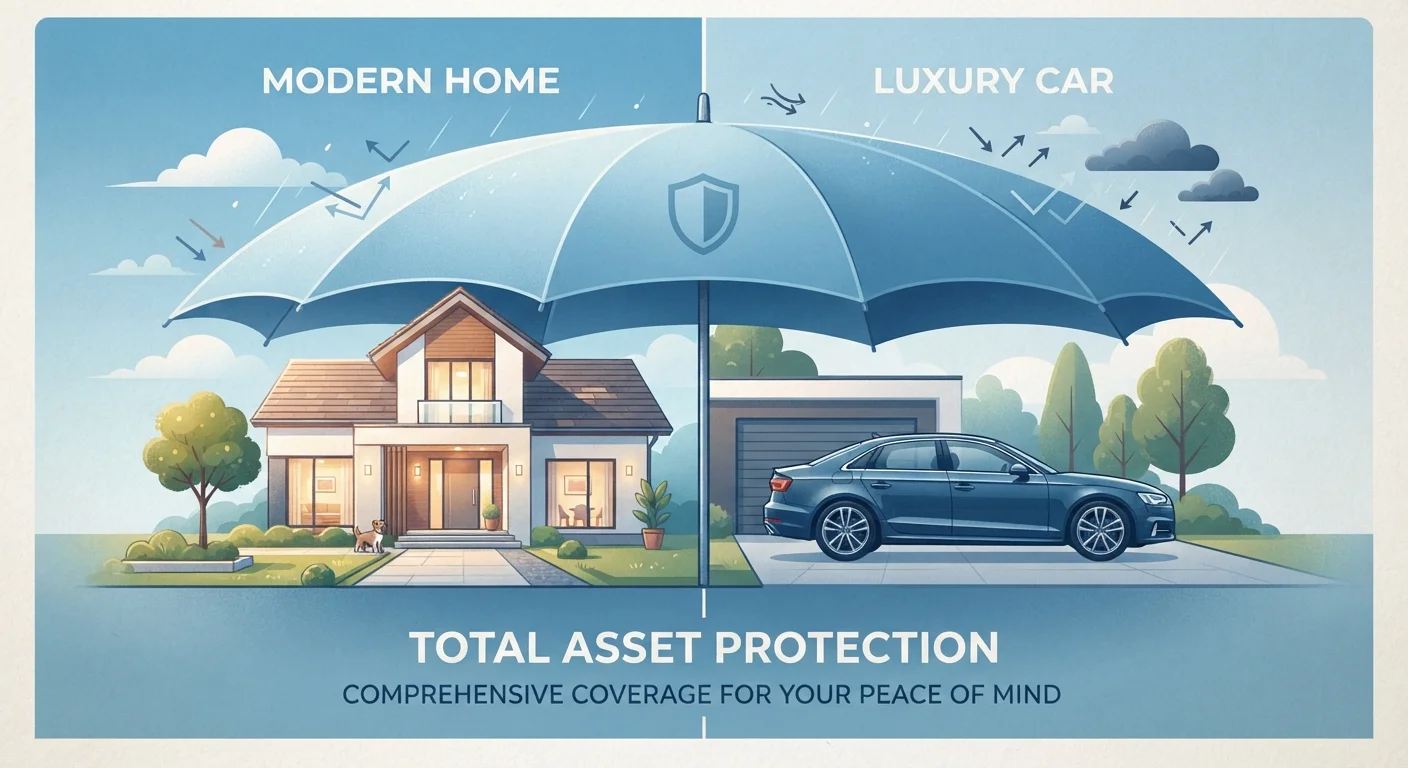
Auto insurance and homeowners insurance are two separate types of property insurance policies that protect against financial losses from specific risks. Auto insurance covers your vehicle and related liabilities when you drive, while homeowners insurance covers your house, belongings, and personal liability on your property. Each policy is a contract between you and an insurer: you pay regular premiums, and the insurer agrees to pay covered losses up to defined limits.
Both policy types are governed primarily at the state level, meaning minimum required coverage, excluded perils, and claims processes can vary significantly depending on where you live.
What Auto Insurance Actually Covers
An auto insurance policy is not a single blanket protection — it's a bundle of distinct coverage types, each addressing a different risk. Understanding these components helps you see exactly where your protection begins and ends.
Liability coverage is the foundation of most auto policies and is required in nearly every state. It pays for bodily injury and property damage you cause to others in an at-fault accident. It does not pay for your own injuries or your vehicle's damage.
Collision coverage pays to repair or replace your vehicle when it's damaged in a crash with another car or object, regardless of fault. Comprehensive coverage handles non-collision losses — theft, vandalism, fire, falling objects, and weather events like hail. For a deeper look at how these three interact, see our breakdown of liability, comprehensive, and collision.
Medical payments (MedPay) or Personal Injury Protection (PIP) — depending on your state — covers medical expenses for you and your passengers after an accident, regardless of who caused it. PIP may also cover lost wages.
Uninsured/underinsured motorist coverage steps in when the at-fault driver has no insurance or insufficient coverage to pay your damages. Many states require this coverage; others make it optional.
Review Your Coverage Limits Annually
Construction costs and home values change over time, meaning coverage that was adequate a few years ago may leave you underinsured today. Set a reminder to review both your auto and home coverage limits each year — or after a major purchase or renovation. A licensed insurance agent can help you assess whether your limits still reflect your actual exposure.
This article provides general insurance information for educational purposes only. Coverage terms, exclusions, and requirements vary by insurer and state. Always read your actual policy and consult a licensed insurance agent for guidance specific to your situation.
What Homeowners Insurance Actually Covers
A standard homeowners insurance policy — often called an HO-3 in the industry — typically breaks down into four core areas of protection.
Dwelling coverage (Coverage A) pays to repair or rebuild the physical structure of your home — walls, roof, foundation, and attached structures — when damaged by a covered peril such as fire, wind, lightning, or vandalism. The coverage limit should reflect the estimated cost to rebuild your home, not its market value.
Other structures coverage (Coverage B) extends similar protection to detached garages, fences, and sheds on your property.
Personal property coverage (Coverage C) reimburses you for belongings — furniture, electronics, clothing — damaged or stolen. Policies typically cover personal property on a named-peril basis, meaning only losses from listed causes qualify. High-value items like jewelry or art often need separate scheduled coverage.
Loss of use coverage (Coverage D) pays for temporary living expenses — a hotel, meals — while your home is being repaired after a covered loss.
Personal liability coverage (Coverage E) protects you if someone is injured on your property or if you accidentally damage someone else's property, covering legal defense costs and judgments up to the policy limit.
To understand what a homeowners policy leaves out, see our guide to common homeowners insurance exclusions. You can also learn how to read the summary of your own policy in our article on reading a home insurance declarations page.
~88%
U.S. homeowners with insurance
According to the Insurance Information Institute, the vast majority of homeowners carry some form of homeowners insurance, though coverage gaps remain common.
1 in 8
Drivers uninsured on U.S. roads
The Insurance Research Council has estimated that roughly one in eight drivers on U.S. roads lacks auto insurance, underlining the importance of uninsured motorist coverage.
$1,411
Average annual auto premium (U.S.)
The National Association of Insurance Commissioners has reported average annual auto insurance expenditures in this range, though individual premiums vary widely by state, driving record, and coverage level.
Key Gaps and Limits Both Policies Share
Even comprehensive-sounding policies carry exclusions and limits that can surprise policyholders at claim time.
Both auto and home policies use coverage limits — the maximum dollar amount an insurer will pay for a given loss. If your damages exceed the limit, you pay the difference. Reviewing whether your limits reflect actual replacement costs is one of the most important things you can do as a policyholder. Our article on how deductibles shape your coverage explains how the interplay between deductibles and limits affects your real-world exposure.
Common auto insurance gaps include: no coverage for mechanical breakdowns, personal belongings inside the vehicle, or damage from a driver not listed on your policy (varies by insurer).
Common homeowners gaps include: floods, earthquakes, sewer backups, and normal wear and tear. These require separate endorsements or standalone policies.
If you rent rather than own, your situation differs meaningfully — renters and homeowners insurance overlap in some areas but diverge significantly. And if you're new to insurance altogether, our starter's guide to auto and home policies offers a broader foundation.
“Most people don't truly understand their insurance until they need to file a claim. Reading your policy declarations page before a loss — not after — is one of the most practical things a policyholder can do.”
— Insurance Basics Editorial Team, Editorial team covering U.S. consumer insurance education