

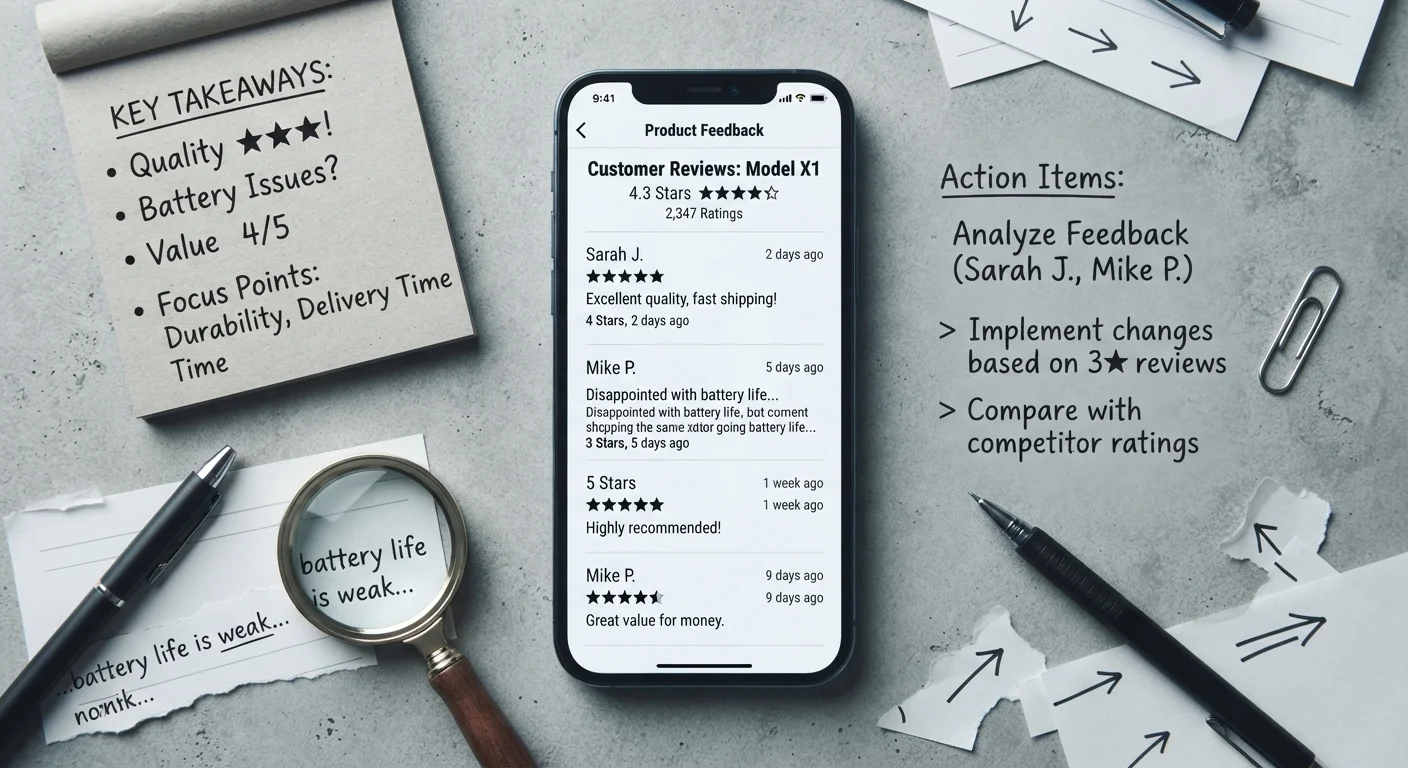
Key Takeaways
Why Star Ratings Mislead More Than They Inform
A 4.6-star average feels reassuring until you realize it might be built on 12 reviews, half of which arrived in the same week. Star ratings compress complex, varied experiences into a single number — and that compression destroys nuance. A product can average four stars because half of buyers love it and half find it unusable, or because it genuinely satisfies most people moderately well. You cannot tell from the number alone.
What the rating distribution tells you is far more useful. A product with a heavy cluster of 5-star and 1-star reviews and almost no middle ratings signals a polarizing experience — the product may work brilliantly for one use case and poorly for another. That split pattern is a prompt to read the 1-star reviews carefully and check whether the complaints describe your intended use.
42%
Of online reviews potentially unreliable
A multi-year analysis by the World Economic Forum cited estimates suggesting a substantial share of online reviews across major platforms may be fake or incentivized.
1-star
Rating tier with highest information density
Consumer research consistently finds that the lowest-rated reviews contain more specific, verifiable detail about product failures than any other rating tier.
As our look at price versus quality reinforces, surface signals often substitute for actual evaluation — and star averages are among the most overused surface signals in consumer shopping.
Recognizing Patterns That Suggest Manipulation
Review manipulation exists on a spectrum. At one end are outright fake reviews — accounts created solely to post five-star praise. At the other are incentivized reviews where real buyers received a discount or free product in exchange for feedback. Both distort the signal, though in different ways.
Check the date distribution of reviews, not just the average rating.
A sudden cluster of reviews within a short window — especially after a long quiet period — can indicate coordinated boosting. Organic review accumulation tends to build gradually over time as real buyers use the product.
Sort by lowest ratings and read complaints before you read praise.
Positive reviews confirm what the product does well, but negative reviews reveal failure modes. Reading the worst-rated feedback first tells you the ceiling of what can go wrong — which is usually more relevant to your purchase decision.
Flag reviews that use identical phrasing or unusually similar sentence structures.
Copy-pasted or templated reviews are a hallmark of coordinated fake review campaigns. While individual word choices vary, formulaic structures — especially across dozens of accounts — indicate non-organic origin.
Prioritize verified purchase labels, but do not treat them as a guarantee of authenticity.
Verified purchase tags confirm a transaction occurred through the platform, but incentivized buyers who genuinely purchased a product can still leave biased reviews. The label reduces — but does not eliminate — the risk of fabrication.
Consult independent review communities alongside retailer-hosted reviews.
Retailer platforms have commercial relationships with sellers that can create subtle pressure on review visibility and moderation. Independent forums and communities have different incentive structures and often surface critical feedback that gets buried elsewhere.
For subscription services and products sold through recurring purchase models, the review landscape has additional complexity. Understanding auto-renewal terms before you buy matters just as much as understanding whether the product itself is well-regarded.
Extracting Real Signal From Review Content
The most reliable reviews are specific, measured, and describe both positives and limitations. A reviewer who explains that a blender handles frozen fruit well but struggles with fibrous greens has given you actionable information. One who writes "Amazing product!! Love it!!!" has not.
Look for reviews that mention time elapsed since purchase — "after six months" or "used it daily for a year" carries more weight than a review posted the day of delivery. Durability and long-term performance are things only time reveals, and fresh reviews systematically underrepresent those factors.
Third-party communities — hobbyist forums, subreddits, and independent testing sites — often surface unfiltered assessments that retailer platforms do not. These sources have weaker financial relationships with sellers and fewer incentives to amplify positive sentiment. For considered purchases, cross-referencing retailer reviews with community feedback is a straightforward way to pressure-test what you're reading. You can apply a similar critical lens to product labels, as covered in reading product labels without getting lost in the fine print.
Incentivized Reviews Are Not Always Disclosed
Some platforms require sellers to disclose when reviews were solicited in exchange for free products or discounts, but enforcement is inconsistent. An incentivized reviewer may have had a genuinely positive experience — but they also have a psychological and sometimes contractual reason to emphasize positives. This doesn't make their feedback worthless, but it does mean you should weigh it alongside uncompensated reviews. Look for the disclosure language, and note its absence when it might be expected.
Finally, consider the channel. Online versus in-store shopping each comes with different review ecosystems — in-store purchases rarely generate the same volume of online feedback, which can skew which products appear most reviewed regardless of actual popularity or quality.