

Key Takeaways
The Real Reason Your Kitchen Feels Inefficient
Most people organize their kitchens the way they unpack groceries — by category. Canned goods together, baking supplies together, spices in one drawer. It feels logical, but it ignores the one thing that actually determines whether a kitchen works: how you move through it when you're cooking.
The result is a kitchen where you cross the room three times to make a single meal. Spices stored on the opposite side of the stove. Cutting boards buried under pots. Measuring cups tucked away with rarely used appliances. None of it is broken — it's just organized around storage logic instead of task logic.
Zone-based organization flips that approach. Instead of grouping items by type, you group them by the task they support — and you place each zone as close as possible to where that task happens. It's the same principle behind a well-run commercial kitchen, and it scales down to any home layout.
If you've ever wondered why your kitchen always feels slightly off, this is usually why. See our room-by-room guide to what earns its place in your home for a broader look at how this problem shows up beyond the kitchen.
Common Kitchen Setup Mistakes — and How to Fix Them
Storing items by category instead of by task proximity.
Why it happens: Unpacking and organizing by type feels intuitive — all spices together, all baking supplies together — but it ignores actual workflow.
Using prime cabinet real estate for rarely used items.
Why it happens: People often fill cabinets in the order they move in, putting the largest or first-unpacked items in the most accessible spots.
Letting countertops absorb overflow from disorganized cabinets.
Why it happens: When cabinets are packed inefficiently, frequently needed items end up on the counter because putting them away is too inconvenient.
Keeping too many duplicate or low-use tools in active zones.
Why it happens: Kitchen tools accumulate gradually and people rarely audit them, so drawers fill with items used once a year alongside daily essentials.
Ignoring vertical space in cabinets and on walls.
Why it happens: Most people stack items flat, which wastes the upper portion of cabinet shelves and forces unnecessary digging.
Addressing these mistakes doesn't require a renovation. In most cases, it means relocating items you already own to positions that match how you actually use them. The shift is conceptual before it's physical.
For pantry items specifically, zoning works hand in hand with smarter stocking habits. The pantry stocking logic that keeps households ready without overbuying explains how to avoid accumulating inventory that gets buried and forgotten — a problem that zone-based storage alone can't solve.
Building Your Kitchen Zones: A Practical Starting Point
Most kitchens benefit from four core zones: prep, cooking, cleanup, and storage. Each zone should contain everything needed for that task and nothing else.
4–6 ft
Ideal reach radius for a primary work zone
Kitchen design guidelines consistently recommend keeping all active-task items within a four-to-six foot radius of the primary work surface to minimize unnecessary movement.
30%
Of kitchen tools used regularly
Research on household behavior suggests that roughly a third of kitchen tools account for the vast majority of daily cooking tasks — the rest rarely leaves the drawer.
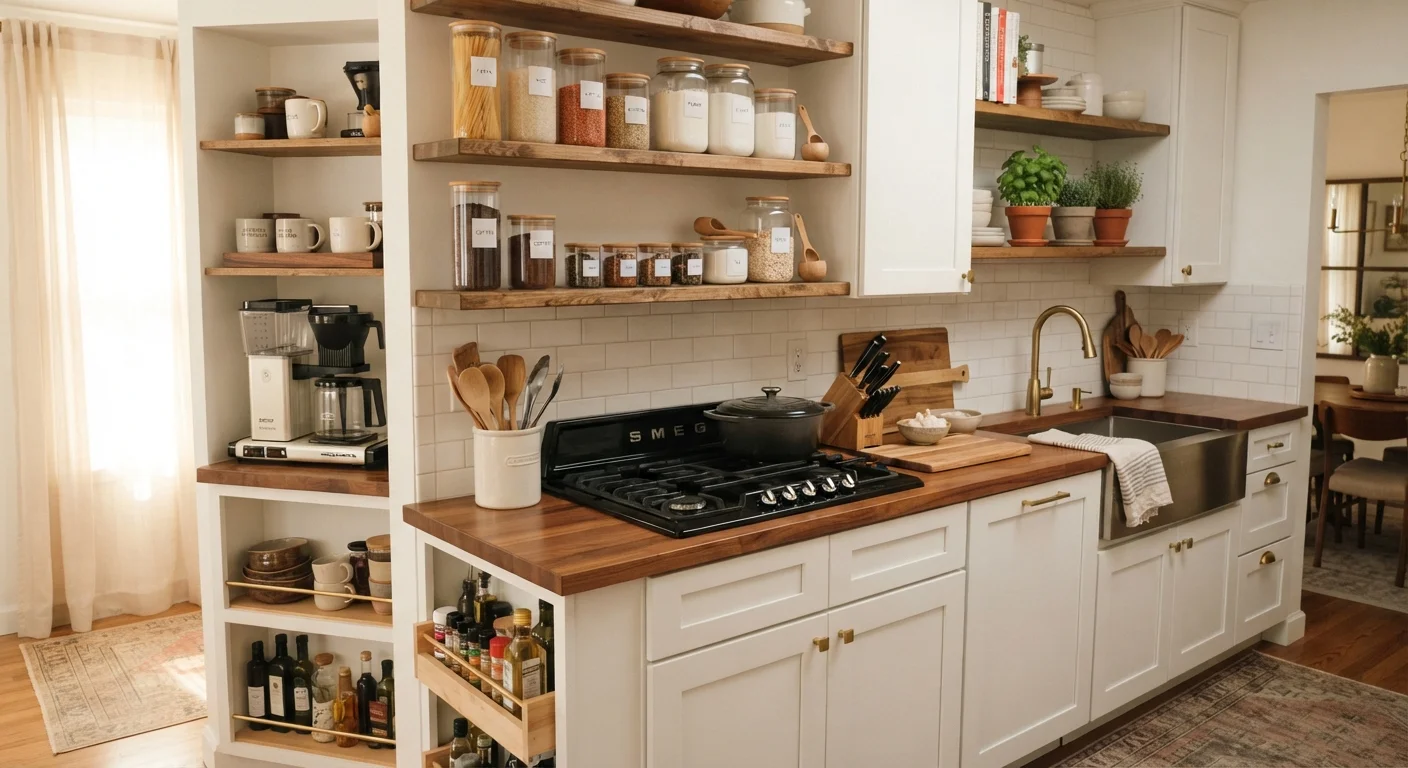
- Prep zone: Near your primary counter space. Cutting boards, knives, mixing bowls, measuring cups, and peelers live here.
- Cooking zone: Immediately around the stove and oven. Oils, common spices, spatulas, tongs, and pot holders belong within arm's reach.
- Cleanup zone: Around the sink. Dish soap, sponges, drying rack, and trash/recycling access.
- Storage zone: Everything else — appliances used less than weekly, bulk pantry items, specialty tools — goes here, ideally in lower-traffic cabinet space.
The goal isn't a perfectly styled kitchen. It's a kitchen where you can cook an entire meal without thinking about where anything is. Organization principles that work in the kitchen tend to work elsewhere in the home too — the functional linen closet principles follow a similar logic of usability over aesthetics.
Don't Reorganize Everything at Once
Attempting a full kitchen overhaul in a single session often leads to fatigue, half-finished zones, and a kitchen that's harder to use for days afterward. Work one zone at a time — start with cooking or prep, live with it for a week, then move on. Small, sustainable changes outlast ambitious one-day reorganizations.
If keeping track of what you have in each zone feels like a challenge, digital tools everyday people actually use to stay organized can help you maintain inventory lists and shopping habits without extra mental load.