

Key Takeaways
Why Most Pantries Fail Their Owners
A pantry that works is one you actually cook from. Most household pantries fail not from lack of product but from lack of logic — shelves crowded with aspirational purchases, expired cans buried in back corners, and a mismatch between what's stocked and what the household genuinely eats week to week.
This isn't a storage problem. It's a decision-making problem. And it connects to a broader challenge of managing household systems thoughtfully — something covered in depth in our overview of running a functional household. When stocking decisions are driven by sales, anxiety, or imitation rather than actual usage patterns, pantries become expensive, wasteful, and harder to use over time.
The solution isn't to stock less — it's to stock smarter.
The Core Practices of Effective Pantry Management
These principles apply across household sizes, budgets, and cooking styles. They're not rules imposed from the outside — they're the habits that people who consistently cook from a well-stocked kitchen tend to use naturally.
Audit your actual eating habits before buying anything new.
Stocking a pantry around an imagined version of your diet — one that includes more legumes, grains, or specialty ingredients than you realistically use — leads directly to waste. Useful inventory reflects real patterns, not aspirations. This audit also reveals gaps you didn't know existed.
Establish a first-in, first-out (FIFO) rotation system.
New purchases should always go behind existing stock, so older items get used first. Without this habit, items migrate to the back and expire unnoticed — one of the most common sources of kitchen waste. FIFO is a standard practice in professional kitchens for exactly this reason.
Categorize and zone your pantry storage logically.
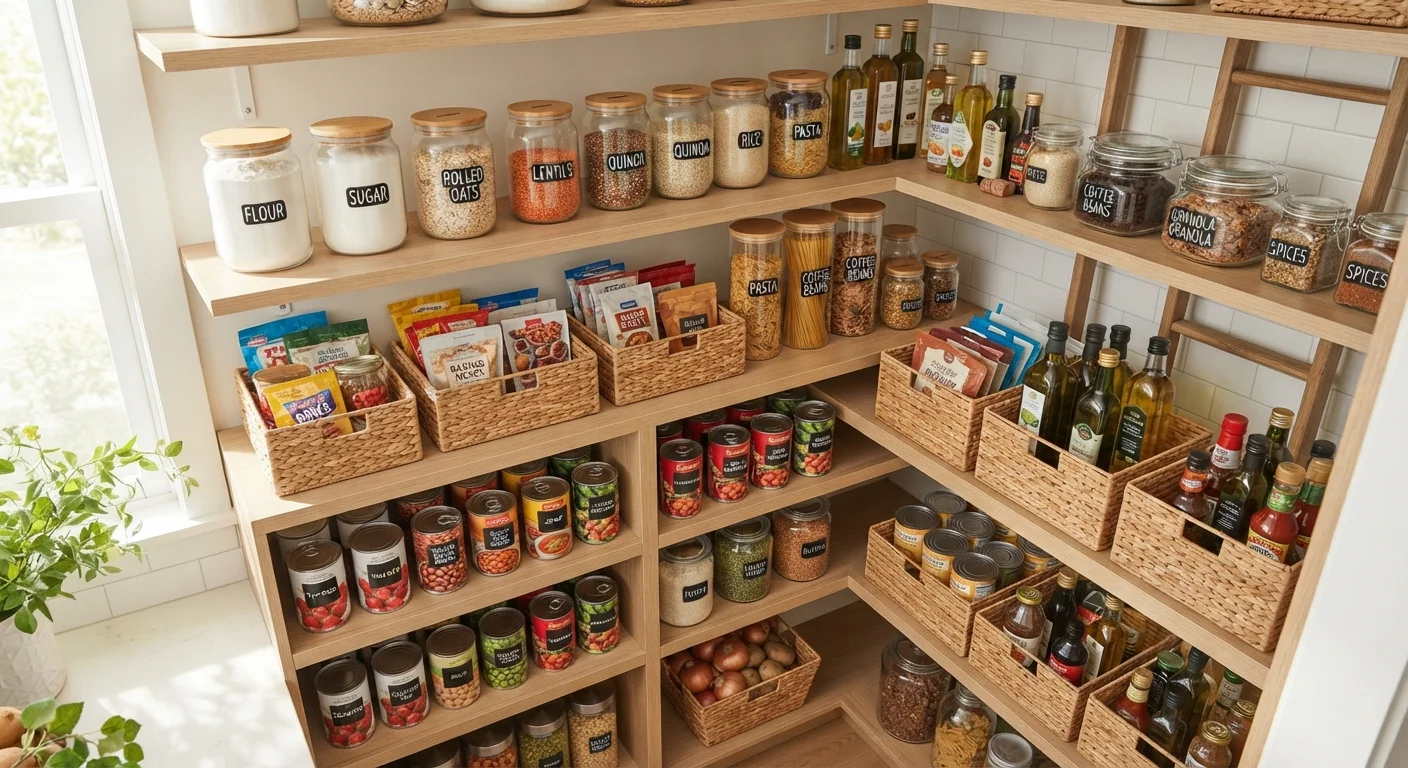
When similar items are grouped together, you can see at a glance what's running low and what's overstocked. Disorganized pantries lead to duplicate purchases because existing inventory isn't visible. Zone-based thinking is also central to kitchen organization more broadly — a topic explored in our guide to kitchen storage zones.
Define a par level — a minimum quantity — for each staple you keep.
A par level is the threshold at which you restock, not the target quantity to maintain. This prevents both over-buying and running out. It also transforms grocery shopping from reactive to systematic, which tends to reduce impulse purchases.
Separate long-shelf-life staples from shorter-cycle items in your planning.
Canned goods, dried legumes, and whole grains can be purchased in larger quantities because they last. Fresh sauces, opened condiments, and specialty items have shorter windows and should be purchased in smaller, more frequent quantities. Conflating these categories leads to spoilage.
Do a full inventory check before every major grocery trip.
A two-minute check prevents buying duplicates and ensures you actually shop to your household's needs rather than general habit. It also catches items approaching expiration that should be prioritized in meal planning before they're lost.
Getting Started Without Overhauling Everything
You don't need to empty the pantry, buy matching containers, or follow a rigid system to see improvement. Small, targeted actions often produce the most durable change — the same thinking that applies when doing a wardrobe audit, as covered in our wardrobe audit guide. Start where the friction is highest.
The One-In, One-Out Principle for Specialty Items
For ingredients you use less frequently — specialty grains, ethnic pantry staples, seasonal spices — consider a one-in, one-out rule: don't buy a new one until the current supply is nearly finished. This prevents the slow accumulation of rarely-used products that quietly expire over months. It mirrors the same logic that helps with clothing and clutter management in other areas of the home.
Pantry Stocking and the Household Budget
A well-managed pantry is a financial tool as much as a logistical one. Households that stock strategically — buying staples in reasonable quantity when prices are stable, and avoiding impulse or panic buying — generally spend less on food over time without sacrificing variety or nutrition.
30–40%
Share of food supply wasted in U.S. homes
USDA estimates suggest that roughly 30 to 40 percent of the U.S. food supply goes to waste, with household-level decisions being a significant contributor.
$1,500+
Estimated annual food waste cost per household
Research from various food waste organizations suggests the average American household discards the equivalent of over $1,500 in food annually, though figures vary by household size and food costs.
Stocking logic also prevents the hidden cost of waste. Ingredients that expire unused represent money spent on nothing. For households working to tighten discretionary spending, the pantry is one of the more controllable variables. Pairing pantry discipline with a thoughtful budget framework — like the principles outlined in our budgeting basics hub — can meaningfully reduce monthly food expenditure without deprivation.
Pantry Stocking Isn't Emergency Preparedness
A well-stocked everyday pantry is different from emergency food storage, which has its own specific guidelines from organizations like FEMA and the Red Cross. The principles here are aimed at normal household function — keeping your regular cooking supported without overbuying. If you want to build a separate emergency supply, treat that as a distinct project with its own inventory logic.