
Key Takeaways
Why Certification Seals Vary So Widely
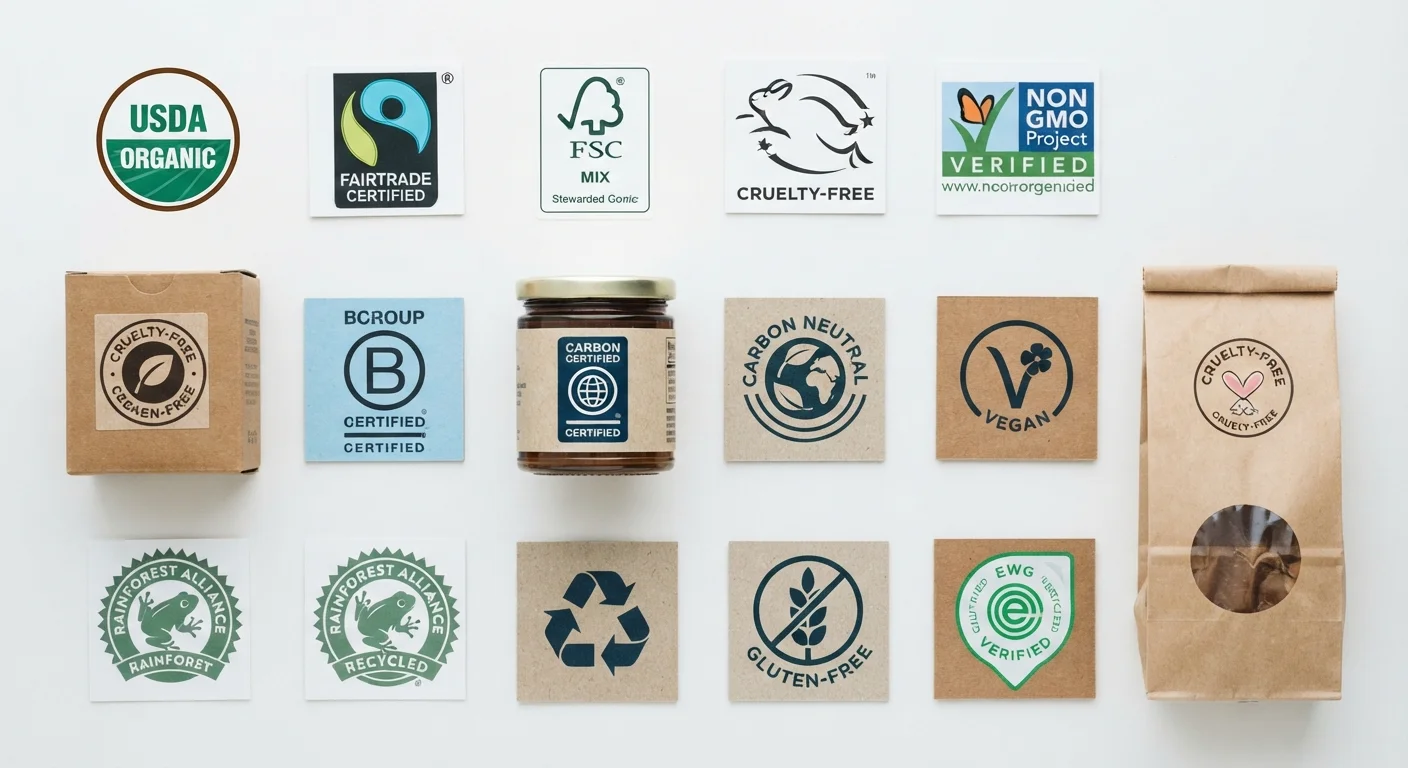
Walk down any grocery or home goods aisle and you'll encounter dozens of seals, badges, and stamps. Some are backed by federal programs, rigorous lab testing, or independent auditing. Others are created and applied by manufacturers themselves with no external verification. The challenge for consumers is that they often look nearly identical on packaging.
The core question to ask about any seal is: who sets the standard, who checks compliance, and are the results publicly accessible? Certifications that score well on all three carry meaningful weight. Those that fail on even one require skepticism. For a deeper look at how common labels stack up, see what consumer certifications actually verify.
Below are certifications that have demonstrated accountability structures worth understanding — not because you should automatically trust them, but because you can actually check their work.
ENERGY STAR (U.S. EPA)
ENERGY STAR is a voluntary program administered by the U.S. Environmental Protection Agency. Products bearing this seal — appliances, electronics, lighting, HVAC systems, and more — have been tested to meet specific energy efficiency thresholds set by the EPA.
Manufacturers must submit products for testing at EPA-recognized laboratories, and the EPA conducts its own market surveillance to verify that certified products continue to meet standards. Importantly, the EPA publishes its full certified product lists publicly, so you can verify whether a specific model is actually listed — not just the brand.
This is one of the more transparent government-backed programs available to U.S. consumers. Its limitation is scope: it measures energy use, not safety, durability, or labor practices.
ENERGY STAR's publicly searchable database lets you verify any specific model — not just a brand's overall enrollment.
NSF International Certification
NSF International is an independent, accredited testing and certification organization with roots in public health. It certifies products across categories including water filtration, dietary supplements, food equipment, and household items.
For water filters, NSF certification is particularly meaningful: it specifies exactly which contaminants a filter is tested to reduce and by how much. A filter certified to NSF/ANSI 53, for example, has been verified to reduce specific health-related contaminants. NSF/ANSI 42 covers aesthetic concerns like chlorine taste.
NSF maintains a searchable certification database. Because the organization is accredited by the American National Standards Institute (ANSI), its testing protocols are subject to external oversight — an additional layer of accountability beyond self-certification.
NSF certification specifies exactly which contaminants are tested and reduced — not just that a product was reviewed.
Fair Trade Certified (Fair Trade USA)
Fair Trade USA certifies products — coffee, chocolate, apparel, produce, and others — against standards that address wages, labor conditions, and community investment for workers in supply chains, often in lower-income countries.
Third-party auditors conduct on-site inspections of farms and facilities. Certified producers must meet minimum social, environmental, and economic standards. Importantly, a portion of every sale contributes to a community development fund controlled by the workers themselves.
Fair Trade USA's standards are publicly available, and it publishes its audit methodology. The certification does have critics — some argue audit frequency and depth vary — but compared to unverified claims of ethical sourcing, it involves substantially more structured accountability. Understand how this differs from organic and non-GMO certifications, which measure different things entirely.
Fair Trade requires on-site audits by independent inspectors — not just a signed code of conduct from suppliers.
USDA Organic
The USDA Organic seal is a federally regulated certification administered by the U.S. Department of Agriculture's National Organic Program (NOP). Farms and handlers must be certified by USDA-accredited certifying agents and are subject to annual inspections.
The standard prohibits most synthetic pesticides and fertilizers, genetic engineering, sewage sludge, and irradiation. For livestock, it mandates access to pasture and prohibits growth hormones and most antibiotics. Certified operations can be searched through the USDA's Organic Integrity Database.
"Organic" as a legal term has a specific, enforceable definition — which makes it meaningfully different from unregulated claims like "natural" or "clean." See how those unregulated buzzwords compare to understand the gap.
USDA Organic is federally enforced with annual inspections — making it one of the few food labels with legal teeth.
UL (Underwriters Laboratories) Safety Certification
UL is an independent safety science organization that tests products — particularly electrical and electronic devices — against established safety standards. When a product carries a UL mark, it means samples were tested and found to meet specific safety criteria at the time of certification.
UL also conducts follow-up factory inspections to check that production continues to meet standards. The UL certification database is publicly searchable, allowing you to verify whether a specific product is genuinely listed rather than using an imitation mark.
This matters particularly for items like extension cords, power strips, space heaters, and chargers — categories where counterfeit safety marks are a documented problem. Verifying a UL listing before purchasing electrical products is a straightforward safety step.
Counterfeit UL marks exist — always verify a product's listing in UL's public database, especially for electrical items.
LEED Certification (Buildings and Spaces)
LEED (Leadership in Energy and Environmental Design) is a green building certification program administered by the U.S. Green Building Council (USGBC). While it applies to buildings rather than products, it's relevant for renters and buyers evaluating homes, apartments, or commercial spaces.
Buildings earn points across categories including energy efficiency, water use, indoor air quality, and materials. Certification levels — Certified, Silver, Gold, and Platinum — reflect cumulative point totals. Third-party verification is required, and certified projects are listed in a public USGBC database.
For consumers renting or purchasing real estate, a LEED-certified building provides documented evidence of design and construction choices — not a guarantee of ongoing performance, but a meaningful baseline.
LEED certification documents verified design choices at construction — giving renters and buyers a documented performance baseline.
How to Apply This to Your Purchases
Knowing which certifications have real accountability doesn't mean every certified product is right for you — it means you have a reliable starting point. When a seal appears on something you're considering, spend 60 seconds on the certifying organization's website to confirm the specific product or producer is listed. Most reputable programs maintain searchable databases.
Always Verify the Specific Product
Certification databases are publicly accessible for most reputable programs — ENERGY STAR, NSF, USDA Organic, and UL all maintain searchable lists. Before purchasing, search the certifier's site using the product's model number or producer name. A brand can be enrolled in a program while only some of its products are actually certified.
Also consider whether the certification is measuring what you actually care about. ENERGY STAR tells you about energy efficiency, not product durability or chemical safety. NSF certification for a water filter tells you it reduces specific contaminants, not that it's built to last a decade. Matching the certification's scope to your own priorities is how you get real value from the seal.
For broader context on how marketing language distorts consumer decisions, learn to distinguish genuine sustainability commitments from surface branding, and review what non-toxic labels actually guarantee before assuming a product is safe. Smart purchasing is a skill — and practical shopping guidance can help you build it systematically.