

Key Takeaways
Option A
Android
The open, customizable platform built for flexibility.
Best for: Users who want hardware variety, deeper personalization, and fewer restrictions on how they use their device.
Option B
iOS
The tightly integrated system optimized for consistency.
Best for: Users who prioritize a seamless, secure experience across Apple hardware with minimal configuration required.
If you want maximum control over your phone's look, feel, and file system
Android
Android allows sideloading apps, setting third-party defaults, and deeper home screen customization that iOS does not permit.
If you already own Apple devices like a Mac, iPad, or Apple Watch
iOS
iOS integrates tightly with the broader Apple ecosystem through features like Handoff, AirDrop, and iMessage continuity, creating a cohesive multi-device experience.
If long-term software support is a priority for your purchase
iOS
Apple typically supports iPhone models with major OS updates for five to six years, while Android update commitments vary significantly by manufacturer.
If budget and hardware variety are deciding factors
Android
Android runs on devices across a wide price range from multiple manufacturers, giving consumers more options to match a specific budget or form factor.
If privacy and data transparency matter to you above all else
iOS
Apple's business model is less reliant on advertising data, and iOS includes prominent privacy controls like App Tracking Transparency that limit cross-app data collection.
The Core Philosophy Divide
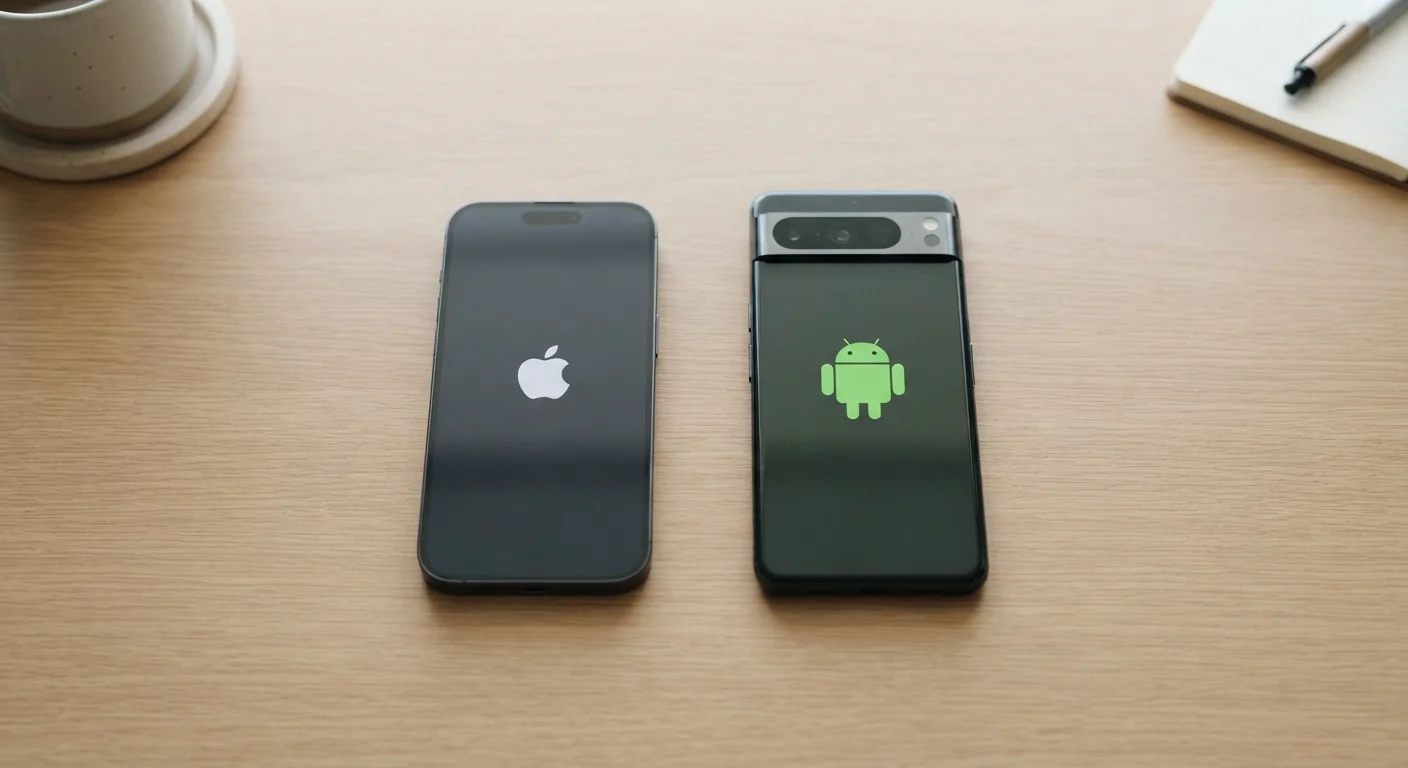
Android and iOS are both mature, capable mobile operating systems, but they were built on different foundational beliefs about what a smartphone should be. Android, developed by Google and released as an open-source platform, was designed to run across a diverse ecosystem of device manufacturers. iOS, developed by Apple exclusively for its own hardware, was built around controlled integration between software and physical components.
That single difference — open versus closed — cascades into nearly every aspect of how the two platforms behave. Android gives manufacturers and users room to modify and extend the system. iOS gives Apple the ability to optimize every layer of the experience for a predictable, consistent result. Neither approach is inherently better; they reflect different answers to the question of who should control a computing device.
For everyday users, this plays out in practical ways: which apps you can install, how your device receives updates, what data gets shared with whom, and how easily your phone works alongside your other gadgets. If you're weighing a device purchase, understanding the assumptions that drive overspending on smartphones can help you focus on what actually matters for your needs.
Customization and App Ecosystems
Android's openness allows users to change default apps — swap out the browser, keyboard, or even the home screen launcher entirely. Files can be moved between a phone and a computer using a standard USB connection without additional software. Android also permits sideloading (installing apps from outside the official Play Store), which adds flexibility but also increases exposure to unvetted software.
iOS keeps customization more bounded. Users can change some defaults, such as the default browser and email client, but the overall system structure remains fixed by Apple. Apps must pass Apple's App Store review process before reaching users, which adds a layer of quality control but also means some tools available on Android simply don't exist on iOS.
Both platforms support hundreds of thousands of apps, and most major services — banking, streaming, social media, productivity — are available on each. Where differences appear is in niche or developer-facing tools, where Android's permissiveness creates a wider range of options. For a broader look at how app delivery models affect your experience, see our overview of web-based apps versus installed software.
| Criterion | Android | iOS |
|---|---|---|
| Hardware source | Many manufacturers (Samsung, Google, etc.) | Apple only |
| Customization depth | High — launchers, defaults, sideloading | Moderate — some defaults, structured system |
| OS update delivery | Via manufacturer; timing varies | Direct from Apple; simultaneous rollout |
| Long-term software support | 2–4 years (varies by brand) | Typically 5–6 years per model |
| Privacy model | User-adjustable; ad-driven defaults | Strong defaults; App Tracking Transparency |
| Ecosystem integration | Google services; broad compatibility | Deep Apple device continuity |
| App source options | Play Store + sideloading allowed | App Store only (in most regions) |
| Price range of devices | Wide — budget to flagship | Mid to premium |
Updates, Security, and Privacy
One of the most consequential practical differences between the two platforms is how software updates are delivered. Apple pushes iOS updates directly to all supported devices simultaneously. On Android, updates flow from Google to device manufacturers, who customize them before releasing to carriers and consumers — a process that can delay security patches by weeks or months, and some lower-cost devices may stop receiving updates after two years.
Security patches matter more than most users realize. Understanding why mobile updates are critical can help you appreciate the real-world risk of running outdated software.
On privacy, both platforms have strengthened user controls in recent years, but their incentive structures differ. Apple generates revenue primarily through hardware sales and services, meaning it has less financial motivation to monetize user data through advertising. Google's advertising business means Android's default settings are oriented toward data collection to power ad targeting, though users can adjust permissions in settings. iOS introduced App Tracking Transparency, which requires apps to ask permission before tracking users across other apps and websites — a feature that meaningfully changed how advertisers can target iPhone users.
~72%
Global smartphone OS market share
Android held approximately 72% of global smartphone market share as of recent industry estimates, driven by its presence across hundreds of device models worldwide.
5–6 years
Typical iOS major update support window
Apple has consistently provided major iOS updates to iPhones for five to six years after their release date, a benchmark most Android manufacturers do not match.
~55%
U.S. smartphone market share held by iOS
In the United States, iOS holds a majority share of active smartphones, reflecting a different regional dynamic than global trends suggest.
For a practical guide to permissions and phone security on either platform, the mobile security fundamentals guide covers the key settings worth reviewing.
Ecosystem Lock-In and Switching Costs
Choosing a mobile platform is not a purely hardware decision — it's a commitment to an ecosystem. iOS integrates deeply with macOS, iPad, Apple Watch, and Apple TV through features that don't translate to Android. Similarly, Android users who rely on Google services like Drive, Photos, and Assistant get tighter integration on Android than on iOS.
Switching platforms means more than buying a new phone. Paid apps generally don't transfer between the App Store and Google Play. iMessage conversation history doesn't migrate to Android. Photos, notes, contacts, and calendar data can usually be exported, but the process requires deliberate effort. The longer you've used a platform, the higher the practical cost of switching.
This isn't a reason to avoid switching if the other platform genuinely suits you better — but it's worth factoring into any comparison. If you're evaluating how your phone fits alongside other devices, our piece on where tablets and laptops fit in your digital life addresses related ecosystem tradeoffs.
Regulatory Changes May Affect App Store Rules
Legislation in the European Union and ongoing regulatory scrutiny in the United States may require Apple to allow third-party app stores on iOS in some markets. This could meaningfully change one of the most consistent differences between the platforms. Users should check current rules in their region, as the situation is evolving.