

Key Takeaways
Option A
Natural Fibers
The breathable, time-tested choice from the earth.
Best for: Everyday comfort, sensitive skin, and garments worn close to the body in variable temperatures.
Option B
Synthetic Fabrics
The engineered, performance-driven modern alternative.
Best for: Active wear, moisture-wicking needs, and situations where durability and shape retention matter most.
If you have sensitive skin or run warm
Natural Fibers
Natural fibers like cotton and linen allow air circulation and are less likely to trap heat or irritate skin compared to many synthetics.
If you need workout or outdoor performance gear
Synthetic Fabrics
Synthetics excel at moisture-wicking, stretch recovery, and resisting abrasion — key properties for active use.
If easy care and wrinkle resistance are your priorities
Synthetic Fabrics
Polyester and nylon hold their shape, dry quickly, and generally tolerate machine washing without special handling.
If environmental impact is a key consideration
Natural Fibers
Natural fibers are biodegradable, though the full picture is nuanced — conventional cotton farming, for example, is resource-intensive.
If you want the best of both worlds in everyday wear
Natural Fibers
A cotton-polyester blend offers comfort and breathability while adding durability and wrinkle resistance — a common middle ground.
What Makes a Fiber Natural or Synthetic?
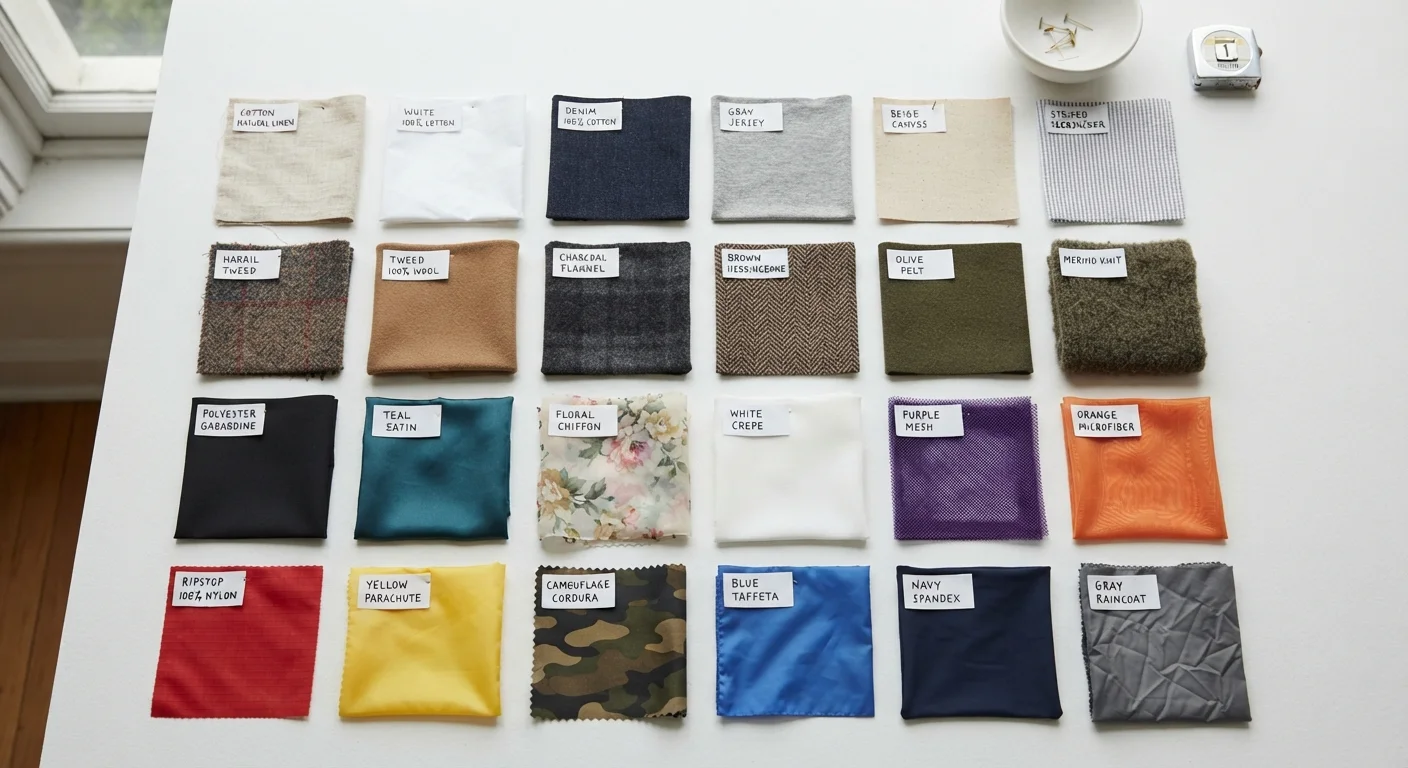
The distinction starts at the source. Natural fibers come from plants or animals — cotton from the cotton plant's seed pod, linen from flax stems, wool from sheep fleece, and silk from silkworm cocoons. Synthetic fabrics are manufactured from chemical compounds, most commonly derived from petroleum. Polyester, nylon, acrylic, and spandex (also called elastane) all fall into this category.
A third class — semi-synthetic or regenerated fibers — sits in between. Rayon (viscose), modal, and lyocell (often sold under brand names) are made by chemically processing natural cellulose from wood pulp. They share some properties with both categories and are worth knowing about, though they're not the main focus here.
Understanding fiber origin helps set realistic expectations, but it's the physical properties that matter most when you're deciding what to wear and how to care for it. As with many consumer choices, the label on the tag doesn't always tell the whole story — much like the buzzwords on product packaging that signal different things to different people.
| Criterion | Natural Fibers | Synthetic Fabrics |
|---|---|---|
| Source | Plants or animals | Petroleum-based chemicals |
| Breathability | Generally high | Variable; often lower |
| Moisture management | Absorbs moisture | Wicks moisture away |
| Durability | Moderate; prone to shrinking | High; shape-retaining |
| Care requirements | Often delicate; cool wash | Generally machine-washable |
| Wrinkle resistance | Low to moderate | High |
| Biodegradability | Yes | No |
| Microplastic shedding | No | Yes (when washed) |
| Typical cost | Varies; often higher | Varies; often lower |
How Each Fabric Performs in Everyday Wear
Breathability and comfort are where natural fibers typically lead. Cotton is highly absorbent and allows moisture to evaporate, making it comfortable in warm weather. Wool regulates temperature remarkably well — trapping warmth in cold conditions while remaining surprisingly breathable in milder ones. Linen is even more breathable than cotton, though it wrinkles easily.
Synthetics have a different performance profile. Polyester resists moisture absorption, which means sweat stays on the surface longer — a drawback in heat, but an advantage in activewear designed to wick moisture away from the skin. Nylon is exceptionally strong and abrasion-resistant, making it standard in hosiery, outerwear linings, and athletic gear. Spandex adds stretch and recovery that no natural fiber can match on its own.
~60%
Share of global fiber production that is synthetic
According to Textile Exchange's Preferred Fiber & Materials Market Report, synthetic fibers — led by polyester — account for the majority of global textile production by volume.
500,000+
Metric tons of microplastics released annually from textiles
The International Union for Conservation of Nature estimates that synthetic textile washing is one of the leading sources of microplastic pollution in the world's oceans.
Shape retention and durability generally favor synthetics. A 100% cotton T-shirt may fade, shrink, or pill faster than a cotton-polyester blend. Wool can felt — permanently shrink and mat — if exposed to heat and agitation in the wash. Synthetics, by contrast, hold their structure through repeated laundering.
That said, synthetics have trade-offs. They tend to retain odors over time and can generate static. Some people find fabrics like 100% polyester uncomfortable against the skin, particularly in warm conditions.
Care, Longevity, and Environmental Considerations
Fabric composition directly determines how a garment should be washed, dried, and stored. Natural fibers often require cooler water, gentle cycles, and more careful drying to prevent shrinkage or damage. Wool in particular demands attention — most types should be hand-washed or dry-cleaned, and laid flat to dry rather than hung. Knowing how to read care labels and act on them is one of the most practical skills in clothing maintenance — our guide on caring for your clothes and reading labels goes deeper on this.
Synthetics are typically more forgiving in the laundry, but they present a documented environmental concern: washing synthetic garments releases microplastic fibers into wastewater systems, and these particles are difficult to filter out at treatment plants. Natural fibers, being biodegradable, don't carry this risk — though conventional cotton cultivation is water- and pesticide-intensive, and wool production has its own land-use implications.
Blended Fabrics: A Common Middle Ground
Many everyday garments combine natural and synthetic fibers in a single fabric — a cotton-polyester blend being the most familiar example. These blends are engineered to balance comfort and practicality, often improving durability and reducing shrinkage compared to 100% natural fiber alternatives. When evaluating a blend, check the fiber percentages on the care label: a fabric that is mostly natural in composition will behave more like the natural fiber in terms of breathability and care needs.
There's no clean winner on environmental impact. Consumers weighing this factor benefit from looking beyond the fiber itself to consider factors like dye processes, transport, and garment longevity — a longer-lasting piece of any material may ultimately have a smaller footprint than a cheap, fast-fashion item in any fiber.
The same critical thinking that helps you evaluate name brand versus generic products applies here: fiber type is one variable, but construction quality, finish, and care habits also shape how long a garment serves you.