

Key Takeaways
Skin Barrier
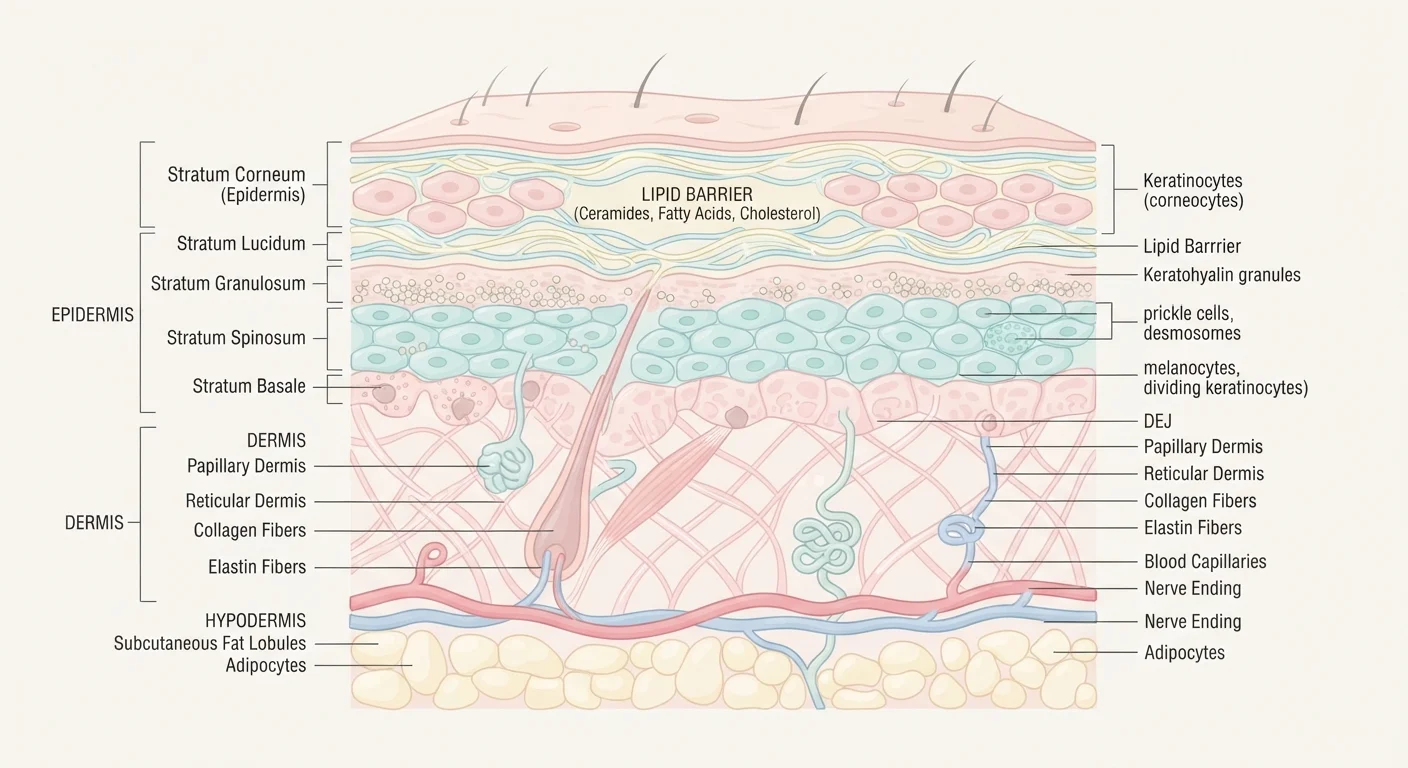
The skin barrier — formally called the stratum corneum — is the outermost layer of skin. It acts as a two-way shield: keeping moisture locked inside the body while blocking irritants, allergens, bacteria, and pollutants from getting in. Think of it as a brick wall, where skin cells are the bricks and a mixture of lipids (fats) is the mortar holding everything together.
Dermatologists often refer to this structure as the 'brick and mortar' model. The lipid matrix between cells is primarily composed of ceramides, cholesterol, and free fatty acids — each playing a specific structural role.
What the Skin Barrier Actually Does
Your skin is your body's largest organ, and its outermost layer does far more than most people realize. The skin barrier performs two critical jobs simultaneously: it prevents TEWL — the evaporation of moisture from skin into the environment — and it acts as a physical and chemical wall against external threats including bacteria, allergens, and UV-related damage.
This defense system also maintains the skin's natural pH, which sits slightly acidic at around 4.5 to 5.5. That acidity inhibits harmful microbial growth and supports the enzymes responsible for shedding dead skin cells in an orderly way. When the barrier is healthy, all of this happens invisibly. When it's compromised, the consequences become quickly apparent.
“The skin barrier is the foundation of all skin health. When it's functioning well, you need very little to maintain it. When it's compromised, no amount of active ingredients will compensate.”
— A board-certified dermatologist, Clinical dermatologist specializing in barrier disorders
The Brick-and-Mortar Structure Explained
Dermatologists use the phrase 'brick and mortar' to describe the skin barrier's architecture — and it's a useful one. Flattened, protein-rich skin cells called corneocytes form the bricks. Surrounding them is the mortar: a carefully balanced mixture of lipids that fills the space between cells and prevents water and unwanted substances from passing through too easily.
That lipid mixture is made up of three main components:
- Ceramides — the most abundant lipid in the barrier, essential for cohesion and moisture retention
- Cholesterol — contributes to barrier flexibility and repair speed
- Free fatty acids — help maintain the acidic pH and reinforce structural integrity
These three must exist in roughly the right ratio to function properly. A disruption in any one of them — from aging, environmental stress, or harsh products — can compromise the entire structure. This is why common skincare assumptions about stripping oils or using high-strength acids daily can backfire.
Simplify Before You Add
If your skin is showing signs of barrier disruption — redness, stinging, or new sensitivity — the most effective first step is usually to strip your routine back rather than add new products. A gentle cleanser and a basic moisturizer for one to two weeks can allow early repair before you reintroduce actives.
What Damages the Skin Barrier
Barrier disruption is more common than most people realize — and often self-inflicted through well-meaning skincare habits. The most frequent causes include:
- Over-cleansing or using harsh surfactants that strip away the lipid layer
- Overuse of exfoliants — both chemical (like strong AHAs and BHAs) and physical scrubs — which remove cells faster than the barrier can regenerate
- Low-humidity environments, particularly forced indoor heat in winter, which accelerates TEWL
- Hot water — long, hot showers dissolve the lipid mortar more effectively than lukewarm water
- Fragrance and alcohol-based products, which are among the most common sensitizing agents in skincare formulations
Genetic conditions like eczema (atopic dermatitis) and rosacea involve inherent barrier impairments that make affected skin more reactive to these same triggers. Understanding your barrier is closely tied to knowing whether you have a skin type or a skin condition — a distinction that shapes smarter product choices.
~50%
Ceramide share of total skin barrier lipids
Research published in dermatological literature consistently identifies ceramides as the dominant lipid class in the stratum corneum, comprising roughly half of its lipid content.
4.5–5.5
Healthy skin surface pH range
Studies have shown that disruption of this acidic pH — common with alkaline soaps and over-cleansing — correlates with increased barrier permeability and microbial imbalance.
1 in 10
U.S. adults affected by atopic dermatitis (eczema)
According to the National Eczema Association, approximately 31 million Americans have some form of eczema, which involves chronic barrier dysfunction as a core feature.
How to Support and Restore Barrier Function
Supporting the skin barrier doesn't require an elaborate routine — it requires a thoughtful one. A few well-established principles apply broadly:
- Cleanse gently. Use a low-pH, fragrance-free cleanser with mild surfactants. Cleansing once daily is often sufficient for most skin types.
- Moisturize consistently. Look for formulas that include ceramides, hyaluronic acid (a humectant that draws water to the surface), and occlusives like petrolatum or squalane that form a protective seal.
- Use sunscreen daily. UV radiation degrades barrier lipids and accelerates structural breakdown. This is one reason understanding your sunscreen options is a foundational part of barrier care, not an optional extra.
- Pace active ingredients. Introduce retinoids, acids, and other potent actives gradually, always monitoring for signs of irritation.
If you're focused on longer-term skin resilience, the evidence-backed principles of anti-aging skincare overlap significantly with barrier support strategies — because a healthy barrier ages better.
This article is for informational and educational purposes only. It is not a substitute for professional dermatological advice. If you are experiencing persistent skin concerns, consult a qualified dermatologist or healthcare provider.