

Key Takeaways
Our Verdict
Neither chemical nor physical sunscreen is universally superior — effectiveness depends on consistent use. Physical formulas suit those with sensitive, reactive, or acne-prone skin, while chemical formulas often work better for everyday wear under makeup or during active outdoor use. Understanding how each works puts you in a better position to choose — and stick with — a sunscreen you'll actually use daily.
| Best for | Recommended |
|---|---|
| Sensitive, reactive, or rosacea-prone skin | Physical (mineral) sunscreen |
| Deeper skin tones seeking no white cast | Chemical sunscreen |
| Outdoor exercise or water exposure | Chemical sunscreen |
| Post-procedure or compromised skin barrier | Physical (mineral) sunscreen |
How Each Type of Sunscreen Actually Works
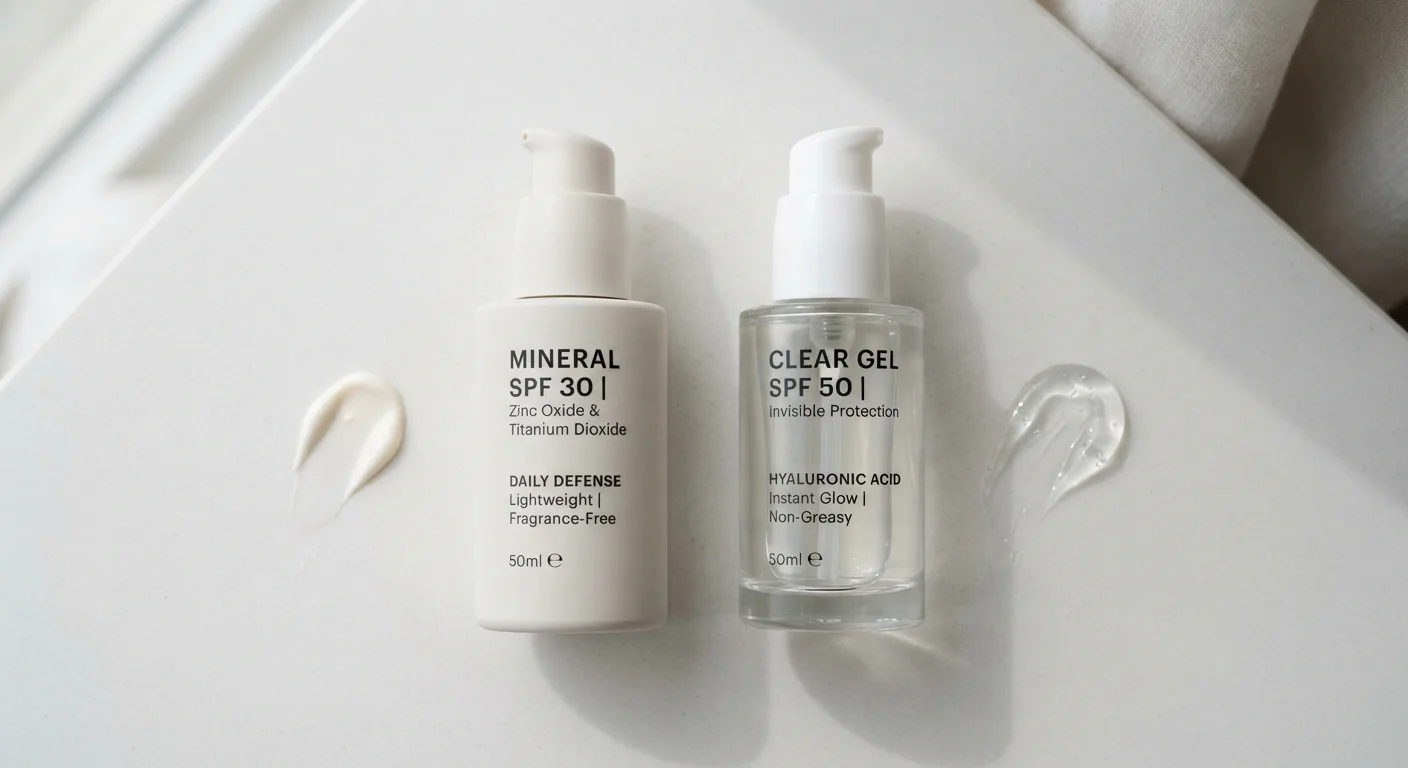
The core difference between chemical and physical sunscreen comes down to mechanism, not simply ingredients. Physical sunscreens — sometimes called mineral sunscreens — use active mineral filters, typically zinc oxide or titanium dioxide, that form a barrier on the skin's surface. When UV rays strike that barrier, they are reflected or scattered before reaching skin cells.
Chemical sunscreens work differently. Their active ingredients — which may include avobenzone, octinoxate, homosalate, or octisalate — are absorbed into the skin, where they undergo a photochemical reaction that converts UV radiation into small amounts of heat, which then disperses. No single chemical filter covers the full UV spectrum, so most chemical formulas combine several actives to achieve broad-spectrum protection.
Understanding this distinction matters because it affects when each type becomes effective. Mineral filters are generally considered active immediately upon application. Chemical filters typically require about 15–20 minutes after application to be fully functional, which is why most dermatologists recommend applying them before sun exposure rather than at the beach. For a deeper look at the labeling that governs both types, see our SPF and broad-spectrum rating glossary.
Comparing the Two: Key Differences at a Glance
The table below covers the most practical dimensions that affect everyday use — from texture to suitability for different skin concerns.
| Physical (Mineral) | Chemical | |
|---|---|---|
| How it works | Reflects and scatters UV rays | Absorbs UV, converts to heat |
| Active when applied | Immediately | After ~15–20 minutes |
| Finish on skin | Can leave white cast | Clear, lightweight |
| Sensitive skin tolerance | Generally well tolerated | May irritate reactive skin |
| Wear under makeup | Can pill or sit heavily | Blends smoothly |
| Broad-spectrum coverage | Yes (esp. zinc oxide) | Yes, when filters are combined |
| Stability in sunlight | Generally photostable | Some filters degrade faster |
One distinction worth highlighting is finish. Physical sunscreens historically left a white or grayish cast due to the opacity of mineral particles, which has been a barrier for people with medium to deep skin tones. Micronized and tinted mineral formulas have narrowed this gap considerably, though they haven't eliminated it entirely. Chemical formulas, by contrast, are typically clear and lightweight, making them easier to layer under foundation or wear on their own without visible residue.
Matching Sunscreen Type to Your Skin
Skin type plays a meaningful role in which formula you're likely to tolerate and maintain consistently. Those with sensitive or reactive skin often respond better to mineral options because zinc oxide and titanium dioxide are generally less likely to trigger irritation or allergic contact reactions. The same applies to skin recovering from procedures like laser treatments or chemical peels, where the barrier is temporarily compromised — see our piece on how the skin barrier works for context on why this matters.
Oily or acne-prone skin can go either way. Some people find mineral formulas sit heavily or pill under makeup, while certain chemical filters have been associated with comedogenicity concerns in acne-prone individuals — though the research here is not definitive. The practical answer is that formula matters as much as filter type: a lightweight, non-comedogenic chemical sunscreen may suit oily skin well, just as a finely milled mineral SPF might.
Consider a Hybrid Formula
Many contemporary sunscreens combine both mineral and chemical filters to balance the strengths of each — offering better cosmetic elegance than pure mineral options while reducing the concentration of any single chemical active. If you've struggled with the texture of mineral SPF or the sensitivity concerns around chemical filters, a hybrid formula may offer a practical middle ground. Look for broad-spectrum labeling on any option you consider.
It's also worth noting that some people develop sensitivity to specific chemical filters over time, particularly oxybenzone and octinoxate, which have seen reformulation in many products due to both consumer preference and environmental scrutiny. If you're mixing SPF with other actives in your routine, check our guide to ingredients that don't layer well to avoid unintended interactions.
What Actually Matters Most: Consistency and Coverage
The most rigorously formulated sunscreen offers limited protection if it's applied too thinly or not reapplied during prolonged exposure. Dermatology guidelines consistently point to two tablespoons for the body and a nickel-sized amount for the face as general application benchmarks — though individual variation applies.
~25%
Reduction in protection from under-application
Research published in dermatology literature suggests that applying half the recommended amount of sunscreen can reduce SPF protection by roughly 50–75%, underscoring how application quantity affects real-world efficacy.
2 hrs
Standard sunscreen reapplication interval
The FDA recommends reapplying sunscreen at least every two hours during sun exposure, regardless of the SPF value or filter type used.
Both chemical and physical sunscreens degrade with sun exposure over time, which is why reapplication every two hours — or after swimming and sweating — remains the standard recommendation regardless of SPF level. Choosing a formula you genuinely enjoy using is therefore a practical factor, not a vanity one: texture, scent, and finish all affect whether you'll reach for the bottle consistently.
The formula debate is worth having, but the bigger picture is this — any broad-spectrum SPF 30 or higher, applied correctly and regularly, is substantially better than none. If questions about which formula suits your specific skin situation arise, a board-certified dermatologist can provide personalized guidance.
This article is for general informational and educational purposes only and is not a substitute for professional medical or dermatological advice. Consult a qualified healthcare provider for guidance specific to your skin.