

Key Takeaways
Why Dogs Pull in the First Place
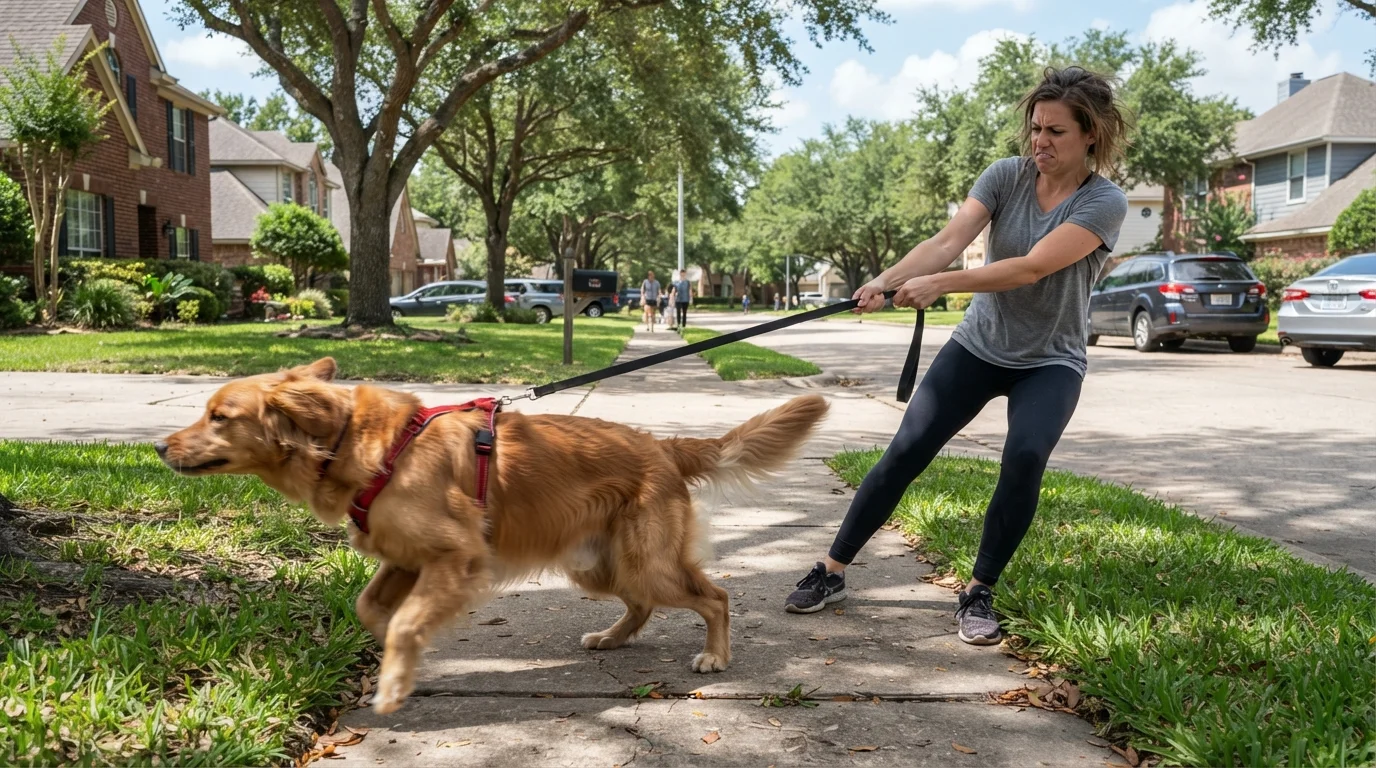
Leash pulling is rarely about dominance or a dog "testing" its owner. The behavioral explanation is far more straightforward: pulling works. When a dog strains toward a fire hydrant, a squirrel, or an interesting smell — and actually reaches it — the brain registers a reward. That reward strengthens the behavior. Over dozens of walks, pulling becomes the default strategy for getting where the dog wants to go.
Dogs also walk naturally faster than humans and have no instinctive understanding of what a leash represents. The constraint itself can increase arousal, which escalates pulling. For some dogs, high excitement at the start of a walk — when stimulation levels peak — makes leash manners especially difficult before they've had any outlet for that energy.
Understanding the function of the behavior is the necessary first step. Pulling isn't spite or stubbornness; it's a conditioned response that owners can interrupt and redirect with the right approach. For a deeper look at the neurological basis of how dogs learn, see the science behind positive reinforcement in dog training.
Common Mistakes That Make Pulling Worse
Most owners make well-intentioned errors that inadvertently reinforce the pulling cycle. Recognizing them is the fastest path to progress.
Following the dog when it pulls, even just a few steps forward.
Why it happens: Owners want to keep the walk moving, especially in uncomfortable weather or on a tight schedule. The path of least resistance is to just go with the dog.
Using a retractable leash while trying to teach loose-leash manners.
Why it happens: Retractable leashes feel more freeing for the dog and require less physical effort from the owner. Many owners don't realize the leash itself is part of the training equation.
Relying on a no-pull harness or head collar as the sole solution.
Why it happens: Equipment that reduces pulling force feels like a fix. The dog pulls less, so owners assume the problem is solved.
Inconsistent rules across different walkers or family members.
Why it happens: One family member reinforces pulling by walking ahead; another practices stopping. Dogs learn context-specifically and will pull with anyone who has historically allowed it.
Skipping mental and physical enrichment before walks.
Why it happens: Owners treat the walk itself as the enrichment, not realizing a dog with pent-up energy starts every outing at a higher arousal baseline.
For a broader look at how owners unintentionally slow their pet's learning, common owner habits that undermine training progress covers the most frequent timing and consistency errors.
Building Loose-Leash Walking That Lasts
Avoid Aversive Equipment Without Professional Guidance
Prong collars, choke chains, and shock collars are sometimes marketed as quick fixes for pulling. However, major veterinary and animal behavior organizations caution that aversive tools carry risks of physical injury, increased anxiety, and aggression — particularly without professional supervision. If you're considering any corrective device, consult a certified professional dog trainer or veterinary behaviorist first.
Loose-leash walking is a trained skill — not a setting you switch on with the right equipment. The foundation is teaching your dog that staying near you predicts good things. Reward your dog with treats, praise, or a brief play moment every time the leash is slack and they're beside or slightly ahead of you. Timing matters enormously: the reward needs to land within one to two seconds of the desired behavior.
Short, frequent sessions outperform long, exhausting ones. Five minutes of focused practice twice a day produces faster, more durable results than a single thirty-minute walk where attention drifts on both ends of the leash. If your dog is over-threshold — too aroused to respond to treats or cues — start training in a lower-stimulation environment, such as your yard or a quiet hallway, before progressing to busier settings.
#1
Most-cited behavior problem by dog owners
Leash pulling is consistently ranked as the top behavior complaint in surveys of dog owners conducted by veterinary and animal behavior organizations.
4–6 ft
Recommended leash length for training
Certified professional dog trainers and the American Kennel Club both recommend a standard four- to six-foot leash for effective loose-leash training feedback.
It's also worth considering whether your dog's pulling is amplified by anxiety-driven reactivity. Dogs who lunge or pull intensely toward other dogs or people may be showing stress responses rather than simple excitement, and those cases often benefit from guidance from a certified applied animal behaviorist or veterinary behaviorist.
This article is for general informational and educational purposes only. For concerns about your dog's behavior or health, consult a qualified veterinarian or certified professional dog trainer.