

Key Takeaways
Option A
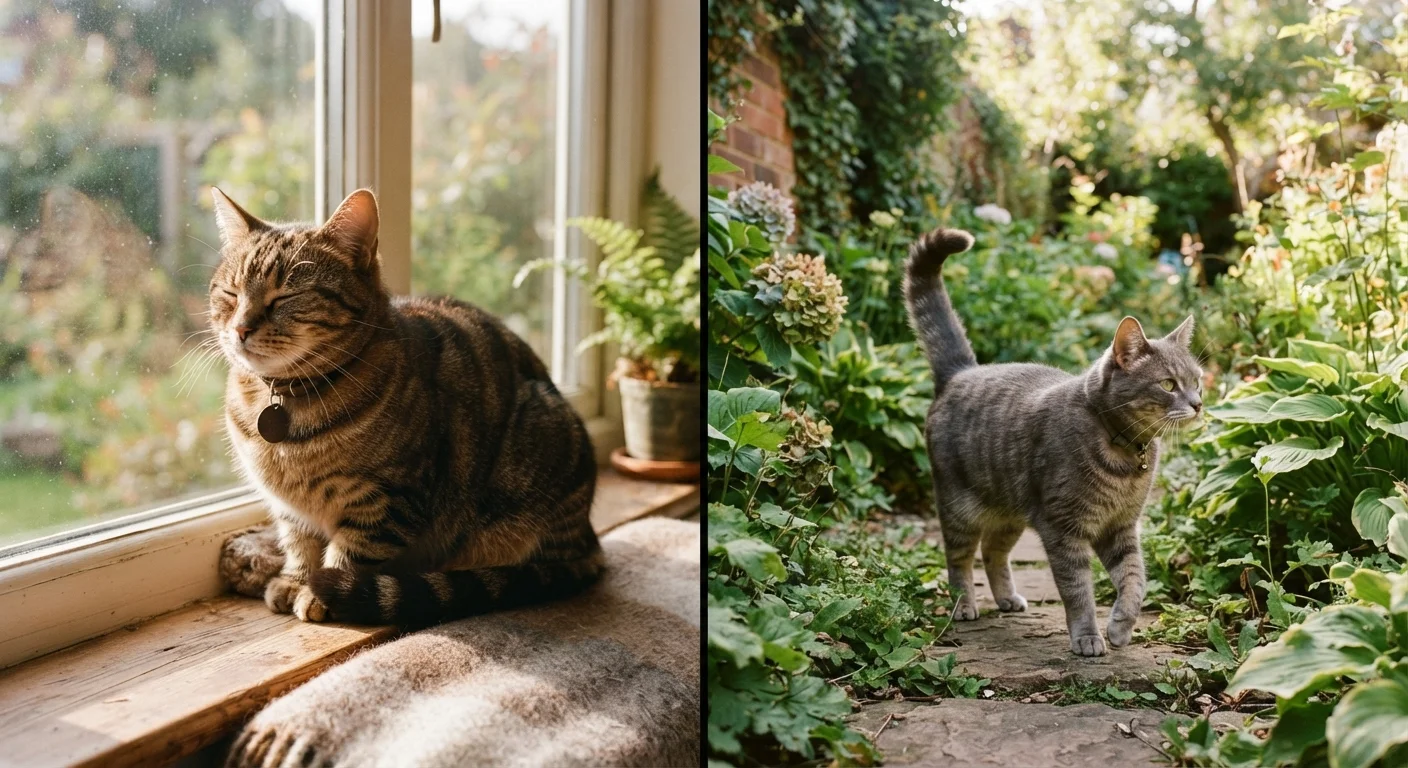
Indoor Cat
The protected, controlled-environment lifestyle.
Best for: Owners who prioritize long-term safety, disease prevention, and predictable care routines.
Option B
Outdoor Cat
The free-ranging, behaviorally stimulated alternative.
Best for: Cats with strong roaming instincts in low-traffic, low-risk environments where owners can manage the added health vigilance.
If your cat's long-term safety and disease prevention are the top priority
Indoor Cat
Indoor cats are shielded from traffic, predators, and contagious diseases, contributing to a considerably longer average lifespan according to veterinary research.
If you have a cat with strong roaming instincts and access to a safe, rural environment
Outdoor Cat
Some cats — particularly those transitioned from strays or feral backgrounds — show significant behavioral benefits from outdoor access when risks can be carefully managed.
If you want to balance enrichment with safety
Indoor Cat
A well-enriched indoor environment with vertical space, puzzle feeders, and supervised outdoor time (such as a secured catio) can meet most behavioral needs without outdoor hazards.
If you're a first-time cat owner without experience managing outdoor health risks
Indoor Cat
Indoor cats require less reactive veterinary management around parasites, injuries, and infectious exposure, making ongoing care more straightforward for new owners.
What the Lifespan Data Actually Shows
The most frequently cited difference between indoor and outdoor cats is lifespan. Veterinary and animal welfare organizations consistently report that indoor-only cats tend to live substantially longer — estimates often place the average indoor cat lifespan between 12 and 18 years, compared to as few as 2 to 5 years for cats with unsupervised outdoor access. These figures vary depending on geographic location, population studied, and methodology, so they should be understood as directional rather than precise guarantees.
The primary drivers of reduced outdoor lifespan are well-documented: vehicle collisions, attacks by dogs or wildlife, accidental poisoning from pesticides or antifreeze, and exposure to infectious diseases such as feline leukemia virus (FeLV) and feline immunodeficiency virus (FIV). Outdoor cats also face higher rates of parasitic infestation, including fleas, ticks, and intestinal worms. For a broader look at how cats mask health problems regardless of lifestyle, see why cats often hide pain — a pattern that makes early detection critical.
| Criterion | Indoor Cat | Outdoor Cat |
|---|---|---|
| Average lifespan | 12–18 years (estimated) | 2–5 years (estimated) |
| Infectious disease risk | Low (controlled exposure) | Higher (FeLV, FIV, rabies exposure) |
| Injury risk | Low | Higher (traffic, predators, fights) |
| Parasite burden | Lower with basic prevention | Higher; more vigilant prevention needed |
| Behavioral stimulation | Requires active enrichment effort | Naturally higher; varied environment |
| Wildlife impact | None | Significant (bird and small mammal predation) |
| Veterinary visit frequency | Standard annual wellness | More frequent monitoring recommended |
The Behavioral Case for Outdoor Access
Outdoor environments offer sensory complexity that is genuinely difficult to replicate indoors: shifting scents, moving prey, varied terrain, and the ability to engage in natural predatory sequences — stalking, chasing, catching. For cats with high prey drive or those previously accustomed to outdoor life, confinement without adequate substitution can lead to frustration behaviors including excessive vocalization, destructive scratching, and inter-cat aggression in multi-cat households.
The research here is nuanced. Studies examining cat welfare indicators have found that outdoor cats often show lower rates of certain behavioral problems, but they also experience higher stress from territorial conflicts with neighboring cats. Indoor cats, by contrast, can thrive behaviorally when given structured enrichment — puzzle feeders, climbing structures, and regular interactive play sessions. A comprehensive enrichment roadmap can help indoor owners build environments that meet these instincts effectively.
12–18 yrs
Typical indoor cat lifespan
Veterinary and animal welfare organizations broadly cite this range for cats kept exclusively indoors.
2–5 yrs
Estimated outdoor cat lifespan
Estimates vary by location and study, but traffic, disease, and predation consistently reduce survival in free-roaming cats.
1.3–4B
Birds killed annually by outdoor cats (U.S.)
A widely cited estimate from the American Bird Conservancy, highlighting the ecological impact of free-roaming cats.
Health Risks, Veterinary Demands, and the Middle Ground
Outdoor cats require more proactive veterinary management: more frequent parasite prevention, up-to-date vaccination schedules that include FeLV and rabies, and readiness to assess wounds or respiratory illness that can emerge after unsupervised roaming. This is not a reason to automatically exclude outdoor access, but it is a realistic part of the cost-of-care equation owners should weigh. For a deeper look at specific health trade-offs by lifestyle, veterinary guidance on indoor and outdoor health risks provides a useful companion read.
A growing middle-ground approach — supervised outdoor access through leash walks, enclosed catios, or garden netting systems — is gaining support from veterinarians and animal behaviorists. This model allows cats to experience environmental complexity while meaningfully reducing exposure to traffic, disease transmission through fights, and predation. It also offers owners more visibility into what their cat encounters. Whatever lifestyle you choose, the decision should be revisited as your cat ages, since an active young cat's needs differ markedly from those of a senior animal.
The 'Catio' as a Practical Compromise
Enclosed outdoor structures — commonly called catios — allow cats to experience fresh air, sunlight, and sensory stimulation without unsupervised roaming. They range from window-box attachments to full garden enclosures and can be built or purchased in various sizes. Many veterinarians and behaviorists view supervised outdoor access of this kind as a reasonable middle path for owners weighing safety against enrichment. Check local building codes and rental agreements before installation.
This article provides general information for educational purposes and is not a substitute for personalized veterinary advice. Consult a licensed veterinarian regarding your individual cat's health, temperament, and lifestyle needs.