

Key Takeaways
The 50/30/20 Rule
The 50/30/20 rule is a budgeting framework that divides your after-tax income into three categories: 50% toward needs, 30% toward wants, and 20% toward savings and debt repayment. It gives you a simple, flexible structure without requiring you to track every individual transaction. The goal is to align your spending with your priorities at a high level.
The framework was popularized by Senator Elizabeth Warren and her daughter Amelia Warren Tyagi in their 2005 book 'All Your Worth.' It applies to net income — the amount you actually take home after taxes and payroll deductions — not gross salary.
Breaking Down the Three Buckets
The 50/30/20 framework works by sorting every dollar of after-tax income into one of three buckets before you spend anything. Understanding what belongs in each category is the foundation of applying it effectively.
50% — Needs
This bucket covers the expenses you genuinely cannot avoid: rent or mortgage payments, utilities, groceries, health insurance premiums, minimum loan and credit card payments, and basic transportation costs. If your household would face a serious consequence — losing housing, going without medical care, or missing a required payment — the expense is likely a need.
30% — Wants
Wants are lifestyle choices: dining out, entertainment, gym memberships, vacations, and non-essential shopping. These bring value and enjoyment but are not strictly required for your survival or financial obligations. This bucket is also where honest self-reflection tends to be most challenging — a streaming subscription feels like a need until you examine it.
20% — Savings and Debt Repayment
This category covers building financial security: contributions to an emergency fund, retirement accounts such as a 401(k) or IRA, and any debt payments above the required minimums. Paying extra on debt accelerates interest savings and is treated as financially equivalent to saving. The right size for an emergency fund depends on your circumstances, but the 20% allocation provides a workable starting point.
37%
Americans with no emergency savings
According to Bankrate's 2024 Emergency Savings Report, roughly 37% of U.S. adults said they would not be able to cover an unexpected $400 expense from savings alone.
50%+
Of income spent on housing in high-cost metros
The U.S. Department of Housing and Urban Development considers households spending more than 30% of income on housing 'cost-burdened'; in cities like San Francisco and New York, median rents routinely push renters well past that threshold.
20%
Recommended savings rate under the framework
Financial planners widely cite saving at least 15–20% of income as a benchmark for long-term financial health, aligning with the rule's savings allocation.
Putting It Into Practice
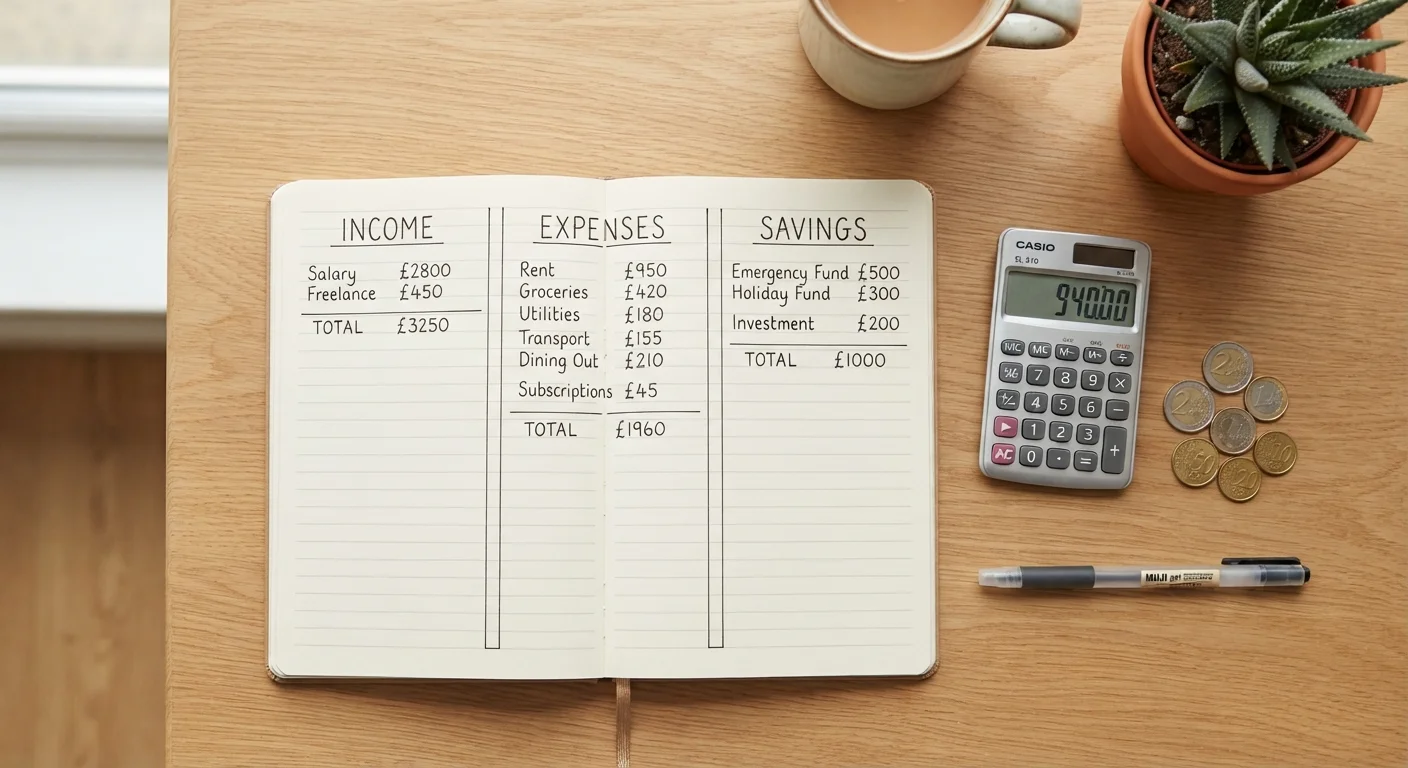
Applying the rule starts with one number: your monthly after-tax income. From there, multiply by 0.50, 0.30, and 0.20 to set your three spending ceilings. For example, if your monthly take-home pay is $4,000, your targets would be $2,000 for needs, $1,200 for wants, and $800 for savings and debt.
The next step is categorizing your current expenses honestly against those targets. Many people discover that their needs already consume more than 50% — particularly those living in cities where housing costs are high or those managing student loan payments alongside basic living costs. If that describes your situation, the 20% savings goal may need to be scaled back temporarily while you stabilize essential spending.
Start With a Single Month of Real Data
Before adjusting your budget, pull your last month of bank and credit card statements and categorize every expense as a need, want, or savings item. Most people are surprised by where their money actually goes versus where they assume it goes. One month of real data is far more useful than estimates when calibrating your 50/30/20 targets.
For a more structured walkthrough of setting up categories and assigning expenses, building a monthly budget that reflects your life provides a step-by-step approach that pairs well with this framework.
When the Rule Fits — and When It Doesn't
The 50/30/20 rule is designed for simplicity, and that is its greatest strength and its most significant limitation. It works well for people with stable, predictable income who want a low-maintenance structure without tracking every coffee purchase.
However, it is a less natural fit for households with irregular income — freelancers, seasonal workers, or those relying on commission. In those cases, applying the percentages to an average monthly income figure can help, though it requires discipline during high-earning months to avoid over-spending. The rule also assumes a level of financial flexibility that may not exist for lower-income earners, for whom basic needs routinely exceed 50% of take-home pay.
If you find this framework too broad, alternatives exist. The 50/30/20 Rule and Its Alternatives surveys other common structures and their trade-offs. And once the savings habit is established, the pay yourself first approach offers a complementary philosophy that puts savings at the front of the budget rather than the end.
“A budget is telling your money where to go instead of wondering where it went.”
— Dave Ramsey, Personal finance author and radio host
This article is for general informational purposes only and does not constitute personalized financial advice. Please consult a qualified financial professional for guidance tailored to your individual circumstances.