

Key Takeaways
Why Build Quality Is Worth Evaluating Before You Buy
Most purchasing decisions happen fast — a quick scroll, a price comparison, an add-to-cart. But the products that quietly drain your budget are rarely the expensive ones you agonized over. They're the mid-range items that seemed fine at the time and failed within a year.
Understanding how to assess build quality shifts you from a reactive buyer into a deliberate one. You don't need engineering expertise — you need a repeatable process and a handful of things to look for. This guide gives you both.
For a broader pre-purchase framework, see our pre-purchase checklist for major household items. If you're weighing the full cost of a cheaper option, the hidden costs behind cheap purchases article is worth reading alongside this one.
What you will need
How to Assess a Product's Durability: Step by Step
Apply this process in-store, when reviewing a product online, or when comparing two options side by side. It works across most consumer categories — appliances, furniture, tools, cookware, clothing, and electronics.
Identify the Primary Materials
Start with what the product is made of — not what the marketing says, but what the spec sheet or label actually lists. Look for precise material callouts: "solid oak" vs. "wood composite," "18/8 stainless steel" vs. "stainless steel finish," "full-grain leather" vs. "bonded leather." Vague terms like "premium materials" or "high-quality construction" carry no technical meaning.
As a general rule, solid and natural materials (metal, solid wood, ceramic, full-grain leather) tend to outlast engineered or composite substitutes under equivalent use. That's not universal — some engineered materials are excellent — but precision in labeling is itself a quality signal.
Examine Joints, Seams, and Fasteners
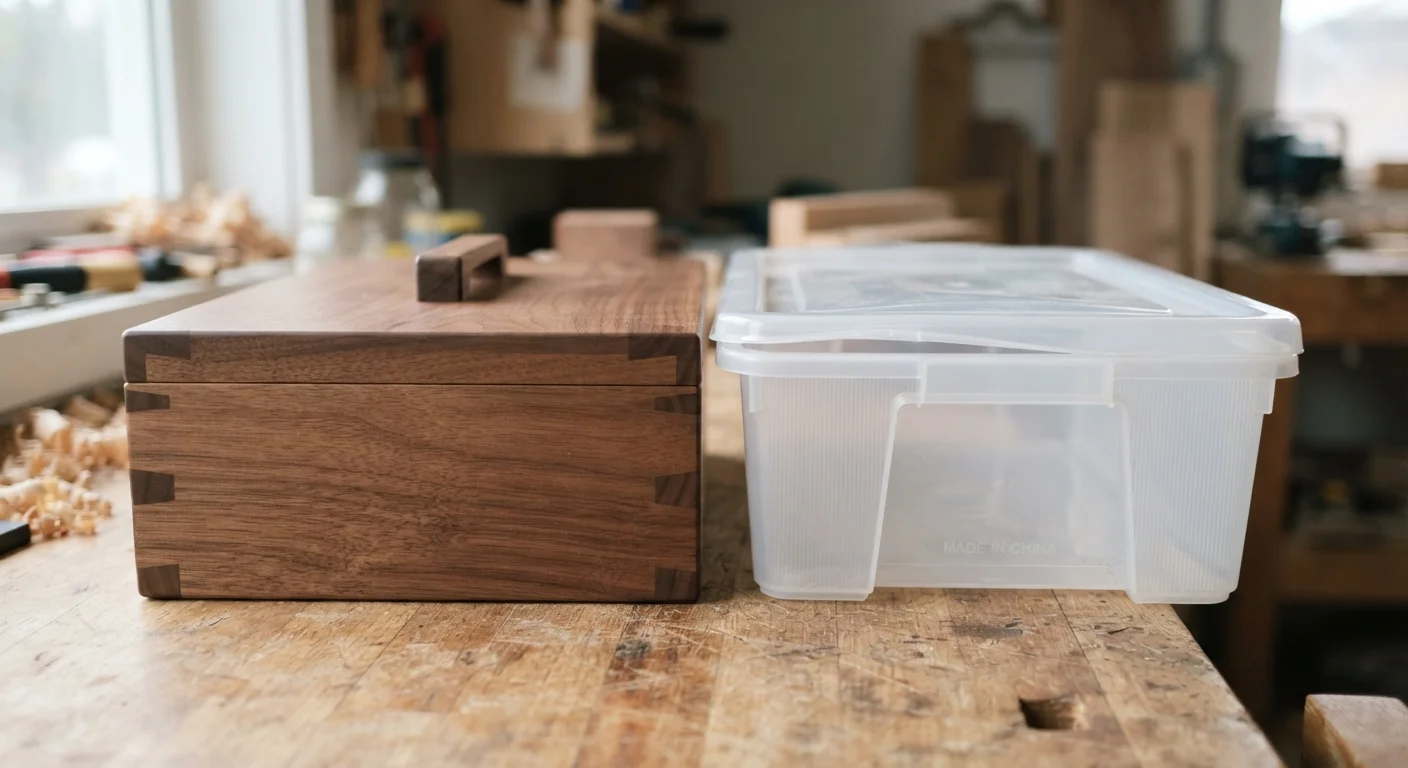
The places where materials meet are where products fail first. On furniture, look for dovetail or mortise-and-tenon joinery rather than staples and glue alone. On appliances and electronics, check whether panels align evenly — poor tolerances suggest cost-cutting in manufacturing. On clothing and bags, inspect stitching density at stress points (handles, buttonholes, pocket corners): tight, even stitching with reinforced bar tacks at high-stress areas indicates thoughtful construction.
Metal fasteners (screws, hinges, rivets) outperform plastic clips in load-bearing applications. If the product uses plastic snaps where a metal screw would serve better, treat that as a durability flag.
Handle It — Weight, Flex, and Finish
When physically possible, pick the product up and interact with it. Solid construction tends to feel dense relative to size. Flex panels, lids, or doors: quality products resist racking and return smoothly to position. Open and close drawers, lids, or hinged components — smooth, damped movement typically signals tighter manufacturing tolerances.
Run your hand across surfaces: uneven texture, rough edges, or paint that feels thin are signs of quality control gaps. On electronic devices, buttons and dials should click or rotate with consistent resistance, not wobble.
Research Repairability
A product's useful life depends partly on whether it can be fixed when something goes wrong. Before purchasing, check whether replacement parts (filters, belts, heating elements, gaskets) are available and reasonably priced. Look up whether independent repair guides exist — platforms that host disassembly guides are a useful proxy for how repair-friendly a product is.
For appliances and electronics, check whether the manufacturer sells spare parts directly and how long they commit to parts availability. Products with sealed, glued, or proprietary-fastener construction are harder and more expensive to repair — a relevant consideration for higher-cost purchases.
Evaluate the Warranty and Manufacturer Support
A warranty is one of the clearest signals of how much confidence a manufacturer has in their own product. Compare warranty length against the category norm: a one-year warranty on a kitchen appliance expected to last a decade is a weaker signal than a five-year warranty on the same item type. Read the fine print for what's actually covered — parts only, or parts and labor? Is the warranty prorated? Does it require you to pay shipping for repairs?
Also check whether the manufacturer has accessible customer support and a clear claims process. A warranty that's difficult to exercise in practice offers less real-world value than the paper suggests. For a structured way to work through these considerations across any major purchase, our pre-purchase checklist for everyday consumer products is a useful companion.
Use Long-Term Owner Reviews Strategically
Short-term reviews capture first impressions; reviews from owners who have used a product for one to three years capture real durability data. When researching online, filter for reviews that mention extended ownership or describe how the product held up over time. Patterns of early failure — zippers breaking, finishes peeling, motors burning out — are more informative than an average star rating.
Common Traps That Make Disposable Products Look Durable
Manufacturers have learned to signal quality without delivering it. A few patterns to watch for:
- Surface-level finishing: High-gloss paint or brushed-metal film can mask low-grade plastic or particle board underneath. Press gently on panels — solid materials resist flex; veneers and thin composites give way.
- Misleading weight: Some products add dead weight (sandbags inside base units, for example) to mimic the density of quality materials. Pick things up when you can and assess whether the weight is structural or cosmetic.
- Warranty theater: A 90-day warranty on a product category where quality goods routinely offer two to five years is a signal, not a guarantee. Read the terms — limited warranties that exclude labor, shipping, or wear often provide little practical protection.
It's also worth separating durability from repairability. A well-built product that cannot be repaired — because parts aren't available or the design is sealed — has a fixed lifespan regardless of its initial quality. For fabric and clothing specifically, the guide to reading care labels and making garments last covers how construction and care interact over time.
Marketing Language Is Not a Durability Claim
Words like "heavy-duty," "professional-grade," and "commercial quality" are not regulated or standardized terms in consumer product marketing. They describe positioning, not verified performance standards. Always look for specific material grades, certifications, or independently testable specifications rather than relying on promotional descriptors.
Not every reusable or "durable" product is the right call, either. Our reusable vs. disposable household items breakdown helps you think through where longevity actually pays off versus where disposables make practical sense.