

Key Takeaways
Dark Patterns
Dark patterns are deliberate design choices in websites and apps that steer users toward actions that benefit the company — often at the user's expense. They work by exploiting how people naturally scan pages, process information quickly, and rely on defaults. Common forms include hidden fees revealed late in checkout, pre-checked opt-in boxes, and confusing cancellation flows.
The term was coined by UX designer Harry Brignull in 2010. Regulators including the FTC have increasingly scrutinized dark patterns as potentially deceptive trade practices under consumer protection law.
Why These Designs Exist — and Why They Work
Online retailers invest heavily in conversion rate optimization — the science of getting more visitors to complete a purchase. Dark patterns are an extreme end of that discipline: interface choices deliberately engineered to override your intentions rather than support them.
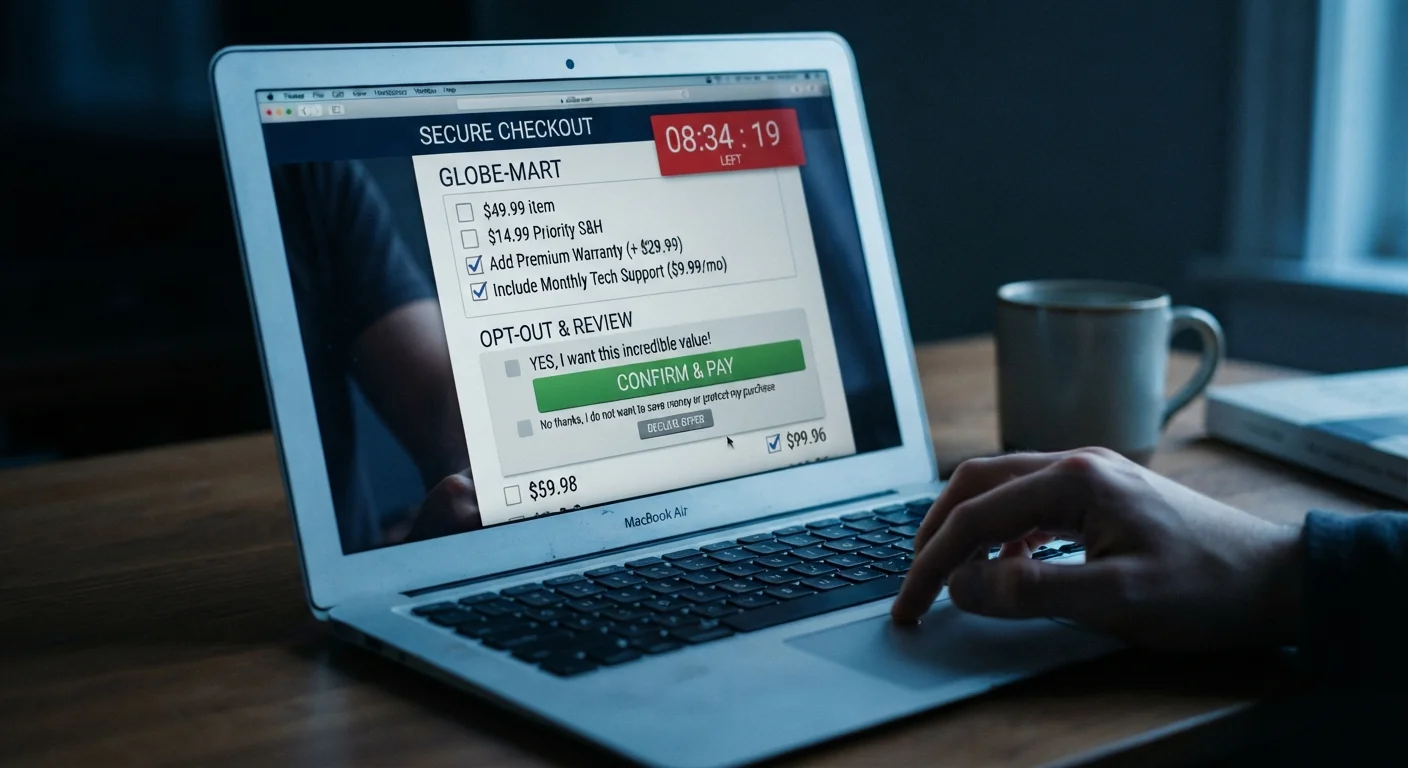
They work because human attention is limited. When you're moving through a checkout flow, you're scanning, not reading. Designers know this. A pre-checked box placed below the fold, a "No thanks, I don't want to save money" opt-out link written to make refusal feel foolish, a fee that appears only on the final confirmation screen — these exploit the gap between careful reading and real-world browsing behavior.
The result is that you may end up enrolled in a subscription you didn't want, paying for a protection plan you didn't choose, or donating to a charity you didn't intend to support. Psychological pricing tactics operate on similar cognitive shortcuts — understanding both helps you shop more deliberately.
Pause Before You Click 'Complete Purchase'
Before finalizing any online order, take 30 seconds to scroll through the full order summary. Look specifically for line items you don't recognize and pre-checked boxes you didn't actively select. This single habit catches the majority of dark pattern charges before they happen.
A Field Guide to the Most Common Dark Patterns
Knowing the pattern by name makes it much harder to fall for. Here are the tactics you're most likely to encounter:
- Confirmshaming: Opt-out language written to make you feel bad for declining — "No thanks, I prefer to pay full price." The shame is the mechanic.
- Pre-selected defaults: Add-ons, subscriptions, or donations already checked when the page loads. You must actively uncheck them, and many people don't notice.
- Hidden costs: Fees — for shipping, handling, service, or processing — that appear only at the final checkout step, after you've invested time in the process. Hidden costs extend well beyond checkout, but dark patterns often weaponize them at the most friction-heavy moment.
- Urgency and scarcity theater: "Only 2 left!" or countdown timers that reset on refresh. Real scarcity exists; manufactured scarcity is a pressure tactic.
- Roach motel: Easy to get in, deliberately hard to get out. Signing up for a free trial takes 30 seconds; canceling requires navigating buried account menus or calling a number during business hours.
- Trick questions: Double-negative opt-out phrasing designed to confuse — "Uncheck this box if you do not wish to not receive marketing emails."
1,818
Dark patterns identified across 11,000 shopping sites
A 2019 Princeton University study found dark patterns on roughly 11% of the 11,000 shopping sites analyzed, with deceptive urgency and hidden subscription enrollment being most prevalent.
~$9B
Estimated annual U.S. unwanted subscription charges
Consumer advocacy research has estimated that Americans collectively pay billions annually for subscriptions they did not knowingly initiate or forgot to cancel — a direct consequence of enrollment dark patterns.
Where They Show Up Most
Dark patterns concentrate wherever a company profits from your inattention. Watch for them in these specific contexts:
Free trial sign-ups: A credit card is required "just to verify your identity" — but you're enrolled in a paid subscription the moment the trial ends. Understanding subscription fine print is essential before entering payment details anywhere.
Booking and travel sites: Pre-checked travel insurance, seat upgrades, and rental car add-ons are endemic in this sector. The base price advertised rarely reflects what you pay.
Donation or charity prompts at retail checkout: Retailers sometimes pre-select a donation amount, and the interface makes it awkward — not impossible — to remove it.
Product reviews: Some platforms use interface tricks to surface favorable reviews prominently while making negative ones harder to reach. Recognizing trustworthy reviews requires knowing how curation can skew what you see.
Regulatory Attention Is Growing
The FTC has issued guidance and pursued enforcement actions targeting subscription enrollment dark patterns, particularly around the ease of cancellation. The EU's Digital Services Act also explicitly addresses manipulative design. While the regulatory landscape is still evolving, these developments signal that some of the most aggressive dark patterns carry legal risk for companies that use them — and that consumer complaints do have channels worth pursuing.
Practical Habits That Blunt Their Effectiveness
Dark patterns depend on speed and inattention. Slowing down is genuinely disruptive to their mechanics. A few concrete habits make a meaningful difference:
- Read the order summary line by line before clicking the final "Place Order" button. Every line item should be something you chose.
- Start checkout from the cart, not from a "Buy Now" button — fast-purchase flows skip the review screens where pre-selected add-ons are most visible.
- Screenshot your final confirmation. If an unwanted charge appears later, you'll have documentation of what you actually agreed to purchase.
- Reload the page if you see a countdown timer and observe whether it resets. If it does, the urgency is manufactured.
- Use a dedicated email address for retail accounts so that confirmation and marketing emails are separated, making it easier to track what you've signed up for.
Building these habits is part of a broader shift toward intentional purchasing. Developing a smarter shopping habit addresses this at a larger scale — from planning through post-purchase review.