

Key Takeaways
Why Responsible Rehoming Matters
The decision to rehome a pet is one of the most emotionally fraught choices a pet owner can face. Life circumstances — job loss, a new baby, a serious illness, a cross-country move, or a sudden allergy diagnosis — can shift the equation in ways that were impossible to predict at adoption. Acknowledging this reality is not a failure of commitment; it reflects the complexity of long-term pet ownership.
What matters is how the decision is handled. Responsible rehoming prioritizes the animal's welfare at every step, ensures the next owner is genuinely equipped to provide appropriate care, and avoids the risks associated with informal or rushed placements. Done well, rehoming is an act of stewardship — not abandonment.
If you're still in the decision phase, it may help to revisit the foundations of pet readiness. Our pet readiness checklist outlines the commitments involved and can help clarify whether a temporary workaround is viable. For those thinking longer-term about what happens to a pet if an owner becomes incapacitated or passes away, planning for a pet's future care covers practical legal and logistical tools.
Prepare a 'Pet Profile' for Prospective Adopters
A one-page summary covering your pet's daily routine, food preferences, quirks, fears, and medical history gives new owners a meaningful head start. Include your vet's contact information so the adopter can request records directly. This small step dramatically improves transition success.
Step-by-Step: Rehoming with the Animal's Welfare First
The steps below apply to dogs, cats, and most companion animals. The principles — transparency, screening, and a thoughtful transition — hold regardless of species.
What you will need
Veterinary Records
Provide the new owner with a complete health history, including vaccinations, medications, and any diagnosed conditions.
Written Behavioral Summary
Document the pet's personality, known fears, house-training status, and compatibility with children or other animals.
Rehoming Agreement
A simple written document outlining both parties' understanding of the transfer, including a return clause if the placement doesn't work out.
Breed-Specific Rescue Contact List
Identify reputable breed-specific or species-specific rescues as vetted rehoming partners.
Exhaust Alternatives Before Deciding to Rehome
Before committing to rehoming, explore whether the underlying problem is solvable. A job loss may be temporary; community resources, pet food banks, and low-cost veterinary clinics exist in many areas. A new baby may require a behavioral consultation rather than a permanent separation. Housing issues — like a no-pet lease — may have more flexibility than assumed; see our guide on navigating rental pet policies for practical options.
If the challenge is behavioral, consult a certified applied animal behaviorist or veterinary behaviorist before concluding the pet cannot remain in the home. Many behavioral issues that lead to rehoming are addressable with professional support.
Gather Your Pet's Complete Health and Behavioral History
Compile vaccination records, spay/neuter documentation, microchip registration details, and notes from recent vet visits. Write an honest behavioral profile that covers house-training status, energy level, compatibility with children, other pets, and strangers, and any known fears or triggers. Transparency here protects both the animal and the adopter.
Identify Responsible Placement Options
Your options fall into several categories, each with different tradeoffs:
- Trusted personal network: Friends, family, or colleagues you know personally and can vet informally. The most controllable route when available.
- Breed-specific rescues: These organizations understand the breed's needs, screen adopters rigorously, and often provide post-adoption support.
- General animal rescues and humane societies: Reputable organizations conduct adoption screenings and offer return policies. Contact them in advance — many have waiting lists or intake requirements.
- Municipal shelters: A legitimate last resort, but intake does not guarantee a specific outcome. Open-admission shelters accept all animals; no-kill shelters have capacity limits.
For guidance on what the shelter adoption process looks like from the receiving end, see common shelter adoption myths.
Screen Prospective Adopters Thoroughly
Treat this like an adoption process — because it is one. Ask prospective adopters about their housing situation, daily schedule, experience with pets, how they plan to handle veterinary costs, and who will care for the pet when they travel. Request a home visit or video call when possible. Check references if you have any doubts.
A simple rehoming agreement — stating both parties' responsibilities and including a clause that the pet must be returned to you rather than passed to a third party — adds an important layer of accountability.
Facilitate a Thoughtful Transition for the Animal
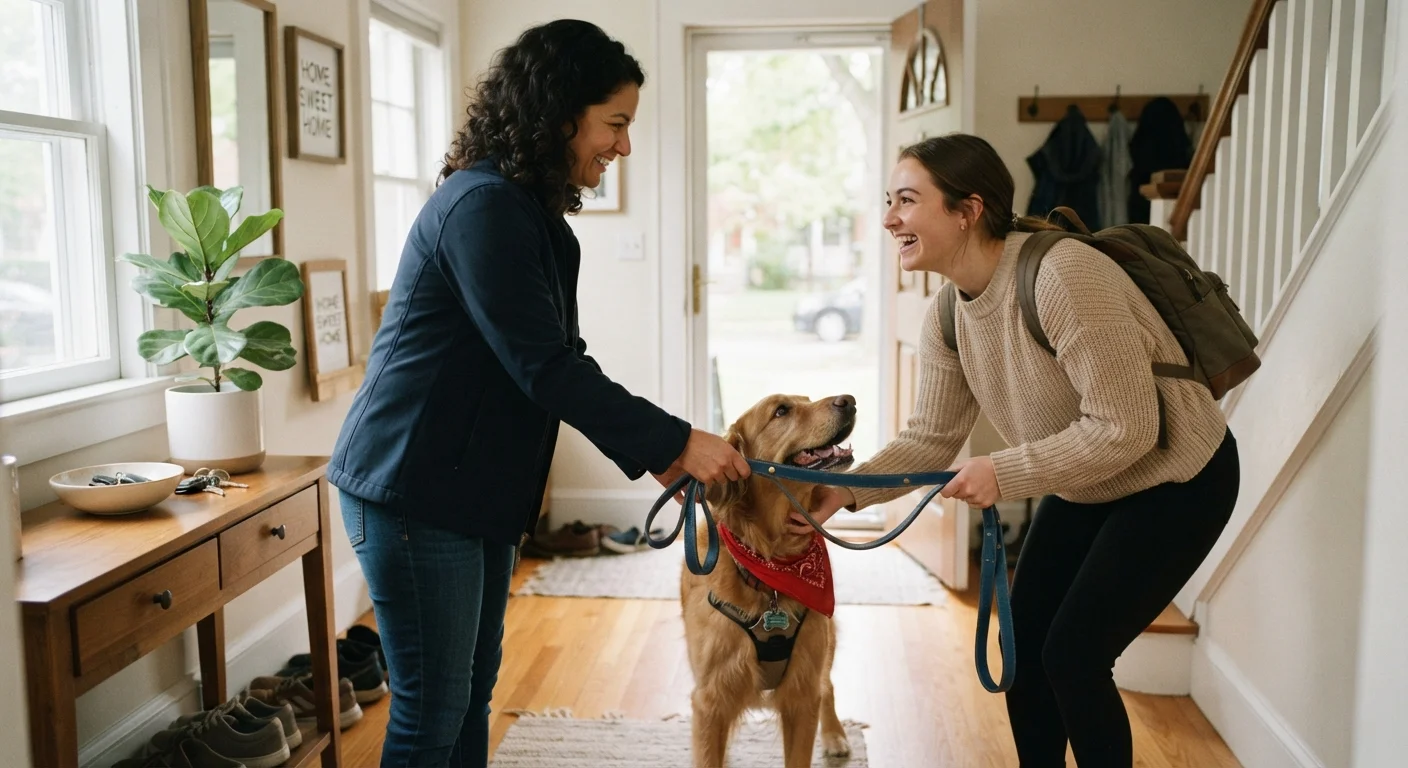
Whenever possible, arrange a meet-and-greet in a neutral environment before the final transfer. Send familiar items — a blanket, a favorite toy, a bag of their current food — to ease the sensory adjustment. Share the pet's daily routine in writing so the new owner can maintain consistency during the settling-in period.
Animals experience stress during transitions. Behavioral changes in the first few weeks are normal; encourage the new owner to give the pet time to acclimate before drawing conclusions about temperament.
Follow Up After the Transfer
Check in with the new owner within the first week and again at the one-month mark. Offer to answer questions about the pet's quirks as they arise. This follow-up signals that you remain a resource and reinforces your commitment to the pet's welfare beyond the handover date.
If the placement isn't working, be willing to take the pet back temporarily or help identify a new placement — especially if you included a return clause in your agreement.
Never List a Pet as 'Free to Good Home'
Ads offering pets for free online attract a broad and unvetted pool of respondents, including individuals who may misuse or resell animals. Charging a nominal rehoming fee and conducting a screening interview significantly filters out unsuitable applicants. Your pet's safety depends on who receives them — take the time to verify.
Avoid Abandonment or Informal Drop-Offs
Leaving a pet at a park, a shelter's doorstep after hours, or with an unprepared acquaintance exposes the animal to serious harm and may constitute animal abandonment under state law. If a shelter is your chosen path, contact them in advance to understand their intake process and any surrender fees.
Rehoming is not the end of responsible ownership — it is an extension of it. Owners who approach the process with care make a lasting difference in their pet's next chapter. For further perspective on the adoption side of this equation, see what the adoption decision really involves.
This article is for general informational purposes only and does not constitute veterinary, legal, or financial advice. Consult qualified professionals for guidance specific to your situation.