

Key Takeaways
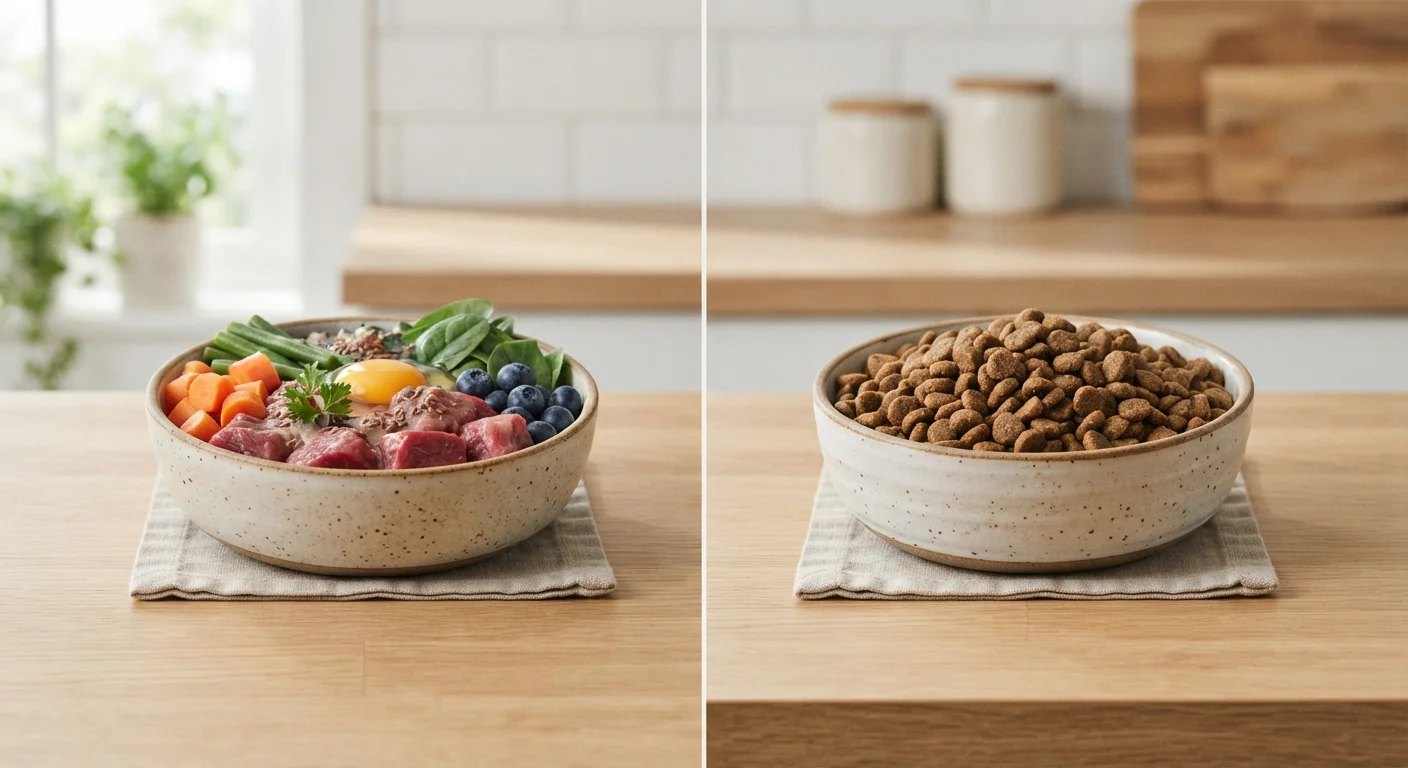
Option A
Raw Diet (BARF/Whole Prey)
The minimally processed, whole-food approach to pet nutrition.
Best for: Owners willing to invest time in meal planning, sourcing, and safe food handling for their pet.
Option B
Commercial Kibble
The convenient, nutritionally standardized staple of modern pet feeding.
Best for: Pet owners seeking a regulated, shelf-stable, and straightforward daily feeding solution.
If convenience and regulatory oversight matter most to you
Commercial Kibble
Kibble is formulated to meet AAFCO nutritional standards, requires no special handling, and is far easier to store and measure consistently.
If you want to minimize heavily processed ingredients and have time to plan carefully
Raw Diet (BARF/Whole Prey)
A properly balanced raw diet emphasizes whole-food ingredients, though it demands rigorous meal planning and safe food-handling practices.
If your pet has a diagnosed health condition or special nutritional needs
Commercial Kibble
Prescription and therapeutic commercial diets are clinically tested and closely regulated, making them the safer starting point for medically complex pets.
If budget is a primary concern
Commercial Kibble
High-quality kibble generally costs significantly less per meal than a properly sourced and balanced raw diet.
What Each Diet Actually Is
The term raw diet typically refers to feeding pets uncooked meat, organs, raw meaty bones, and sometimes fruits or vegetables. Two common frameworks are BARF — which includes plant matter — and whole-prey feeding, which mimics what animals eat in the wild. Proponents argue that minimal processing preserves nutrients and enzymes, though scientific consensus on those specific benefits remains limited.
Commercial kibble is a dry, extruded pet food manufactured to meet nutritional profiles established by the Association of American Feed Control Officials (AAFCO). Reputable manufacturers conduct feeding trials or use nutrient analysis to verify that a product supports a pet's life stage. This standardization is one of kibble's key advantages — a verified nutritional floor that removes much of the guesswork from daily feeding. For a broader overview of pet nutrition fundamentals, see our new owner's health guide.
Nutritional Trade-Offs and Evidence
Supporters of raw feeding often cite improvements in coat quality, digestion, and energy levels. These reports are largely anecdotal; controlled, peer-reviewed studies comparing raw and kibble diets in companion animals are limited, and findings are mixed. What is clear is that improperly balanced raw diets — those lacking adequate calcium, phosphorus, or key vitamins — can cause serious nutritional deficiencies, particularly in growing puppies and kittens.
Kibble, when it carries an AAFCO statement of nutritional adequacy, offers a reliable baseline. However, formulations vary widely, and ultra-processed ingredients, fillers, or high carbohydrate content may not be optimal for every animal. Diet quality — whether raw or commercial — matters more than the category itself. Pets on either diet can become overweight if portions aren't managed; our article on pet obesity explains how diet composition and calorie density interact with weight gain.
| Criterion | Raw Diet | Commercial Kibble |
|---|---|---|
| Nutritional regulation | No regulatory requirement; owner-dependent | AAFCO standards; feeding trial options |
| Pathogen risk | Higher — raw meat, bones, handling | Lower — heat processing kills most pathogens |
| Ingredient processing | Minimal to none | High-heat extrusion or baking |
| Monthly cost (medium dog) | Typically 2–4x higher than kibble | Generally more affordable |
| Preparation time | Significant — sourcing, thawing, portioning | Minimal — scoop and serve |
| Storage requirements | Freezer space essential | Dry storage; long shelf life |
| Suitability for life stages | Risky without expert formulation for puppies/kittens | Life-stage formulas widely available |
Safety Risks You Need to Know
This is where the evidence is clearest and most consequential. Raw meat — including poultry, beef, and fish — can harbor Salmonella, Listeria, E. coli, and parasites. The FDA and the American Veterinary Medical Association (AVMA) have both raised concerns about raw pet food on these grounds — not just for the animals consuming it, but for household members who handle contaminated bowls, surfaces, or the pets themselves.
Immunocompromised individuals, the elderly, young children, and pregnant people face elevated risk from pathogen exposure. If anyone in your household falls into these categories, the safety calculus shifts significantly toward commercial feeding. Kibble, while not without its own safety history (recalls do occur), undergoes heat processing that eliminates most pathogens. Always check recall databases and practice good food hygiene regardless of diet type.
67%
Raw pet foods testing positive for harmful bacteria
An FDA study found that approximately two-thirds of raw pet food samples tested positive for pathogens, compared to far lower rates in commercial dry foods.
~2–4x
Cost increase vs. kibble for balanced raw feeding
Veterinary nutritionists commonly estimate that properly sourced and balanced raw diets cost roughly two to four times more monthly than comparable quality commercial kibble.
<10
Peer-reviewed controlled feeding trials on raw diets
The body of controlled clinical research directly comparing raw and commercial diets in companion animals remains limited, making definitive nutritional claims difficult to substantiate.
Cost, Practicality, and the Long View
A properly sourced, balanced raw diet for a medium-sized dog can cost two to four times more per month than quality commercial kibble. Owners must budget for varied protein sources, organ meat, raw meaty bones, and potentially supplements to fill nutritional gaps — see what the evidence says about pet supplements for guidance on when supplementation is warranted. Preparation time, freezer space, and safe thawing routines add further logistical demands.
Kibble wins on convenience: it's shelf-stable, precisely portioned, and easy to travel with. The hidden cost of either diet, however, is veterinary correction — whether that's treating a nutritional deficiency from a poorly planned raw diet or managing a diet-related health condition linked to low-quality kibble. Pet ownership carries real long-term financial commitments; the full cost of pet ownership covers this in depth. Whatever diet you choose, factor veterinary nutritionist consultations into your planning — especially before any significant switch.
Working With a Veterinary Nutritionist
Board-certified veterinary nutritionists (Diplomates of the American College of Veterinary Nutrition) can formulate customized raw or home-cooked diets tailored to your specific pet's health status and life stage. This is especially important for pets with kidney disease, food allergies, or growth-stage needs. Your primary veterinarian can provide a referral, or you can search through the American College of Veterinary Nutrition's directory.
This article is for general informational and educational purposes only and does not constitute veterinary or nutritional advice. Always consult a licensed veterinarian or board-certified veterinary nutritionist before changing your pet's diet.