

Key Takeaways
Portfolio Drift
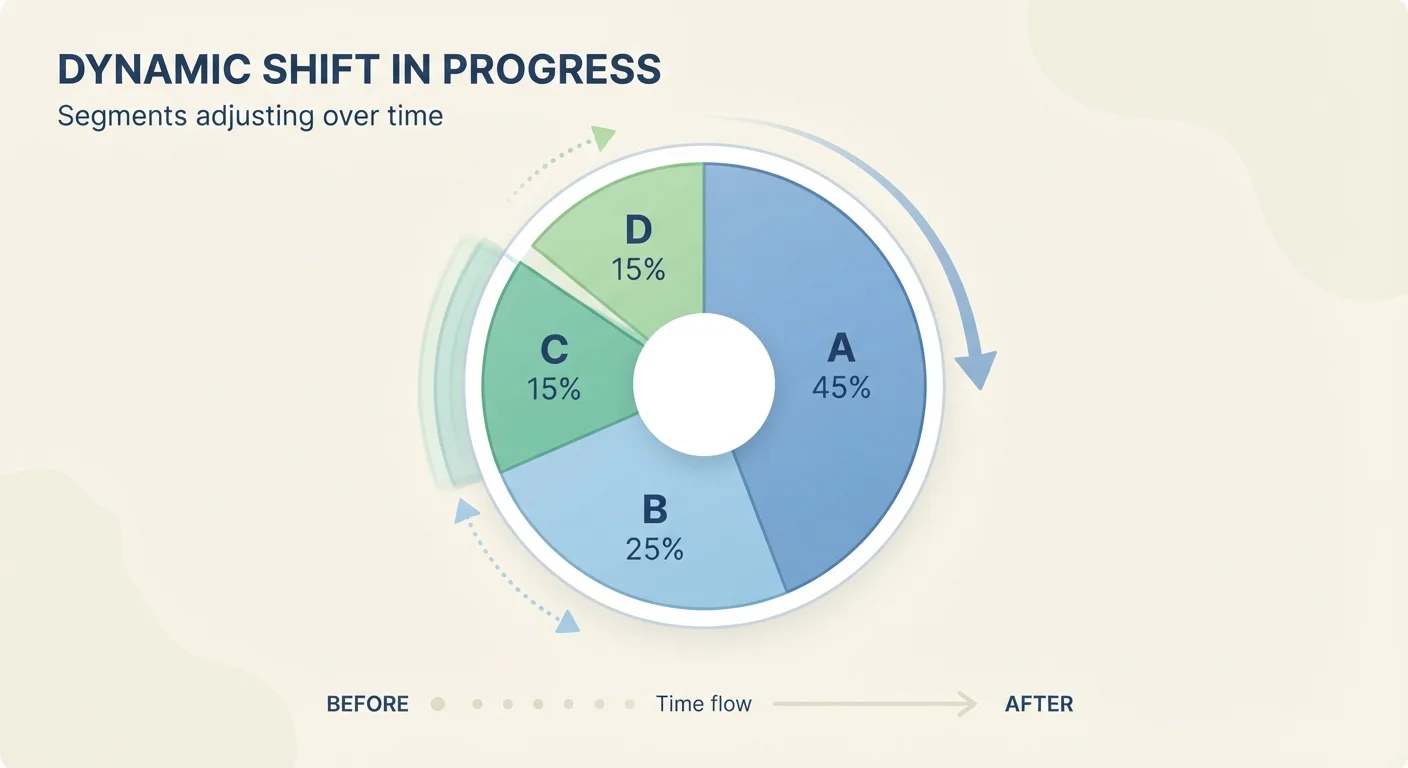
Portfolio drift is what happens when your investments grow at different rates, causing the mix of assets in your portfolio to shift away from your original plan. For example, if stocks surge while bonds stay flat, stocks will take up a larger share of your portfolio than you intended. Over time, this silent shift can change how much risk you're carrying — often without you realizing it.
Drift is measured as the deviation between a portfolio's current asset weights and its target allocation, typically expressed in percentage points per asset class.
How Drift Happens Without You Doing Anything
Imagine you start with a portfolio split 60% in stocks and 40% in bonds — a common moderate-risk allocation. After a strong year for equities, your stocks have grown significantly while your bonds stayed relatively flat. Now stocks might represent 70% of your portfolio, and bonds just 30%. You never made a move; the market did it for you.
This is portfolio drift: a gradual, automatic shift in how your money is distributed across different asset classes. It happens in every market environment — during rallies, corrections, and quiet sideways periods alike. The speed of drift depends on how volatile markets are and how different your holdings' return rates are from each other.
60/40
Classic moderate-risk starting allocation
A 60% stock, 40% bond split is a widely referenced starting point for moderate-risk investors, though the right mix varies by individual goals and timeline.
5%
Common rebalancing drift threshold
Many financial professionals use a five-percentage-point deviation from target as a trigger for rebalancing a portfolio.
1x/year
Suggested minimum review frequency
Annual portfolio reviews are a commonly cited minimum for checking whether drift has moved an allocation meaningfully off course.
Why Drift Can Change Your Risk Profile
Your original allocation wasn't arbitrary — it was chosen to reflect a level of risk you're comfortable taking on. Stocks generally offer higher growth potential but also sharper swings in value. Bonds tend to be more stable but grow more slowly. When stocks outpace bonds, a portfolio that drifts toward equities becomes more volatile than you planned for.
This matters most when you're close to a financial goal, such as retirement. A portfolio that has drifted to 75% stocks carries meaningfully different downside risk than one at 60% stocks. A market downturn hitting at the wrong time could affect your plans in ways your original allocation was designed to guard against. Understanding how diversification works — and its limits helps explain why keeping your allocation in range matters.
Check Your Allocation After Major Market Moves
Sharp market rallies or downturns are natural moments to check whether your allocation has drifted significantly. You don't need to rebalance after every fluctuation, but a big move in equities — up or down — is worth a quick review. Staying proactive helps avoid unintended risk accumulation over time.
Rebalancing: Bringing Your Portfolio Back in Line
Rebalancing is the process of restoring your portfolio to its target allocation. In practice, that usually means selling some of the assets that have grown to represent too large a share and using those proceeds to buy more of the underweighted assets. For example, in the scenario above, you'd sell some stocks and buy more bonds until you're back to 60/40.
There are two common approaches to deciding when to rebalance:
- Calendar-based: You review and rebalance on a set schedule — quarterly, semi-annually, or annually.
- Threshold-based: You rebalance whenever an asset class drifts beyond a set range, such as five percentage points from its target.
Many investors combine both approaches. It's worth noting that rebalancing in taxable accounts can trigger capital gains taxes, so the timing and method matter. A qualified financial adviser or tax professional can help you navigate that tradeoff. This principle — staying aligned with your long-term plan rather than reacting to short-term moves — is among the core investment principles supported by decades of research.
“The idea is not to pick the right stocks. It's to stay at the right risk level consistently, across time — and that means paying attention to what your portfolio actually looks like, not just what you intended it to look like.”
— William Bernstein, Author and investment theorist known for writing on portfolio construction and financial history
Making Drift Work for You, Not Against You
Staying aware of portfolio drift doesn't require constant monitoring. For most everyday investors, an annual check-in is enough to catch significant deviations. Some retirement accounts and robo-advisers rebalance automatically, which removes the burden of manual action entirely.
If you're building an investment habit from scratch, understanding drift is a good early step — it reinforces why your initial allocation decision matters and why common early missteps like ignoring your allocation can compound over years. Drift is normal and manageable; what matters is having a plan to keep it from quietly changing the nature of your investment strategy.
This article is for general informational and educational purposes only and does not constitute personalized financial, investment, tax, or legal advice. Consult a licensed financial adviser or tax professional before making decisions about your own portfolio.