

Key Takeaways
Option A
HMO (Health Maintenance Organization)
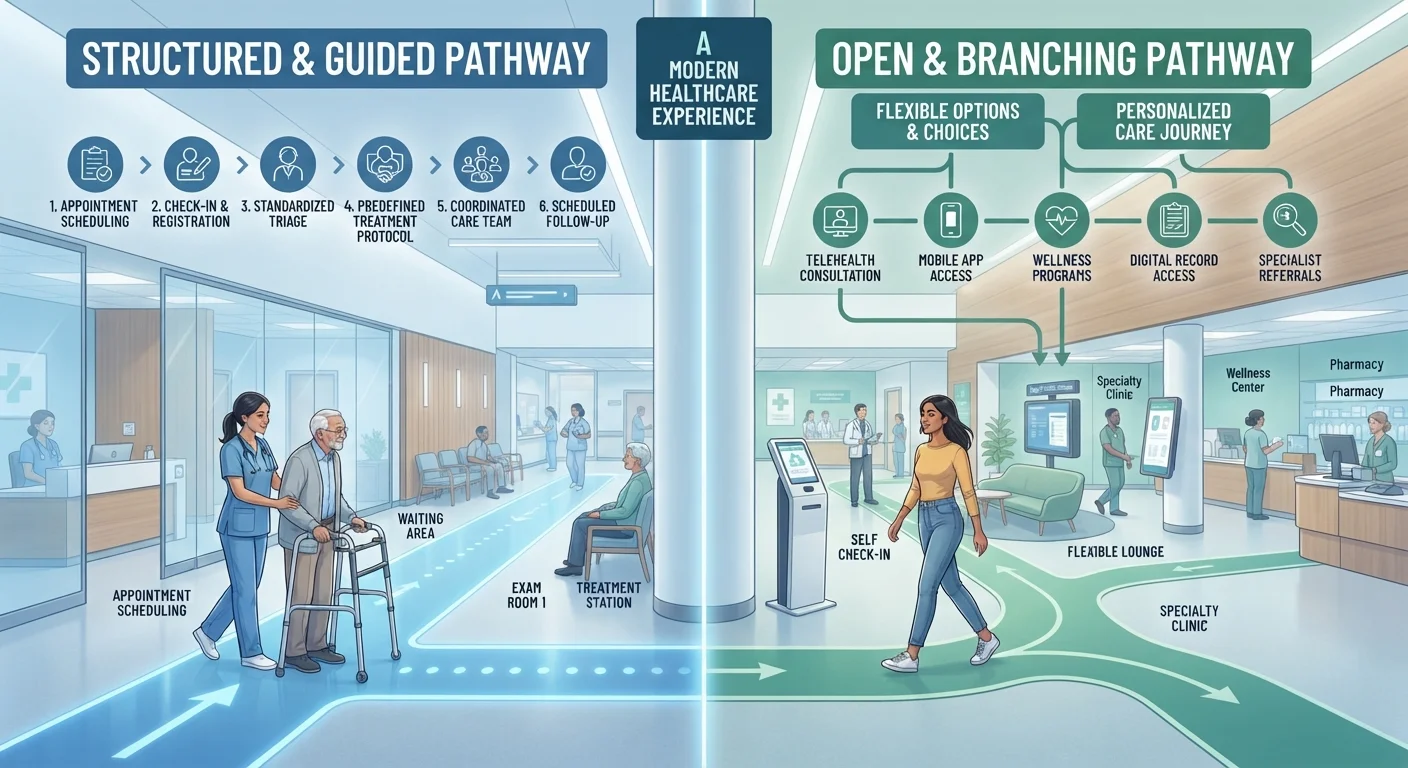
The structured, gatekeeper-based approach to managed care.
Best for: People who want lower premiums, predictable costs, and don't mind coordinating care through a primary care physician.
Option B
PPO (Preferred Provider Organization)
The flexible, direct-access network with broader provider choice.
Best for: People who want to see specialists directly or need access to a wider range of providers, including out-of-network care.
If you have a regular primary care doctor and prefer lower monthly premiums
HMO
HMOs are designed around coordinated care through a single primary physician, which keeps premiums and copays lower for people who don't need frequent specialist access.
If you manage a chronic condition requiring multiple specialists
PPO
PPOs allow you to book specialist appointments directly without waiting for a referral, which can reduce delays in care coordination.
If you travel frequently or split time between states
PPO
PPO networks tend to be broader, and many plans offer partial coverage for out-of-network care, which matters when your regular providers aren't nearby.
If you rarely use healthcare and want to minimize fixed monthly costs
HMO
The trade-off of network restrictions is easier to accept when you don't use care frequently, and the premium savings can be meaningful over a year.
What Sets HMOs and PPOs Apart
Both HMO and PPO plans are forms of managed care health insurance, but they handle provider access and cost-sharing in fundamentally different ways. Understanding these differences is essential before choosing a plan — for a deeper foundation on coverage concepts, see Health Insurance Decoded.
An HMO requires you to select a primary care physician (PCP) — a doctor who serves as your main point of contact for all health needs. If you need to see a specialist, your PCP must issue a referral first. Care delivered outside the HMO's defined network is generally not covered at all, except in genuine emergencies.
A PPO, by contrast, does not require a PCP or referrals. You can schedule an appointment with a specialist directly. PPOs also cover some out-of-network care, though at a higher cost-sharing rate than in-network visits. This flexibility comes at a price: PPO premiums are typically higher than HMO premiums for comparable coverage levels.
| Criterion | HMO | PPO |
|---|---|---|
| Primary care physician required | Yes — mandatory selection | No — optional |
| Specialist referrals needed | Yes — from PCP | No — direct access |
| Out-of-network coverage | Emergency only | Yes, at higher cost-sharing |
| Monthly premium (typical) | Lower | Higher |
| Network size | Narrower, often regional | Broader, often national |
| Care coordination | Centralized through PCP | Self-directed by enrollee |
| Predictability of costs | High (in-network use) | Moderate (varies with provider choice) |
Cost Differences: Premiums, Copays, and Out-of-Pocket Exposure
The premium — the fixed monthly amount you pay regardless of whether you use care — is almost always lower on an HMO. That's partly because HMOs negotiate tightly with a defined network and route all care through managed channels, which reduces administrative and claims costs for the insurer.
PPO members typically pay more each month but gain two things in return: the ability to skip the referral process, and a safety net for out-of-network care. If you see an out-of-network provider under a PPO, you'll usually pay a higher coinsurance rate — your share of the bill after the deductible — but you won't face the full, uninsured cost that HMO members encounter outside their network.
~48%
Employer-sponsored enrollees in PPO plans
According to KFF's Employer Health Benefits Survey, PPOs consistently represent the largest share of employer-sponsored plan enrollment in the US.
~25%
Employer-sponsored enrollees in HMO plans
KFF employer benefits data shows HMOs hold a meaningful share of enrollment, particularly in regions with established managed care markets.
For a detailed look at how network tiers affect your actual bill, in-network vs. out-of-network costs is worth reading before you enroll.
How to Decide Which Structure Fits Your Situation
No plan type is universally better. The right choice depends on how you actually use healthcare. Consider these factors:
- Your preferred doctors: Check whether your current physicians are in each plan's network. On an HMO, an out-of-network doctor means full out-of-pocket cost. On a PPO, it means higher cost-sharing — still significant, but less absolute.
- Specialist access: If you regularly see cardiologists, dermatologists, or other specialists, the PPO's no-referral model may save you time and friction. HMO referrals can add scheduling delays.
- Budget predictability: HMOs tend to offer lower and more predictable costs when you stay in-network. PPOs offer more flexibility but with greater premium expense and variable out-of-network exposure.
- Geography: HMO networks can be regional. If you spend time in multiple states, a PPO's broader reach may be more practical.
It's also worth comparing these options alongside other plan structures. For instance, high-deductible health plans paired with HSAs offer a different kind of cost trade-off that some people find preferable to either HMO or PPO models.
EPO and POS Plans: The Middle Ground
If neither HMO nor PPO feels like an exact fit, two hybrid structures exist. An EPO (Exclusive Provider Organization) skips the referral requirement but still restricts you to an in-network provider list — similar to an HMO in network scope but more like a PPO in access structure. A POS (Point of Service) plan blends both: it uses a PCP gatekeeper like an HMO but allows out-of-network care at higher cost like a PPO. Your employer or marketplace may offer these options alongside standard HMO and PPO plans.
When evaluating plans during open enrollment, a structured approach helps. Comparing plans without getting overwhelmed walks you through that process step by step.
This article is for general informational purposes only and does not constitute personalized insurance, financial, or legal advice. Coverage terms, network structures, costs, and regulations vary by insurer, plan, and state. Always review the actual plan documents and consult a licensed insurance professional before making coverage decisions.