

Key Takeaways
Cost-Sharing in Health Insurance
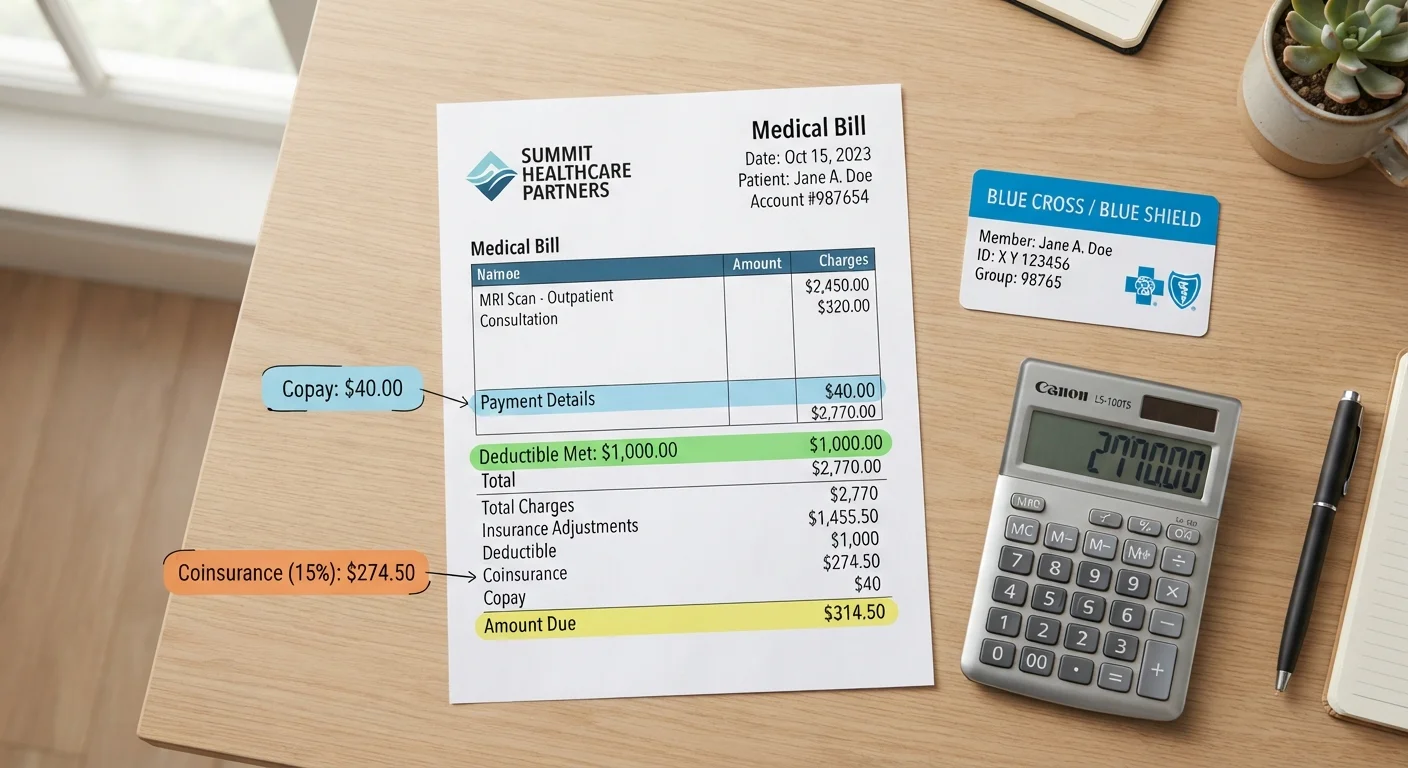
Cost-sharing refers to the portion of covered medical expenses that you — not your insurer — are responsible for paying. Deductibles, copays, and coinsurance are the three main mechanisms through which that responsibility is divided. Each works differently and applies at different points in your care.
Cost-sharing structures are governed partly by ACA rules, which cap annual out-of-pocket maximums for qualifying plans and require certain preventive services to be provided without cost-sharing.
The Deductible: Your Starting Line
A deductible is the dollar amount you must pay out of pocket for covered services before your health insurer starts sharing costs. If your deductible is $1,500, you cover the first $1,500 of eligible medical bills each plan year. After that threshold is crossed, your plan's other cost-sharing rules — coinsurance and copays — kick in.
A few important nuances:
- Not all services count toward the deductible. Many plans exempt preventive care, and some cover certain services — like primary care visits — with a copay before the deductible is met.
- Family plans may have two deductibles. An individual deductible applies to each person; a family deductible is the aggregate limit before the plan covers the whole family.
- Higher deductibles usually mean lower premiums. This trade-off is central to choosing a plan — see our article on high-deductible health plans and HSAs for a deeper look at what that exchange actually means.
$1,763
Average individual deductible for employer plans
According to the Kaiser Family Foundation 2023 Employer Health Benefits Survey, the average annual deductible for single coverage in employer-sponsored plans was approximately $1,763.
$9,450
ACA out-of-pocket maximum for individual plans (2024)
The federal out-of-pocket limit for ACA-compliant individual health plans was set at $9,450 for the 2024 plan year, capping total exposure from deductibles, copays, and coinsurance combined.
Copays: The Flat Fee at the Point of Care
A copay (short for copayment) is a fixed dollar amount you pay for a specific type of service at the time you receive it — regardless of what the total bill is. Common examples include a $25 copay for a primary care visit or a $50 copay for urgent care.
Copays are predictable by design: you know the cost before you walk in the door. They also typically apply before you've met your deductible for those specific service categories — meaning you may owe a copay even early in the year.
Check the Copay Before Your Visit
Your insurer's member portal or plan documents list copay amounts by service category. Confirming these in advance — especially for specialists and urgent care — prevents billing surprises. If you're unsure whether a copay or coinsurance applies, call the member services number on your insurance card before the appointment.
Copays vary significantly by service type within the same plan. Specialist visits usually carry higher copays than primary care. Emergency room visits are higher still. Prescription copays are often tiered by drug formulary level. Always check your plan's Summary of Benefits before assuming a flat rate applies across all services.
Coinsurance: The Percentage Split
Coinsurance is a shared percentage of costs that you and your insurer each pay after your deductible has been satisfied. A common split is 80/20: your insurer pays 80% of covered costs and you pay the remaining 20%.
Here's how it plays out: suppose you've met your $1,500 deductible and then receive a covered service billed at $2,000. With 20% coinsurance, your share would be $400. The insurer covers the other $1,600.
Unlike a copay, coinsurance is proportional — a more expensive procedure means a larger dollar amount out of your pocket, even at the same percentage. This is why understanding what you're facing before a major procedure matters. For context on how the entire billing process reflects these numbers, see how to read your Explanation of Benefits.
How These Three Costs Work Together
The confusion around cost-sharing often comes from not seeing how deductibles, copays, and coinsurance interact in sequence. Most plans follow a general pattern:
- Before your deductible is met: You pay the full allowed cost of most covered services (except those with copays or zero-cost-sharing preventive care).
- After your deductible is met: Coinsurance applies — you pay your percentage, your insurer pays theirs.
- Throughout the year: Copays apply at the time of service for applicable visit types, independent of deductible status in many plans.
- Once you reach your out-of-pocket maximum: Your insurer covers 100% of covered in-network costs for the remainder of the plan year.
The interplay between these elements is why two plans with identical premiums can have very different real-world costs. For a broader foundation on navigating these structures, Health Insurance Decoded walks through premium, network, and benefit concepts side by side.
Out-of-Network Services Change the Math
The deductible, copay, and coinsurance amounts outlined in your plan documents typically apply to in-network providers. Out-of-network care often involves separate, higher deductibles and coinsurance rates — sometimes with no out-of-pocket maximum protection. Understanding this distinction is essential before seeking care outside your network. See how in-network vs. out-of-network care affects your costs for a detailed breakdown.
This article is for general informational purposes only and does not constitute personalized financial, insurance, or legal advice. Coverage terms, cost-sharing structures, and out-of-pocket limits vary by plan and provider. Always review your actual policy documents and consult a licensed insurance professional for guidance specific to your situation.