

Key Takeaways
What Sleep Hygiene Actually Means
Sleep hygiene refers to the collection of behaviors, habits, and environmental conditions that collectively shape how well you sleep. The term is clinical in origin but the concept is practical: small, consistent choices about how you prepare for and structure sleep have a compounding effect on its quality and duration.
The science behind sleep hygiene centers on two biological systems. The first is the circadian rhythm - a roughly 24-hour internal clock that regulates alertness and sleepiness in response to light and social cues. The second is sleep pressure, the gradual buildup of adenosine (a chemical byproduct of wakefulness) that intensifies the drive to sleep the longer you stay awake. Effective sleep hygiene works with both systems rather than against them.
Poor sleep isn't just fatigue. Research consistently links inadequate sleep to reduced immune function, impaired emotional regulation, and compromised cognitive performance. It's also deeply intertwined with mental wellness - disrupted sleep is both a symptom and a driver of conditions like anxiety and depression. For more on how everyday routines affect emotional well-being, see habits that quietly undermine emotional well-being.
1 in 3
U.S. adults not getting enough sleep
The CDC estimates that roughly one-third of American adults regularly sleep less than the recommended seven hours per night.
5-6 hrs
Caffeine half-life in the body
Research published in the Journal of Clinical Sleep Medicine found caffeine consumed six hours before bed reduced sleep time by more than one hour.
~65-68°F
Optimal bedroom temperature range
Sleep scientists at the National Sleep Foundation cite this temperature window as supportive of the body's natural core temperature drop during sleep onset.
The Environmental Factors That Matter Most
Your bedroom environment sends constant signals to your nervous system. Three variables - light, temperature, and noise - have the clearest evidence base for influencing sleep architecture.
Light
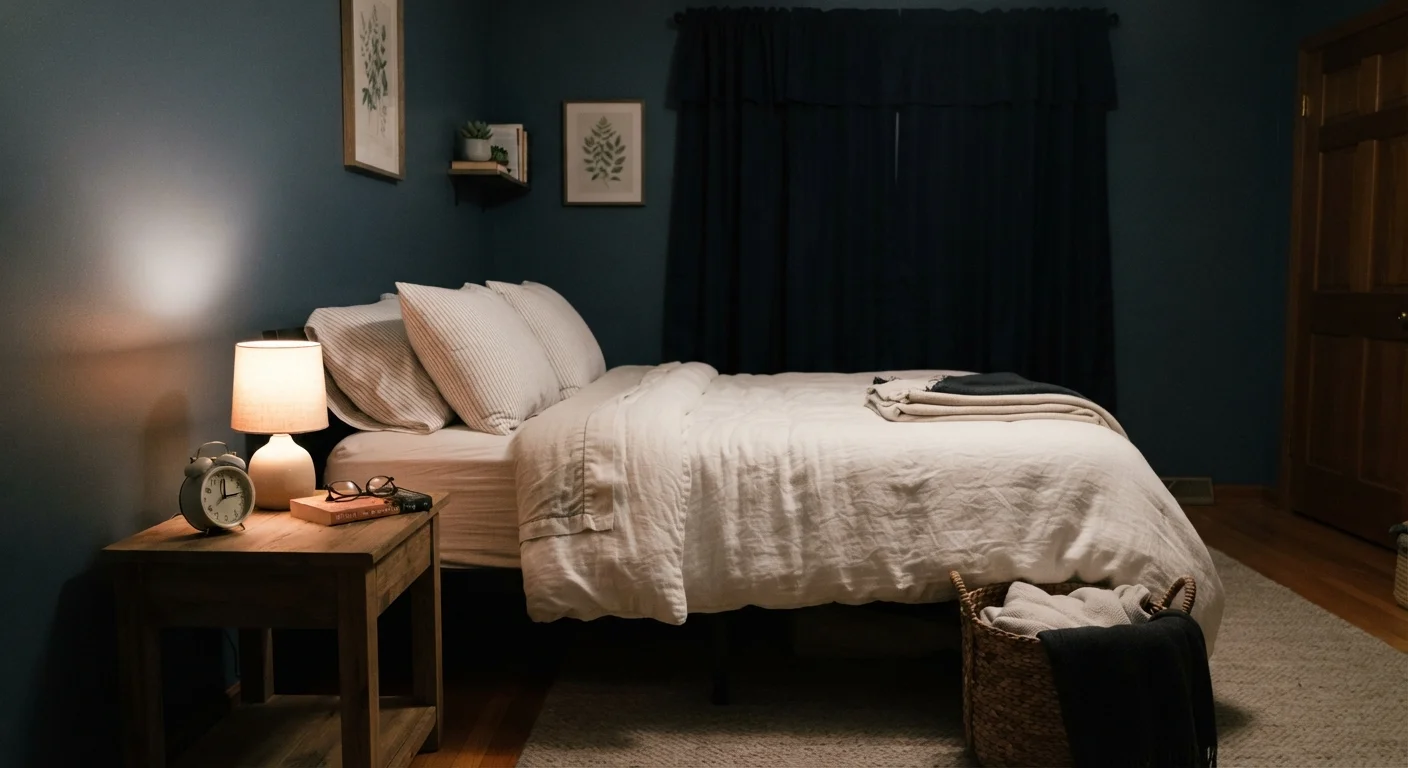
Light is the primary signal your circadian clock uses to distinguish day from night. Exposure to bright or blue-spectrum light in the evening suppresses melatonin production, the hormone that promotes sleepiness. Blackout curtains, dim amber lighting in the hour before bed, and minimizing overhead lights all help shift the environment toward sleep readiness.
Temperature
Core body temperature naturally drops as part of the sleep-onset process. A cool room - research generally supports a range between 65°F and 68°F for many adults, though individual preference varies - supports that process. Rooms that are too warm are associated with more frequent waking and lighter sleep stages.
Noise
Even noise that doesn't fully wake you can fragment sleep stages. Consistent, low-level masking sounds (such as white noise or a fan) can reduce the jarring effect of intermittent sounds more effectively than complete silence in noisy environments.
These environmental improvements connect naturally to the broader value of a well-structured home for daily well-being - explored further in the Home Essentials resource hub.
Behavioral Habits That Undermine Sleep
Environment sets the stage, but behavior writes the script. Several common daily habits measurably erode sleep quality in ways many people don't connect to their nightly difficulties.
Alcohol Is Not a Sleep Aid
Despite being commonly used to 'take the edge off' before bed, alcohol reliably fragments sleep in the second half of the night and suppresses REM sleep. Over time, regular evening drinking can worsen insomnia rather than ease it. If you rely on alcohol to fall asleep, speaking with a healthcare professional is worthwhile.
Caffeine Timing
Caffeine blocks adenosine receptors, directly counteracting sleep pressure. Its half-life in the body is approximately five to six hours, meaning half of a mid-afternoon coffee remains active at bedtime. Consuming caffeine within six hours of sleep is associated with reduced total sleep time and lighter sleep stages, even when people report falling asleep without difficulty.
Alcohol as a Sleep Aid
Alcohol may accelerate sleep onset, but it disrupts sleep architecture - particularly REM sleep - in the second half of the night. It also relaxes throat muscles, which can worsen snoring and sleep-disordered breathing.
Irregular Sleep Timing
Shifting your sleep and wake times substantially from day to day creates a form of social jet lag that destabilizes the circadian rhythm. Consistency - even on weekends - is one of the highest-leverage habits available. This kind of routine consistency is a thread running through building a sustainable mental wellness routine.
Screen Use Before Bed
The blue-spectrum light from phones and tablets delays melatonin onset. Beyond the light, the cognitive and emotional stimulation of social media, news, or engaging video content activates arousal systems that work against sleep readiness.
If you can't fall asleep after about 20 minutes, get up and do something calm in dim light until you feel sleepy - then return to bed. Lying awake in bed for long periods reinforces the association between your bed and wakefulness.
This technique, called stimulus control therapy, is a core component of CBT-I and has strong evidence for reducing sleep-onset latency over time.
Set your alarm for the same time every morning, including weekends, before worrying about when you fall asleep. Wake time consistency anchors the circadian clock faster than any other single variable.
Circadian rhythms are highly sensitive to the timing of light exposure upon waking; a fixed wake time stabilizes the entire sleep-wake cycle more reliably than a fixed bedtime.
Building a Wind-Down Routine That Works
A consistent pre-sleep routine helps signal the nervous system that sleep is approaching - a process sometimes called stimulus control. The goal is to associate the bedroom and the hour before bed with calm and rest rather than stimulation or problem-solving.
Effective wind-down routines share a few structural features: they begin at a consistent time, they reduce sensory and cognitive stimulation gradually, and they're realistic enough to maintain without willpower battles. Practices commonly supported by sleep researchers include light stretching, reading physical books, journaling to offload unfinished mental tasks, and simple breathing exercises that engage the parasympathetic nervous system.
The 20-Minute Wind-Down Threshold
Research on pre-sleep arousal suggests that even a short, consistent transition period - as little as 20 minutes of low-stimulation activity - can improve sleep-onset time. You don't need an elaborate routine; you need a reliable one. Consistency matters more than duration.
The bedroom itself should function as a sleep-and-sex-only space where possible. Using your bed for work, scrolling, or watching television trains your brain to associate it with wakefulness - a conditioning effect that can persist for weeks. For those who spend significant time at a desk and carry physical tension into the evening, addressing underlying postural strain can also help. The connection between sedentary habits and body tension is explored in posture problems most desk workers don't realize they have.
Sleep is also physically restorative in ways that parallel exercise and nutrition. Understanding what happens during those hours reinforces why protecting sleep is worth the effort - detailed further in sleep's role in physical recovery.
When Sleep Problems Signal Something More
Sleep hygiene improvements help most people, but they have limits. If sleep difficulties persist despite consistent effort - particularly if you experience chronic insomnia (defined broadly as difficulty falling or staying asleep at least three nights per week for three months or more), loud snoring with pauses in breathing, excessive daytime sleepiness regardless of time in bed, or restless leg sensations - these patterns warrant evaluation by a qualified healthcare professional.
When to Seek Professional Evaluation
Persistent difficulty sleeping - despite consistent hygiene efforts - may indicate an underlying sleep disorder such as insomnia disorder, obstructive sleep apnea, or restless legs syndrome. These conditions are treatable, but they require proper clinical assessment. Do not self-diagnose or self-prescribe sleep medications; a healthcare provider can guide appropriate evaluation and evidence-based care.
Cognitive Behavioral Therapy for Insomnia (CBT-I) is currently considered the most evidence-supported first-line treatment for chronic insomnia by major sleep medicine organizations. It's a structured, non-pharmacological approach that directly addresses the thought patterns and behaviors perpetuating poor sleep, and it typically produces more durable results than sleep medications alone.
Sleep health is not a luxury concern. It underpins nearly every aspect of physical and mental functioning - from immune defense and hormonal regulation to emotional resilience and cognitive clarity. Treating it with the same intentionality as nutrition or exercise is not excessive; it's evidence-based self-care.
This article is for general informational and educational purposes only and is not medical advice. If you are experiencing persistent sleep problems or believe you may have a sleep disorder, please consult a qualified healthcare professional.