

Key Takeaways
Option A
Mindfulness
A moment-to-moment quality of awareness you can apply anywhere.
Best for: People who want to reduce automatic reactions and bring more intentional attention to daily life.
Option B
Meditation
A structured, dedicated practice that trains the mind over time.
Best for: People seeking a consistent mental training routine with measurable long-term benefits.
If you have little time but want to manage stress throughout the day
Mindfulness
Mindfulness can be woven into existing routines without carving out extra time, making it highly accessible for busy schedules.
If you want a structured mental wellness practice with progressive depth
Meditation
Formal meditation sessions build sustained attention and emotional regulation skills more systematically over weeks and months.
If you're new to mental wellness practices and unsure where to start
Mindfulness
Mindfulness requires no equipment or instruction to begin - simply paying deliberate attention to one activity is enough to get started.
If you experience chronic stress, anxiety, or difficulty sleeping
Meditation
Structured programs like Mindfulness-Based Stress Reduction (MBSR) have the strongest clinical evidence for these specific concerns.
If you want to reinforce the gains from formal meditation in everyday life
Mindfulness
Applying mindful awareness between meditation sessions helps consolidate the attention skills built during practice.
What Each Term Actually Means
The confusion between mindfulness and meditation is understandable - the two terms are used interchangeably in wellness culture, on app store descriptions, and in casual conversation. But they describe meaningfully different things.
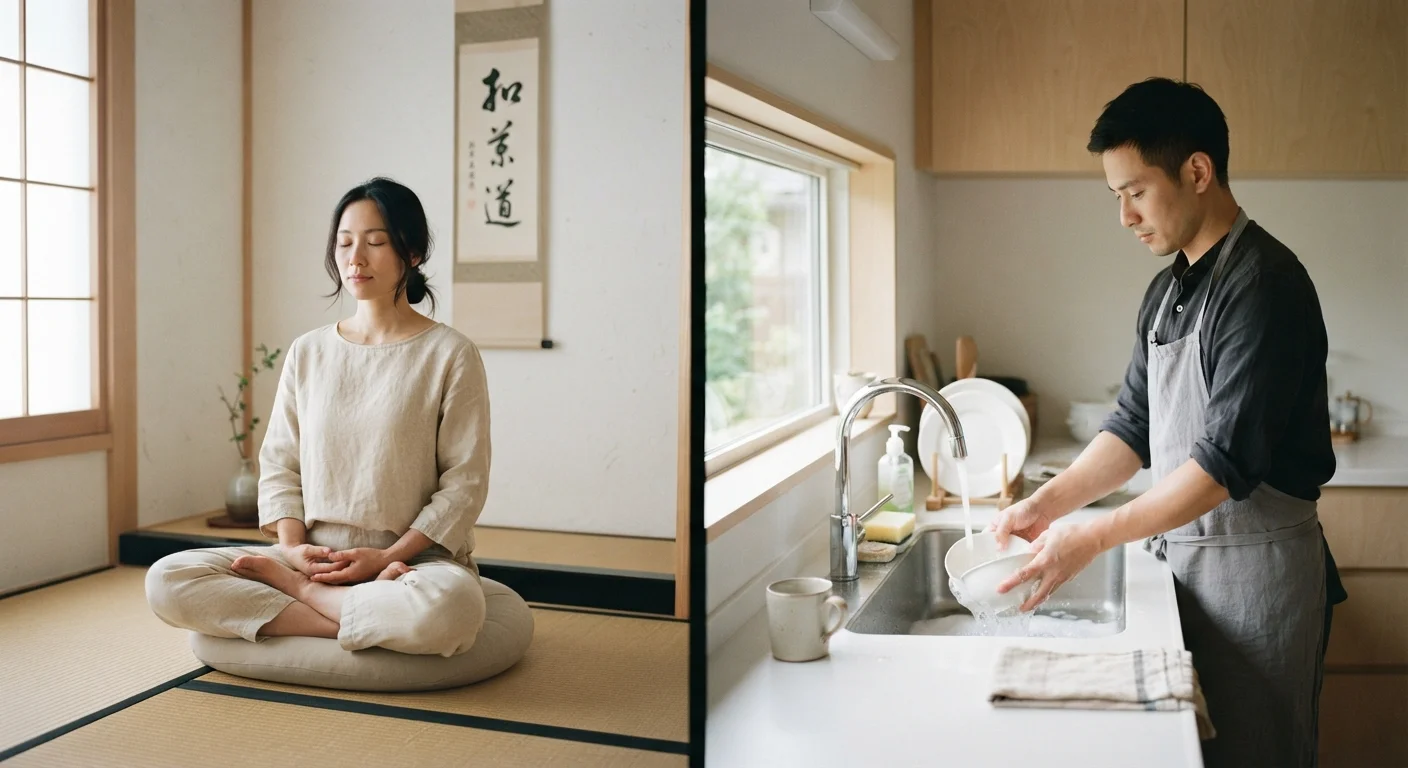
Mindfulness is a quality of attention - specifically, the deliberate awareness of what is happening in the present moment without layering judgment on top of it. It is not a technique you perform at a set time; it is an orientation you can bring to virtually any experience. You can be mindful while drinking coffee, listening to a colleague, or waiting in traffic.
Meditation is a structured practice - a deliberate exercise in which you set aside time, adopt a specific technique (such as focused breath awareness, body scanning, or loving-kindness), and systematically train attention or cultivate a particular mental quality. Meditation is one of the most reliable ways to develop mindfulness, but the two are not synonymous.
A useful analogy: mindfulness is like physical fitness - a capacity you carry with you. Meditation is more like going to the gym - the deliberate training session that builds that capacity. You can be fit without going to the gym daily, but structured training makes fitness easier to sustain. If you're building a broader mental wellness foundation, this beginner's guide to mental wellness covers how practices like these fit into a realistic overall approach.
How They Compare Side by Side
Understanding where each practice sits across practical dimensions helps clarify which fits a given lifestyle or goal.
| Criterion | Mindfulness | Meditation |
|---|---|---|
| What it is | A quality of present-moment awareness | A structured mental training practice |
| When it happens | Any time, during any activity | Dedicated sessions with set technique |
| Time required | No extra time needed | Typically 5-45 minutes per session |
| Learning curve | Low - can begin immediately | Moderate - benefits from instruction |
| Clinical evidence | Emerging; harder to study informally | Stronger; especially MBSR and MBCT |
| Equipment needed | None | None required; apps or guides optional |
| Primary benefit | Reduces automatic, reactive thinking | Builds sustained attention over time |
One key distinction worth emphasizing: meditation almost always involves mindfulness, but mindfulness does not require meditation. A formal sitting meditation practice that asks you to focus on breath and return attention when it wanders is, at its core, a mindfulness exercise - but the reverse relationship doesn't hold. Mindful attention applied during a walk or meal involves no formal technique at all.
~14%
U.S. adults who have tried meditation
A CDC National Health Interview Survey found a significant increase in meditation use among U.S. adults over a recent multi-year period.
8 weeks
Typical MBSR program length
The standard Mindfulness-Based Stress Reduction program involves eight weeks of guided practice, the format used in most major clinical trials.
Moderate
Effect size for anxiety reduction
Meta-analyses of mindfulness-based interventions generally report moderate effect sizes for anxiety and stress, with consistency of practice as a key variable.
What the Research Supports
Both practices have accumulated a meaningful body of scientific evidence, though the research landscape is more developed for structured meditation programs.
Mindfulness-Based Stress Reduction (MBSR), an eight-week structured meditation program developed at the University of Massachusetts Medical School, has been studied extensively. Clinical reviews have found it associated with reductions in psychological stress, anxiety symptoms, and markers of emotional reactivity. Mindfulness-Based Cognitive Therapy (MBCT), which builds on similar foundations, has enough clinical support that it is included in guidelines for preventing relapse in recurrent depression in several countries.
Informal mindfulness - the kind applied during daily activities - is harder to study systematically, but research on attentional training suggests that even brief, consistent practices can shift how people relate to stressful thoughts. The mechanisms appear to involve changes in how the brain processes self-referential thought, particularly in regions associated with the default mode network.
It's worth noting that research quality varies widely across studies. Effect sizes for both practices tend to be moderate rather than dramatic, and results depend heavily on consistency and the nature of the condition being addressed. These practices are general wellness tools, not substitutes for clinical care. For a useful perspective on where self-directed strategies like these fit relative to professional support, see Therapy vs. Self-Help: Understanding What Each Can Realistically Offer.
These Practices Are Not a Clinical Treatment
Mindfulness and meditation are well-supported general wellness tools, but they are not replacements for professional mental health care. If you are managing a diagnosed condition such as depression, anxiety disorder, or PTSD, speak with a licensed mental health professional before relying on self-directed practices alone. These approaches are most effective as complements to, not substitutes for, appropriate clinical support.
Integrating Both Into Everyday Life
The most effective approach for many people isn't choosing one over the other - it's using meditation as the training ground and mindfulness as the ongoing practice applied throughout the day.
A common pattern: a short daily meditation session (even five to ten minutes) builds the attentional skills that make informal mindfulness easier to access. Without that training, attempts to be mindful during stressful moments often fail because the mental habit hasn't been reinforced enough to activate under pressure.
Mindfulness also pairs well with other reflective practices. Journaling, for instance, works best when approached with the same non-judgmental attention that mindfulness cultivates - writing as observation rather than rumination. Similarly, it's worth examining whether daily habits are working against your efforts; some common routines quietly undermine emotional well-being in ways that no amount of mindfulness or meditation fully compensates for.
Starting small is consistently more effective than ambitious goals that are abandoned quickly. A single mindful pause during a routine moment - one conscious breath before answering an email - is more valuable than an elaborate practice that never actually begins.
This article is for general informational purposes only and does not constitute medical or mental health advice. If you are experiencing significant mental health symptoms, please consult a qualified healthcare professional.