

| Number of adults affected by mental illness annually (U.S.) | About 1 in 5 (National Institute of Mental Health (NIMH)) |
| Most common mental health conditions | Anxiety disorders, depression (World Health Organization) |
| Average delay between symptom onset and treatment | 11 years (NAMI, National Alliance on Mental Illness) |
| Therapy formats available | In-person, telehealth, group, self-guided |
| Key barrier to seeking care | Stigma and lack of awareness (NIMH and NAMI research) |
Why Mental Health Vocabulary Matters
Words shape how we think about our experiences - and in mental health, imprecise language can create real barriers. When someone doesn't recognize the term "cognitive distortion," they may not realize that a therapist is describing a thought pattern, not a character flaw. When "affect" and "mood" are used interchangeably in conversation, important clinical distinctions get lost.
This plain-language reference exists to close that gap. Whether you're preparing for a first therapy appointment, supporting a family member, or simply trying to understand what you've read, having a working vocabulary helps you ask better questions and engage more confidently in conversations about mental health. For a look at some of the misconceptions that language and stigma can reinforce, see common mental health myths examined against the evidence.
This Is General Information, Not Medical Advice
The definitions in this reference are educational and intended to help you understand commonly used mental health language. They are not a substitute for evaluation or guidance from a licensed mental health professional. If you are concerned about your mental health or that of someone you know, please consult a qualified healthcare provider.
Language in Mental Health Evolves
Mental health terminology changes as research advances and communities shape how conditions are discussed. What is standard clinical language today may be replaced or refined over time. When speaking with a provider, it is always appropriate to ask what a term means in the context of your own care.
| Number of adults affected by mental illness annually (U.S.) | About 1 in 5 (National Institute of Mental Health (NIMH)) |
| Most common mental health conditions | Anxiety disorders, depression (World Health Organization) |
| Average delay between symptom onset and treatment | 11 years (NAMI, National Alliance on Mental Illness) |
| Therapy formats available | In-person, telehealth, group, self-guided |
| Key barrier to seeking care | Stigma and lack of awareness (NIMH and NAMI research) |
Key Terms Defined
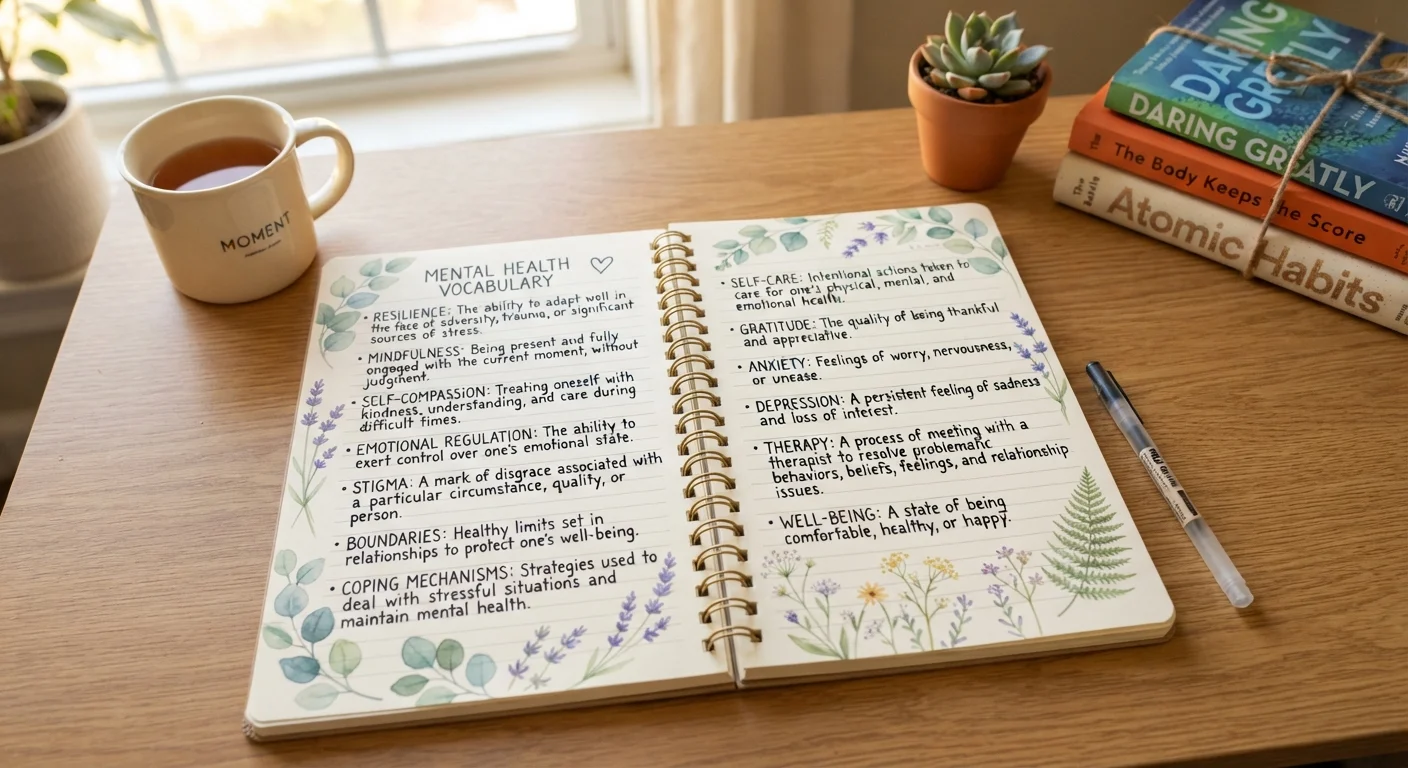
The definitions below cover terms you are likely to encounter in clinical settings, news coverage, and everyday conversations about mental health. They are organized to build understanding, not to serve as a diagnostic tool.
Understanding these terms is a foundation - not a finish line. Once you're familiar with the language, you're better positioned to follow through on the habits that support mental wellness over time. Our guide on building a sustainable mental wellness routine offers practical, research-informed strategies for doing exactly that.
This article is for informational purposes only and does not constitute medical advice. Please consult a licensed mental health professional for guidance specific to your situation.