

Key Takeaways
Why Controlled Breathing Affects Stress
When the body perceives a threat - real or psychological - the autonomic nervous system triggers the sympathetic branch, releasing stress hormones that speed heart rate, tighten muscles, and sharpen alertness. This is the well-known fight-or-flight response. The problem is that modern stressors (a looming deadline, a difficult conversation) rarely require a physical response, leaving the body in a prolonged state of activation that wears on cardiovascular, immune, and cognitive function over time.
Controlled breathing interrupts this cycle through a direct physiological pathway. Slow, deep exhalations stimulate the vagus nerve, which activates the parasympathetic nervous system - often called the rest-and-digest system. Heart rate variability increases, blood pressure tends to decrease, and the body begins to downregulate the stress response. This is not simply relaxation in a vague sense; it is a measurable shift in autonomic balance that researchers can observe in heart rate and cortisol data.
Breathing is unique among automatic bodily functions because it sits at the intersection of the voluntary and involuntary nervous systems. You cannot consciously lower your blood pressure or slow your digestion directly, but you can control your breath - and doing so reaches those deeper regulatory systems indirectly. That is why breathing-based interventions appear across clinical mindfulness programs, cognitive behavioral therapy adjuncts, and occupational resilience training.
For a broader look at how breathing fits alongside other evidence-informed coping strategies, see Ways People Cope With Stress.
What you will need
How to Practice the Three Core Techniques
The three methods below - diaphragmatic breathing, box breathing, and 4-7-8 breathing - are among the most thoroughly studied breath-based tools for stress. They share a common mechanism (slow, deliberate respiratory patterns) but differ in structure and in which aspect of the stress response they address most efficiently. Follow the steps in order when learning: diaphragmatic breathing is the physical foundation the other two build on.
Practice Diaphragmatic (Belly) Breathing
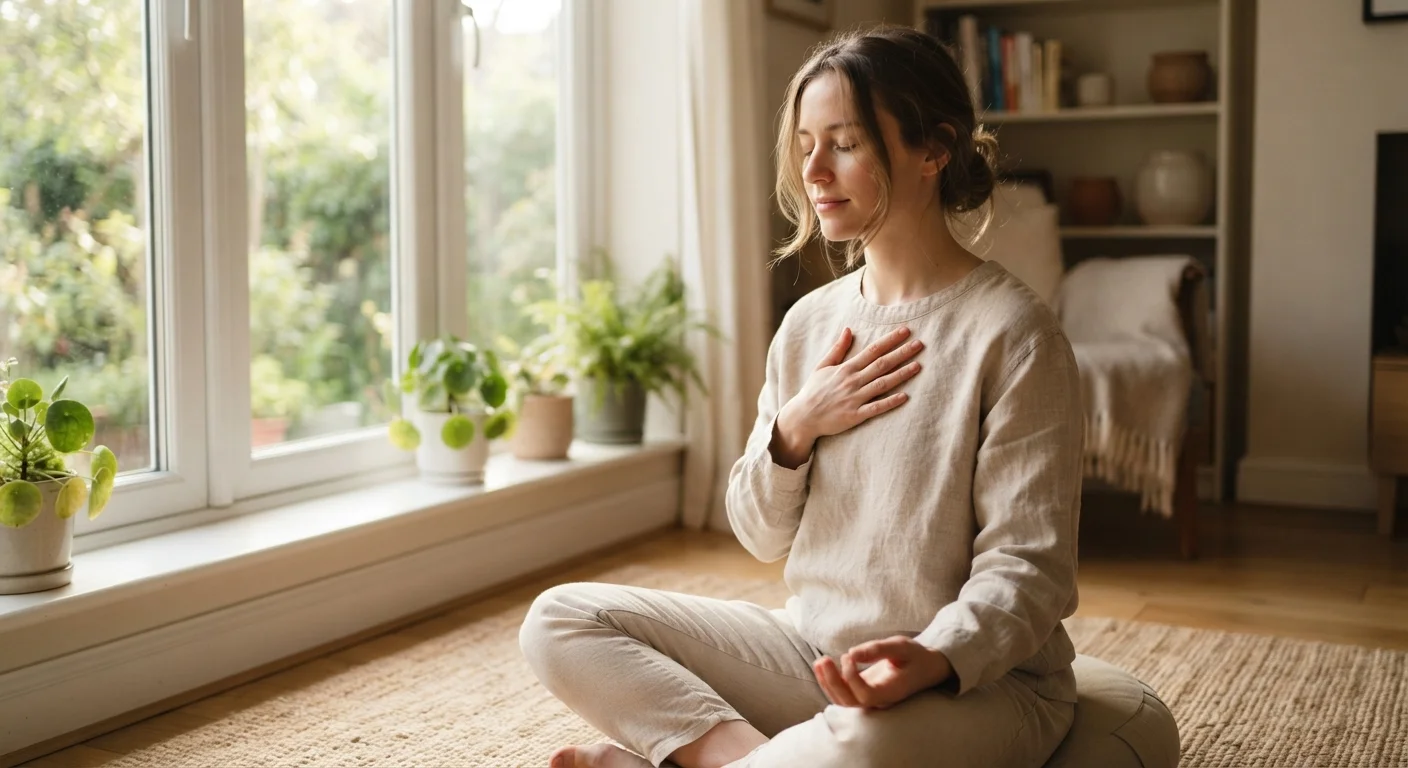
Sit upright or lie on your back. Place one hand on your chest and the other on your belly, just below the ribcage. Inhale slowly through your nose for about four counts, directing the breath downward so that your belly rises while your chest stays relatively still. Exhale gently through pursed lips for six to eight counts, feeling your belly fall. Repeat for five to ten breath cycles.
This technique directly engages the diaphragm, the primary muscle of respiration, and is the foundation for the methods that follow.
Try Box Breathing for Structured Calm
Box breathing - sometimes called four-square breathing - uses equal-length intervals to create a predictable rhythm. Inhale through your nose for four counts, hold your breath for four counts, exhale through your mouth for four counts, then hold again for four counts. That completes one box. Perform four to six boxes in a single session.
Because each phase requires focused counting, box breathing is particularly useful when racing thoughts are making relaxation difficult. It has been widely adopted in high-stress occupational settings as a rapid composure tool.
Use 4-7-8 Breathing for Deeper Relaxation
The 4-7-8 technique extends the exhale phase, which amplifies the parasympathetic response. Inhale quietly through your nose for four counts, hold for seven counts, then exhale completely through your mouth - making an audible whoosh - for eight counts. This is one cycle. Complete three to four cycles.
The prolonged exhale is the key mechanism: a longer exhalation slows the heart rate more substantially than the inhale phase does, helping the body shift more decisively out of the fight-or-flight state.
Build a Brief Daily Practice
Choose one technique and practice it at the same time each day - morning, midday, or before sleep all work well. Start with five minutes and extend as the habit becomes comfortable. Over time, the physiological calming effect becomes more accessible even in genuinely stressful moments, because your nervous system has been repeatedly conditioned to follow the cue.
Consistency Matters More Than Duration
Research suggests that brief, consistent daily practice - even five minutes - builds the habit and physiological conditioning that make these techniques more effective under real stress. Waiting until a crisis to try them for the first time is less effective than regular rehearsal.
Lightheadedness Is a Signal to Pause
Some people feel dizzy or lightheaded when they first practice controlled breathing, particularly techniques involving breath-holds. If this happens, return to your normal breathing pattern and rest before trying again. Avoid practicing while driving or operating machinery.
What to Expect and When to Seek Help
Most people notice a modest reduction in immediate tension after a single well-executed session. However, the more meaningful benefits - a lower baseline stress response, faster recovery from stressful events - tend to emerge after weeks of regular practice. Setting realistic expectations prevents discouragement in the early days.
These techniques are generally well-tolerated by healthy adults with no respiratory conditions. However, they are not a substitute for professional support when stress is severe, chronic, or accompanied by symptoms of anxiety disorder, depression, or panic. If your stress level is significantly affecting your sleep, relationships, work, or physical health, that is a clear signal to consult a licensed mental health professional or your primary care provider.
Not a Substitute for Professional Care
Breathing exercises are evidence-informed self-help tools, not medical treatments. If you experience chronic anxiety, panic attacks, or a respiratory condition, please consult a qualified healthcare provider before relying on these techniques as a primary intervention.
This article is for general informational purposes only and does not constitute medical advice. Always consult a qualified healthcare professional for guidance specific to your health situation.